About this artwork
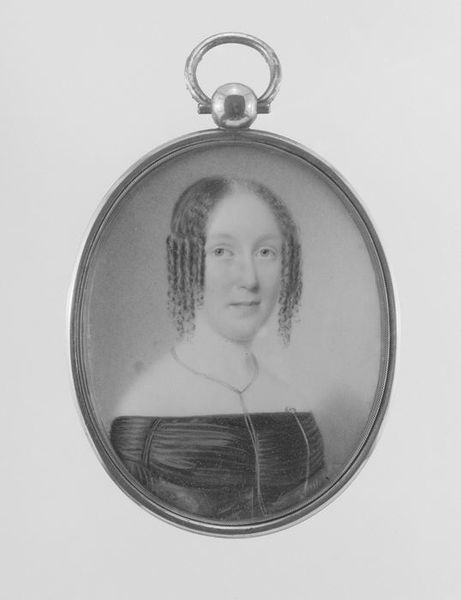
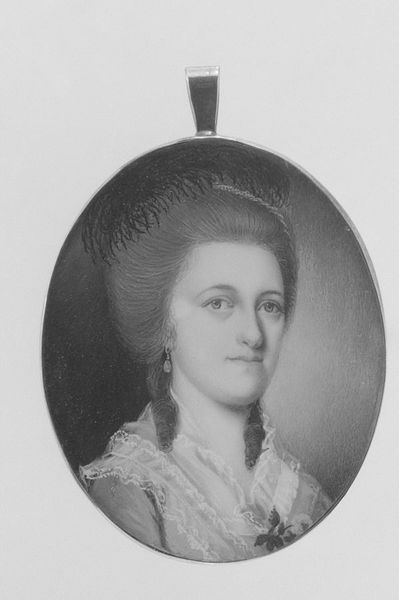
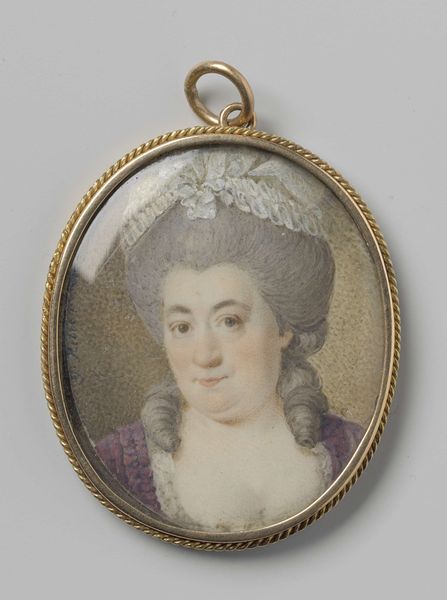
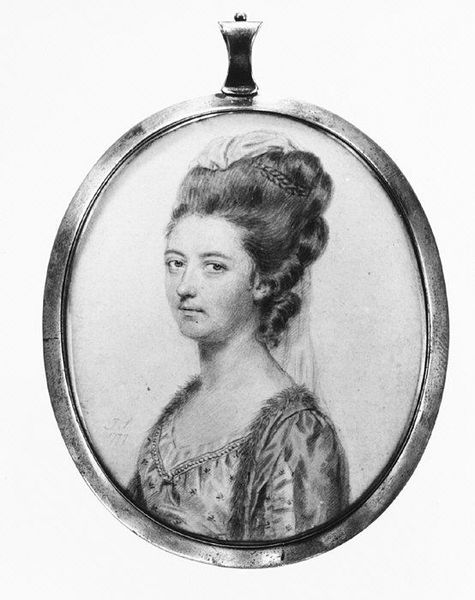
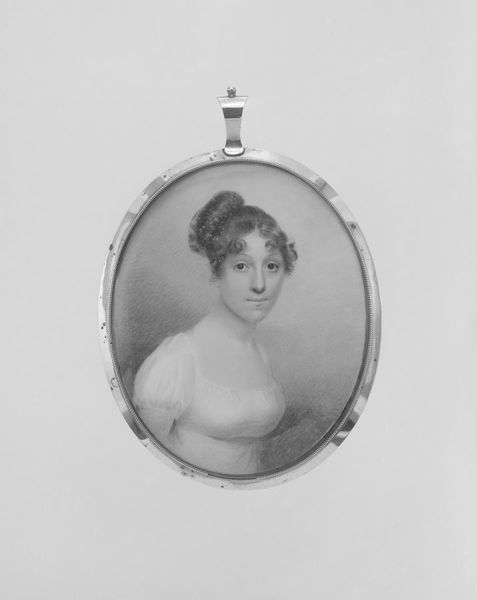
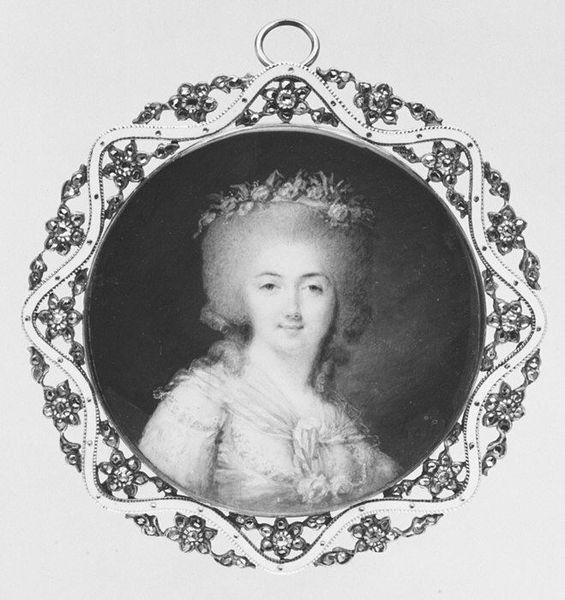
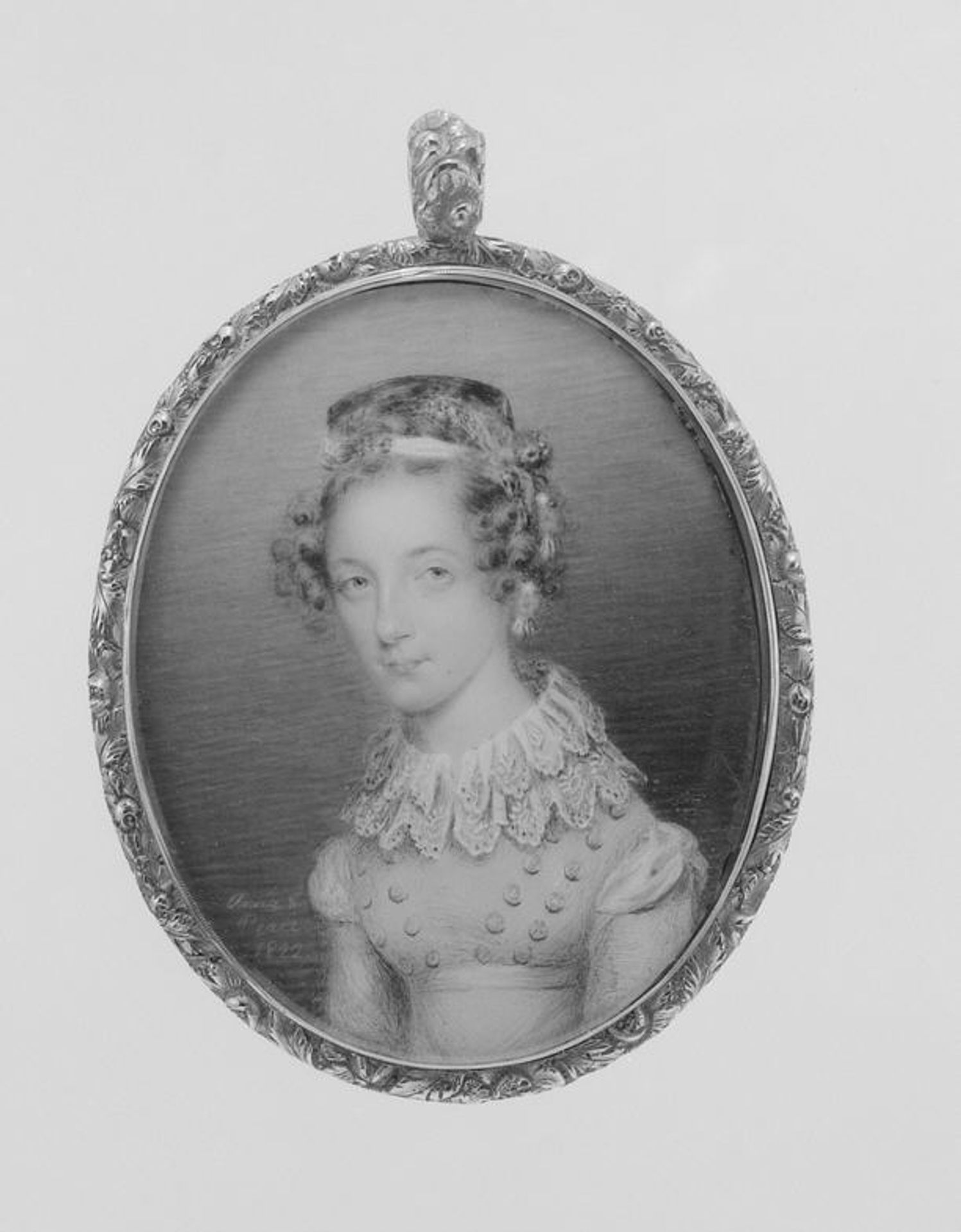
Anna Claypoole Peale’s "Portrait of a Lady," a small watercolor on ivory, presents a study in restrained elegance, encased within an ornate oval frame. The muted palette focuses attention on the delicate rendering of the sitter’s features. Peale’s meticulous technique, particularly evident in the lace collar and soft curls, invites a reading of the artwork through the lens of detail and precision. The oval shape constrains the composition, focusing our view directly on the subject's face and upper torso, thus creating an intimate viewing experience. This compositional choice—emphasizing closeness within defined boundaries—speaks to the conventions of portraiture during Peale’s time, which balanced public presentation with personal revelation. The contrast between the smooth, ivory surface and the detailed brushwork enhances the tactile quality of the miniature, reflecting a broader cultural interest in capturing likenesses as objects of personal value and historical record. The overall effect is not just a depiction of an individual, but an exploration of identity framed by material and form.
Portrait of a Lady
1822

Anna Claypoole Peale
1791 - 1878
The Metropolitan Museum of Art
Metropolitan Museum of Art, New York, NYArtwork details
- Medium
- drawing, paper, pencil, graphite
- Dimensions
- 2 5/8 x 2 1/8 in. (6.7 x 5.4 cm)
- Location
- Metropolitan Museum of Art, New York, NY
- Copyright
- Public Domain
Tags
Comments
Share your thoughts
About this artwork
Anna Claypoole Peale’s "Portrait of a Lady," a small watercolor on ivory, presents a study in restrained elegance, encased within an ornate oval frame. The muted palette focuses attention on the delicate rendering of the sitter’s features. Peale’s meticulous technique, particularly evident in the lace collar and soft curls, invites a reading of the artwork through the lens of detail and precision. The oval shape constrains the composition, focusing our view directly on the subject's face and upper torso, thus creating an intimate viewing experience. This compositional choice—emphasizing closeness within defined boundaries—speaks to the conventions of portraiture during Peale’s time, which balanced public presentation with personal revelation. The contrast between the smooth, ivory surface and the detailed brushwork enhances the tactile quality of the miniature, reflecting a broader cultural interest in capturing likenesses as objects of personal value and historical record. The overall effect is not just a depiction of an individual, but an exploration of identity framed by material and form.
Comments
Share your thoughts