1872
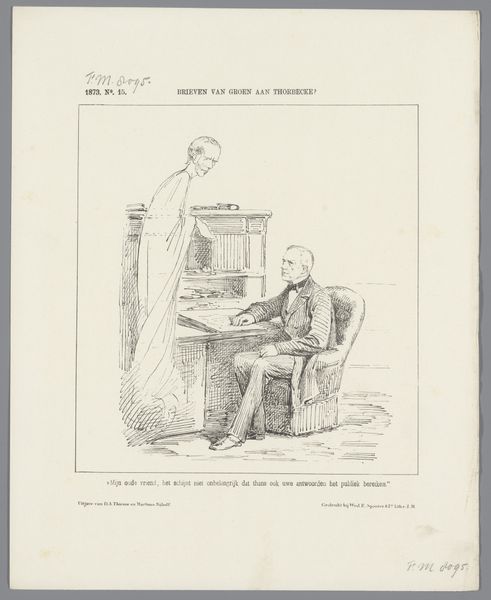
Spotprent op de rijksbouwmeester W.N. Rose, 1872

Listen to curator's interpretation
Curatorial notes
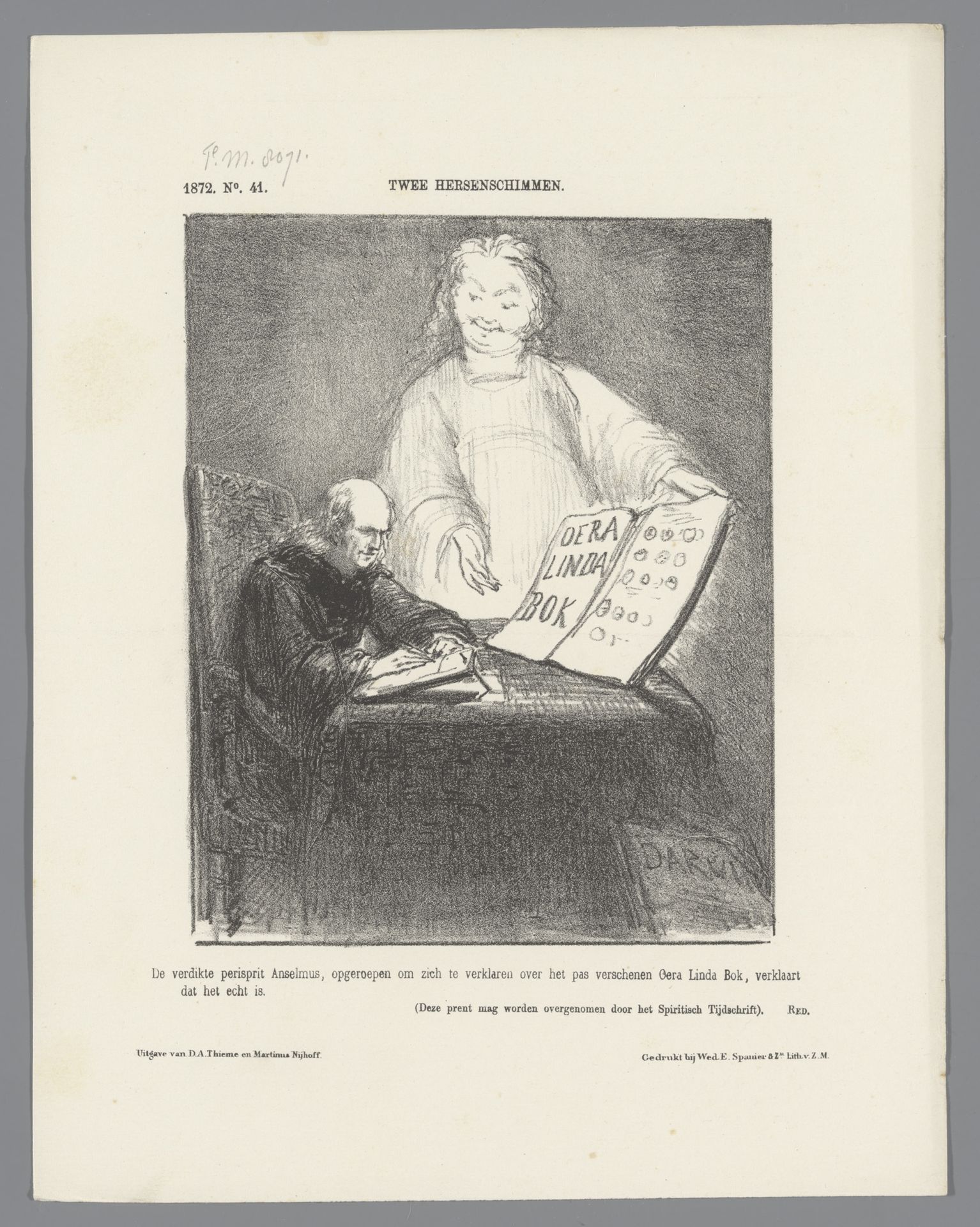
Curator: This piece, dating back to 1872, is a political cartoon titled "Spotprent op de rijksbouwmeester W.N. Rose." It is crafted from ink on paper, showcasing print and drawing techniques by Johan Michaël Schmidt Crans. Editor: It gives off a kind of spooky vibe, right? That pale, looming figure in the background... almost spectral. And the one in the front, bent over his work, oblivious or perhaps in conversation? Curator: The artist masterfully employs line weight and contrast. Note how the background figure, rendered with softer lines, achieves a ghostly, ethereal presence, contrasting sharply with the more defined figure at the desk. The central focus is that large book. Editor: "Oera Linda Bok," the writing reads... so this piece is all about a recently published book. What’s with the spectral figures, though? Are they whispering inspiration, or sowing seeds of doubt? It feels like a satire. Curator: Indeed, caricature is a prominent element of this artwork. Consider how Rose, as the central figure, is portrayed—perhaps the exaggerated features and somber posture indicate a commentary on his character or his role as state architect. And that second figure behind is intended as a "perisprit", that ghostly entity. The work’s narrative-driven content offers a fascinating socio-political insight of its time. Editor: You're right. Those dark, inky shadows feel very intentional. It’s more than just shading—it's shaping the entire mood. But this spirit is gesturing at a book—so the spirit affirms the book's legitimacy? What a strange idea. And, for me, what makes the piece special is its playful balance between the real and unreal. Curator: By integrating historical context and keen observations, the artwork encapsulates elements of sociopolitical tension—and invites critical inquiry. Editor: Well said. It seems to transcend merely an illustration, and truly is an artwork that allows one to ask some serious questions of history.