About this artwork
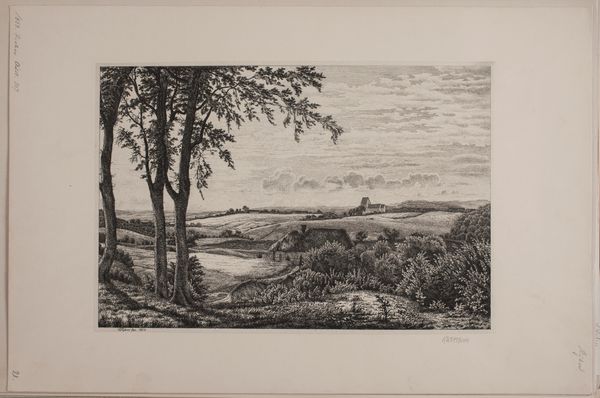
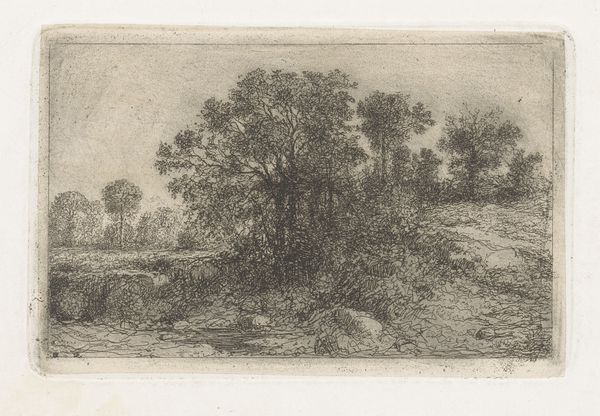
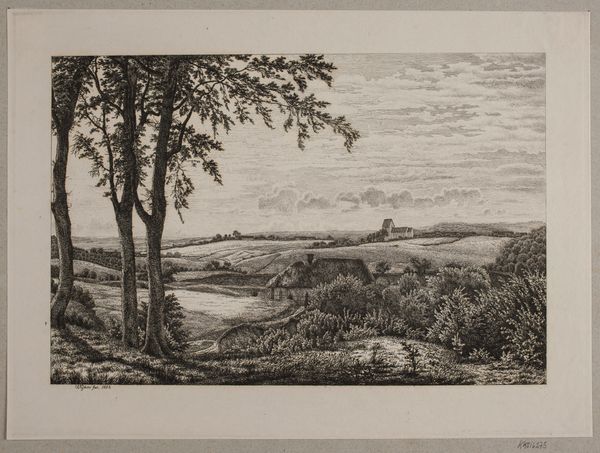
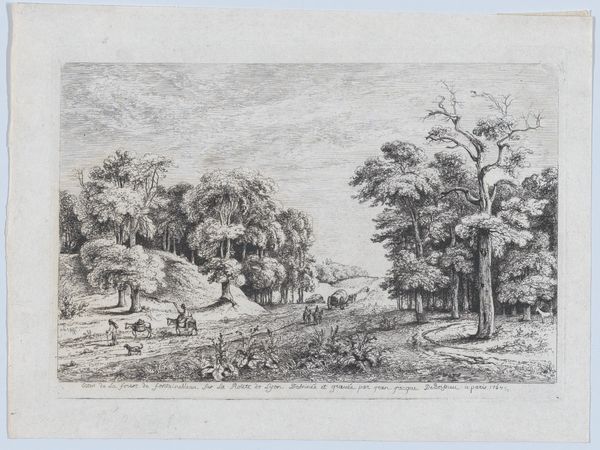
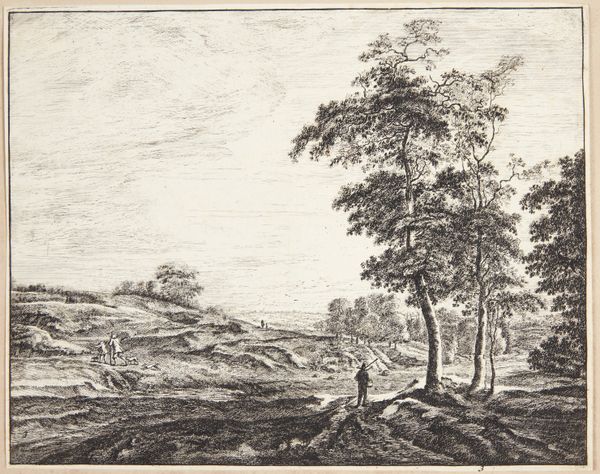
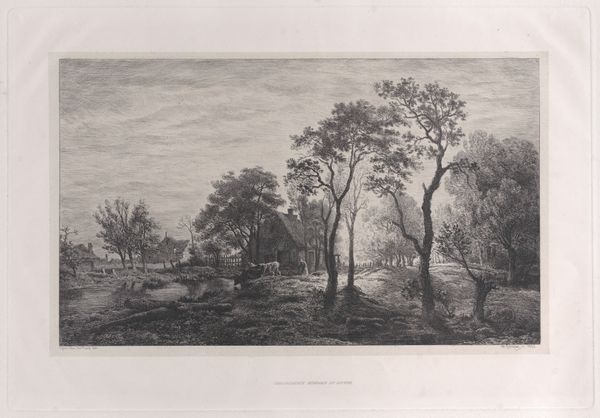
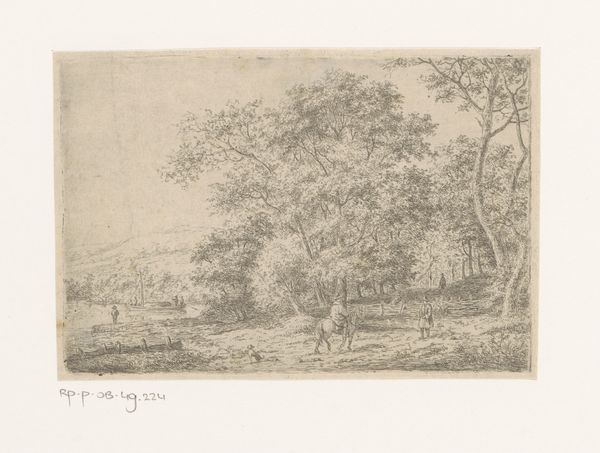
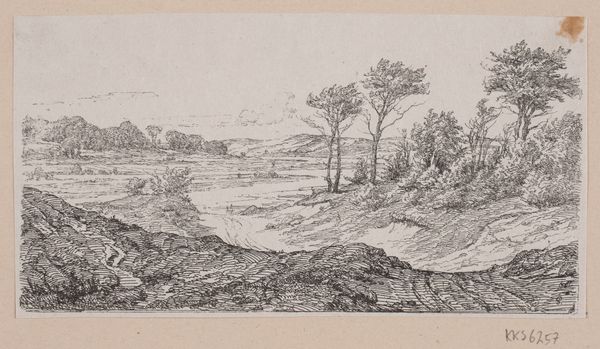
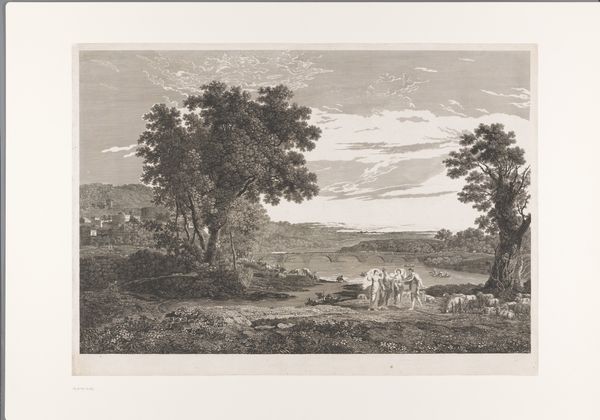
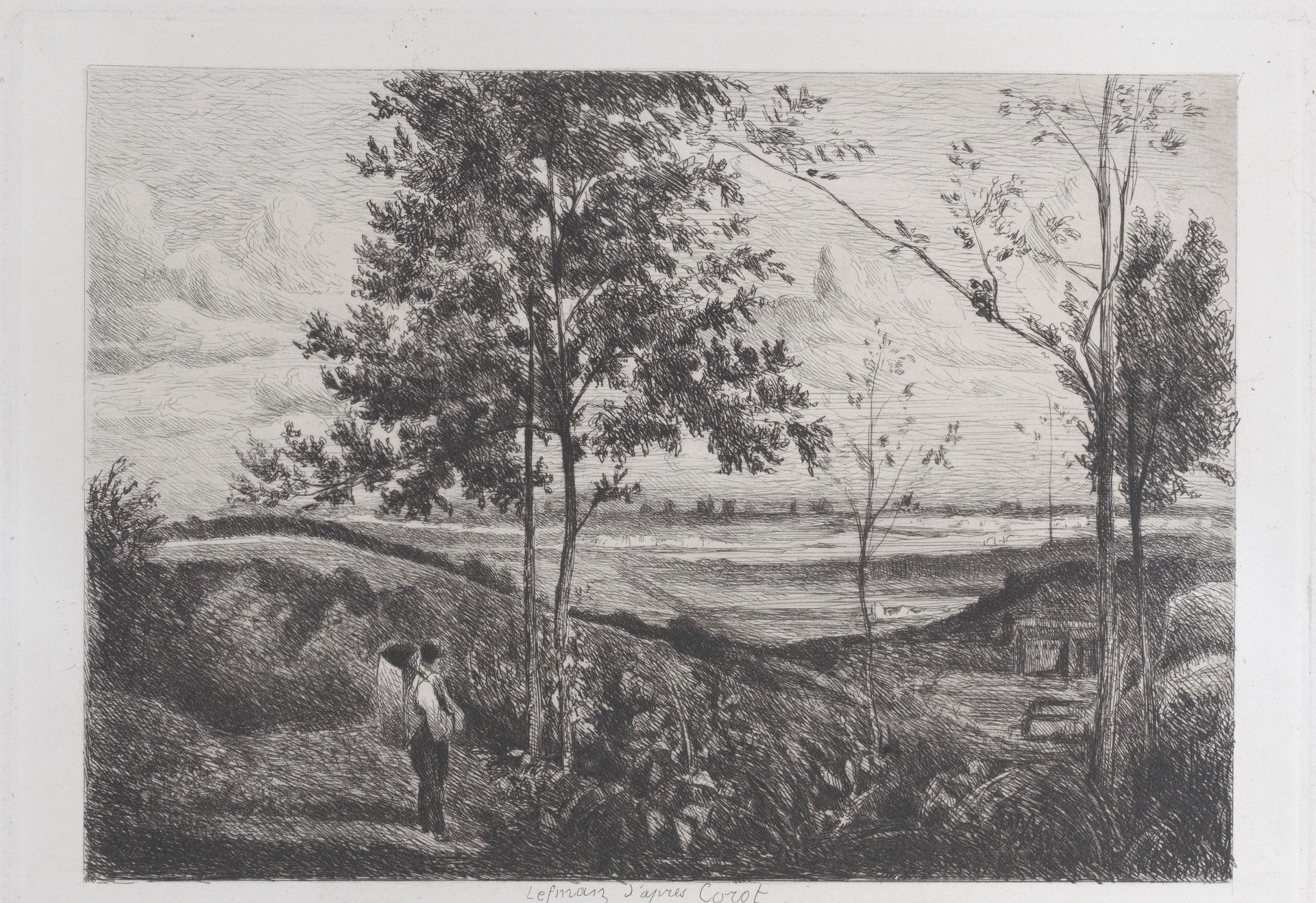
Editor: So, this etching is called "Landscape," made between 1873 and 1890 by Ferdinand Lefman. It’s really delicate and almost feels like a memory. How do you interpret this work? Curator: The hazy quality and the deliberate inclusion of the working man in the landscape positions it as a visual statement on labor and class. Consider the timeframe, the late 19th century – industrialization was rapidly changing social structures. Lefman offers us a glimpse into the lives of ordinary people within a changing world. What is the subject doing, carrying, and how is this important? Editor: It looks like he’s carrying some kind of bundle, maybe collected firewood? So the image seems to comment on the connection between the worker and his land. Curator: Precisely. It evokes questions of access and ownership, both in terms of the landscape itself and the means of survival. Lefman prompts a dialogue about the romanticization, or not, of rural labour. This tension underscores broader social inequities. To what degree does Lefman romanticize the landscape? Editor: It's true, the figure blends into the environment, creating a sort of harmony, but the harsh lines of the etching prevent pure beauty, it does show the harshness of a lived world. So Lefman isn’t glorifying poverty. Curator: And that’s where the power lies, isn't it? In recognizing the beauty and the struggle interwoven in the lives represented. This is a window onto history and a commentary on today’s world and questions around resource exploitation. Editor: I see what you mean. It’s not just a pretty picture, it’s a reflection on work, class, and our relationship to the environment. Thanks for showing me how it can engage with so many pressing contemporary concerns.
Landscape
1873 - 1890


Artwork details
- Medium
- drawing, print, etching
- Dimensions
- Plate: 7 1/16 × 9 11/16 in. (18 × 24.6 cm) Sheet: 7 11/16 × 10 7/8 in. (19.5 × 27.7 cm)
- Location
- Metropolitan Museum of Art, New York, NY
- Copyright
- Public Domain
Tags
Comments
Share your thoughts
About this artwork
Editor: So, this etching is called "Landscape," made between 1873 and 1890 by Ferdinand Lefman. It’s really delicate and almost feels like a memory. How do you interpret this work? Curator: The hazy quality and the deliberate inclusion of the working man in the landscape positions it as a visual statement on labor and class. Consider the timeframe, the late 19th century – industrialization was rapidly changing social structures. Lefman offers us a glimpse into the lives of ordinary people within a changing world. What is the subject doing, carrying, and how is this important? Editor: It looks like he’s carrying some kind of bundle, maybe collected firewood? So the image seems to comment on the connection between the worker and his land. Curator: Precisely. It evokes questions of access and ownership, both in terms of the landscape itself and the means of survival. Lefman prompts a dialogue about the romanticization, or not, of rural labour. This tension underscores broader social inequities. To what degree does Lefman romanticize the landscape? Editor: It's true, the figure blends into the environment, creating a sort of harmony, but the harsh lines of the etching prevent pure beauty, it does show the harshness of a lived world. So Lefman isn’t glorifying poverty. Curator: And that’s where the power lies, isn't it? In recognizing the beauty and the struggle interwoven in the lives represented. This is a window onto history and a commentary on today’s world and questions around resource exploitation. Editor: I see what you mean. It’s not just a pretty picture, it’s a reflection on work, class, and our relationship to the environment. Thanks for showing me how it can engage with so many pressing contemporary concerns.
Comments
Share your thoughts