About this artwork
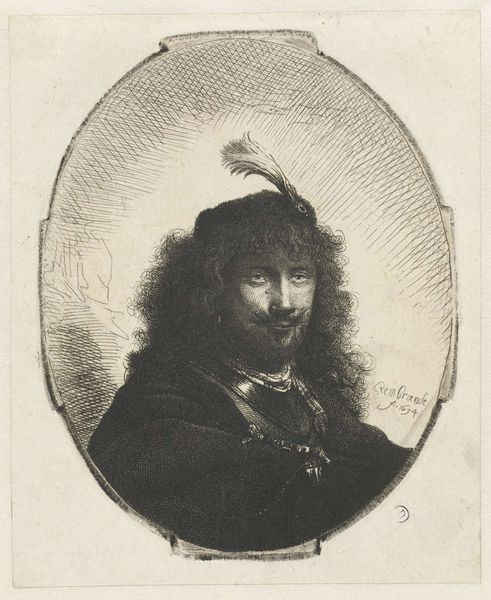
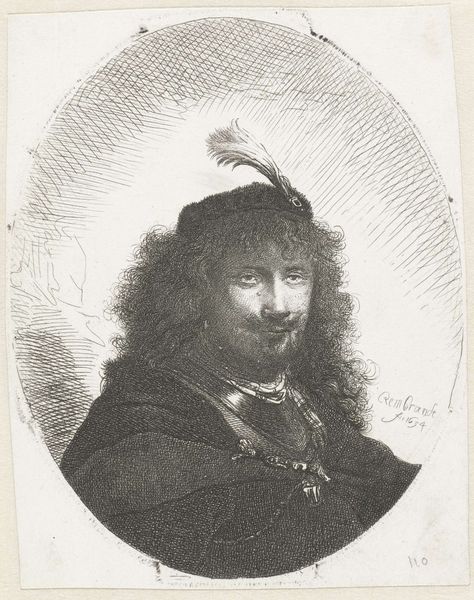
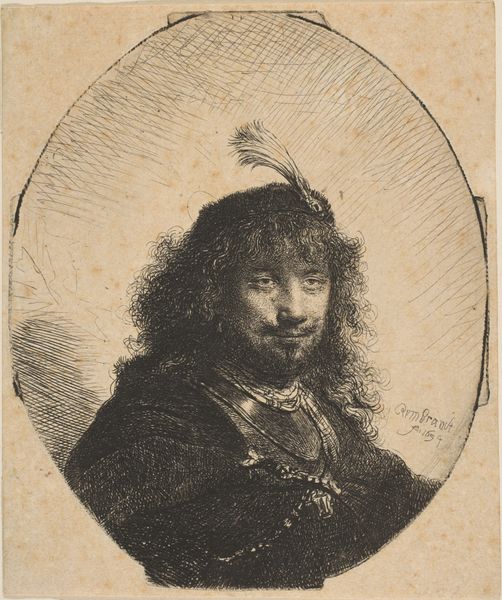
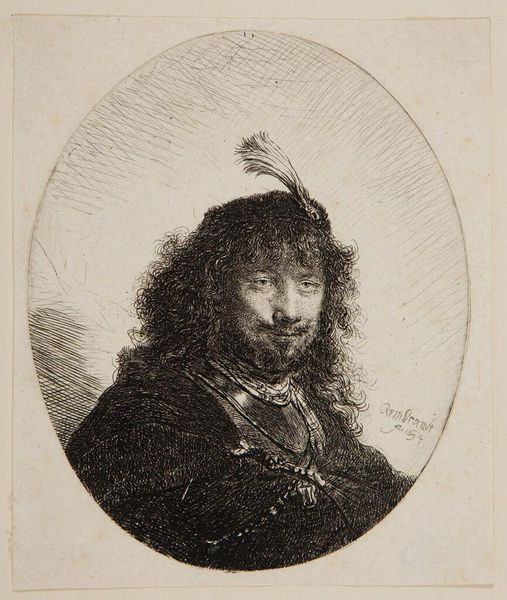
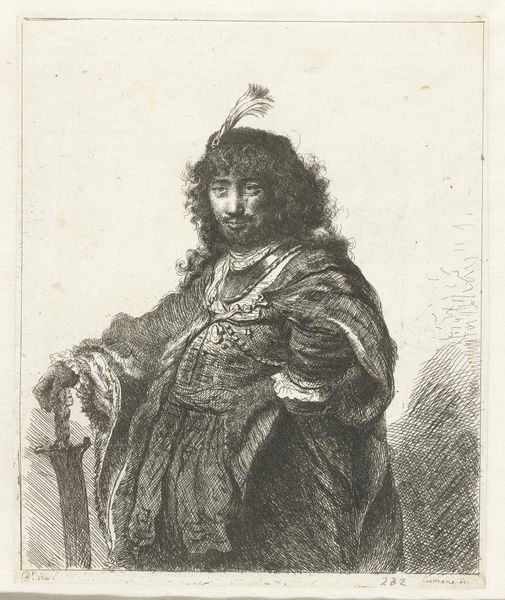
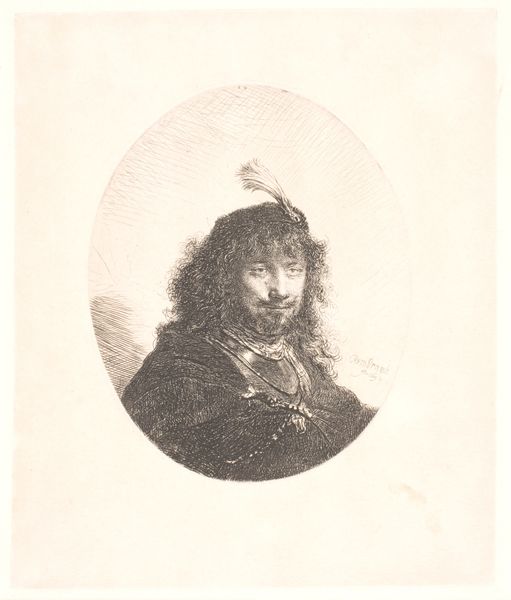
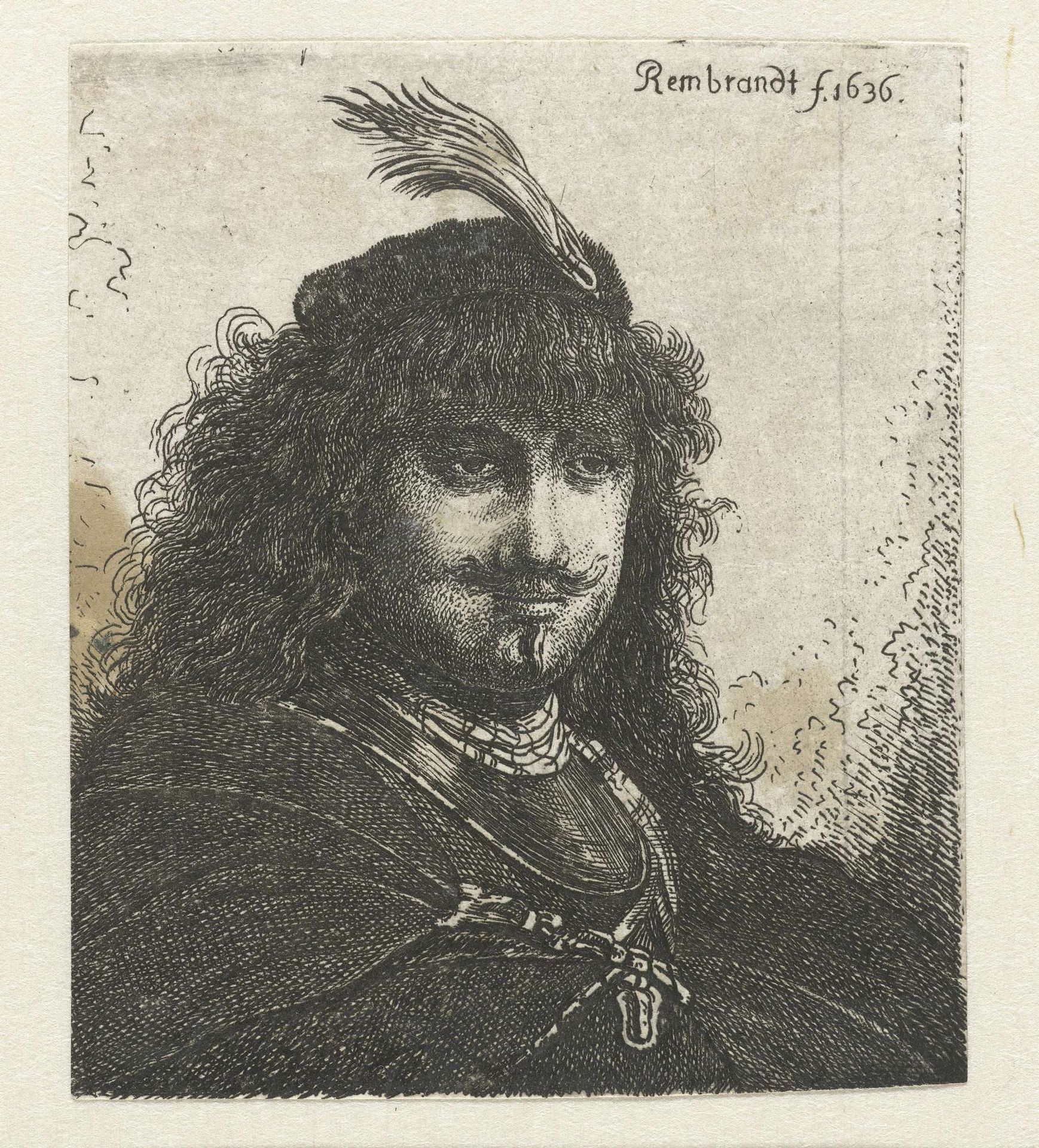
This etching, whose authorship is debated, shows a man in elaborate attire. It was made in the 18th century by Georg Leopold Hertel, or perhaps by Rembrandt van Rijn, in the 17th century. The sitter's flamboyant dress and confident gaze provide a glimpse into the theatricality of identity during the period when ideas about the self were changing. The plumed cap and lowered sabre act almost as props, constructing a persona of confident authority. Yet, questions of originality and authorship complicate this image. Is it a self-portrait of Rembrandt or Hertel? Is it a copy? Such questions reflect the changing status of artists and artworks, and the increasing importance of originality and self-expression. This image exists at the intersection of portraiture, self-fashioning, and artistic identity. It invites us to reflect on the ways in which we construct and perform our own identities, and how these performances are shaped by social and historical forces.
Self-portrait (?) with plumed cap and lowered sabre
1750 - 1800

Georg Leopold Hertel
1740 - 1778Location
RijksmuseumArtwork details
- Dimensions
- height 94 mm, width 80 mm
- Location
- Rijksmuseum
- Copyright
- Rijks Museum: Open Domain
Comments
Share your thoughts
About this artwork
This etching, whose authorship is debated, shows a man in elaborate attire. It was made in the 18th century by Georg Leopold Hertel, or perhaps by Rembrandt van Rijn, in the 17th century. The sitter's flamboyant dress and confident gaze provide a glimpse into the theatricality of identity during the period when ideas about the self were changing. The plumed cap and lowered sabre act almost as props, constructing a persona of confident authority. Yet, questions of originality and authorship complicate this image. Is it a self-portrait of Rembrandt or Hertel? Is it a copy? Such questions reflect the changing status of artists and artworks, and the increasing importance of originality and self-expression. This image exists at the intersection of portraiture, self-fashioning, and artistic identity. It invites us to reflect on the ways in which we construct and perform our own identities, and how these performances are shaped by social and historical forces.
Comments
Share your thoughts