About this artwork
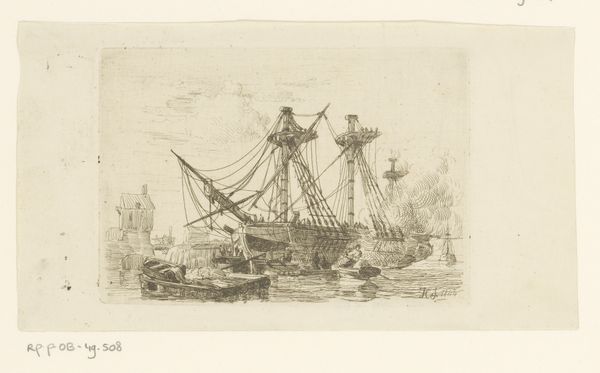
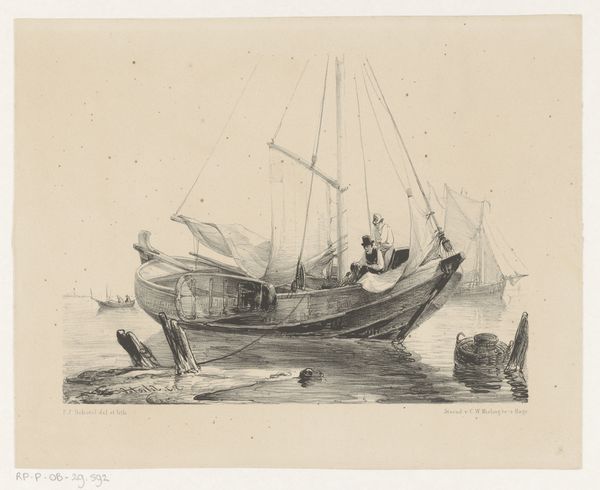
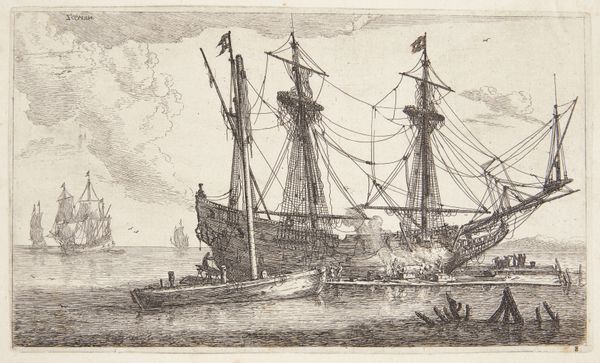
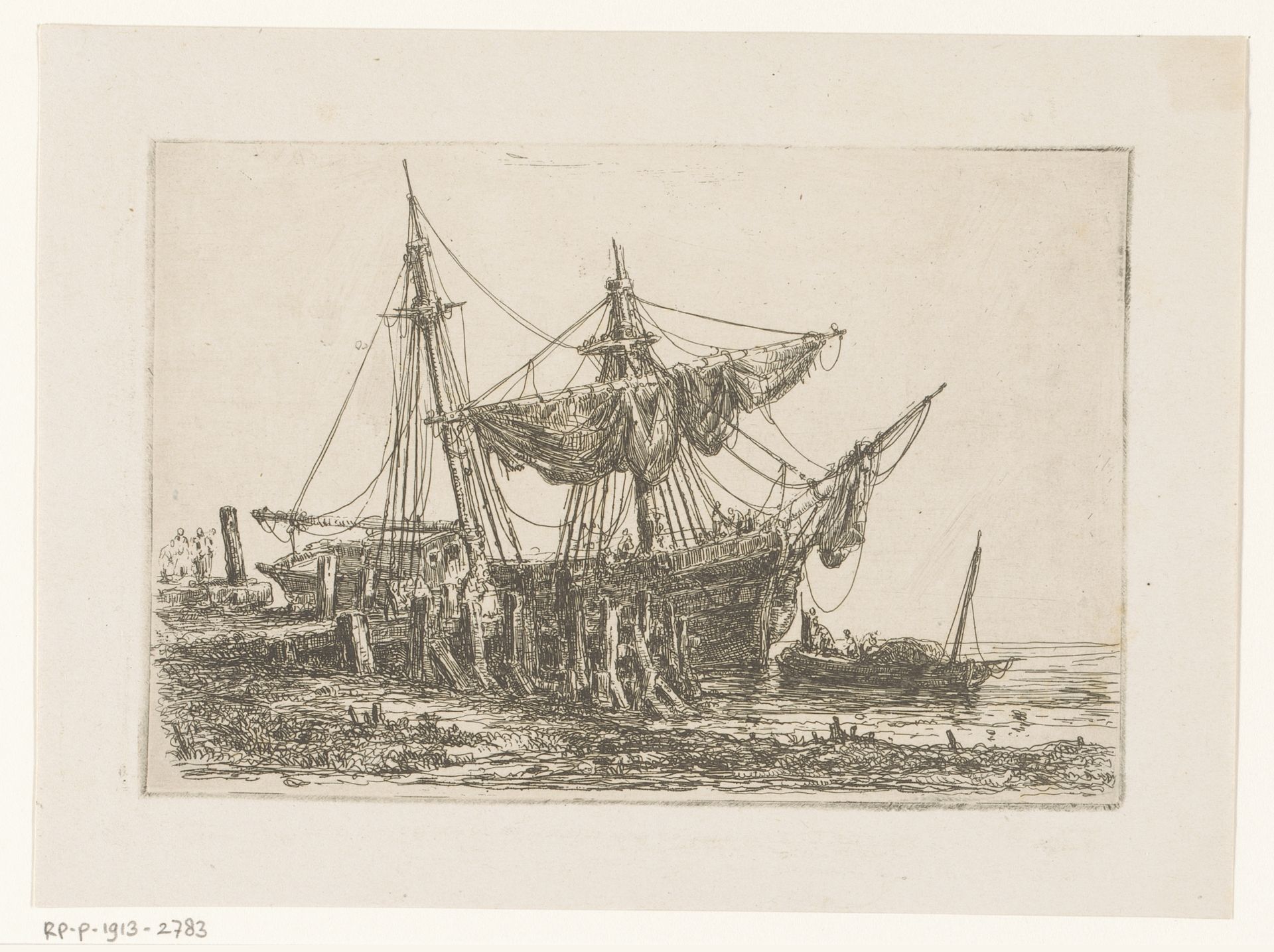
Henri François Schaefels made this etching of a pier with a ship in disrepair and a sloop. It's difficult to date this work precisely, but Schaefels was working in Belgium during a period of rapid industrialization and expansion of global trade. The image presents us with an older vessel, past its prime, run aground. This is juxtaposed with the smaller, active sloop. It invites us to consider the changing fortunes of maritime industries in the 19th century. Schaefels was known for his marine scenes and historical depictions of naval battles, suggesting an interest in the historical narratives of seafaring. This work might subtly critique the relentless march of progress, as older technologies and ways of life are superseded. An art historian can look to maritime records, economic data, and social histories of the period, to provide a richer understanding of the work. Ultimately, it's in this historical context that the image gains its fullest meaning.

Artwork details
- Medium
- print, etching
- Dimensions
- height 102 mm, width 150 mm
- Copyright
- Rijks Museum: Open Domain
Tags
Comments
Share your thoughts
About this artwork
Henri François Schaefels made this etching of a pier with a ship in disrepair and a sloop. It's difficult to date this work precisely, but Schaefels was working in Belgium during a period of rapid industrialization and expansion of global trade. The image presents us with an older vessel, past its prime, run aground. This is juxtaposed with the smaller, active sloop. It invites us to consider the changing fortunes of maritime industries in the 19th century. Schaefels was known for his marine scenes and historical depictions of naval battles, suggesting an interest in the historical narratives of seafaring. This work might subtly critique the relentless march of progress, as older technologies and ways of life are superseded. An art historian can look to maritime records, economic data, and social histories of the period, to provide a richer understanding of the work. Ultimately, it's in this historical context that the image gains its fullest meaning.
Comments
Share your thoughts