c. 1930
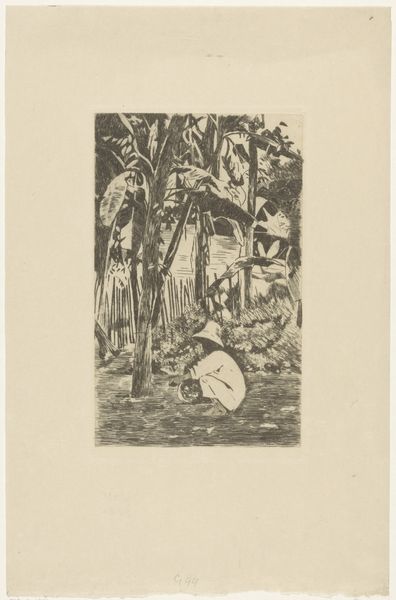
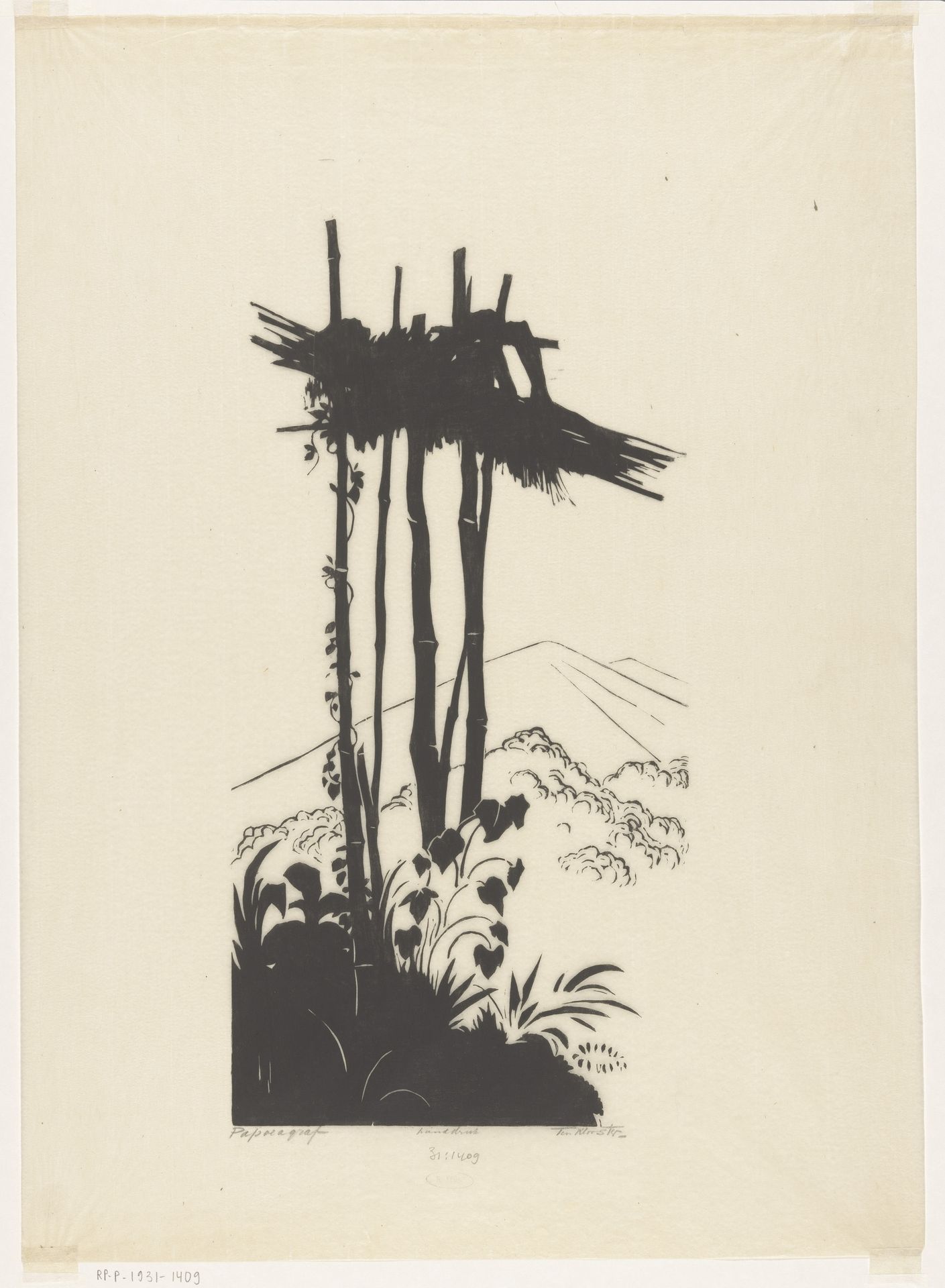
Papoeagraf

Listen to curator's interpretation
Curatorial notes
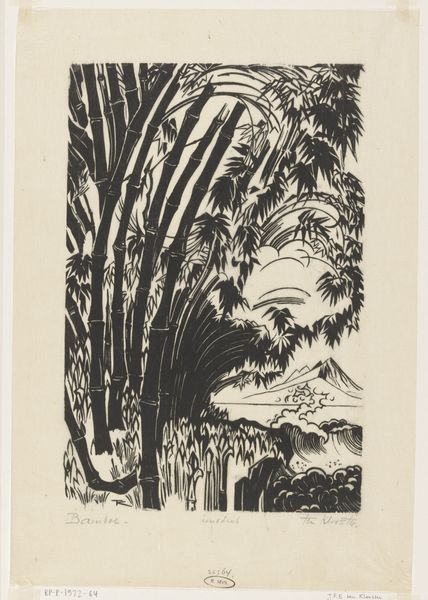
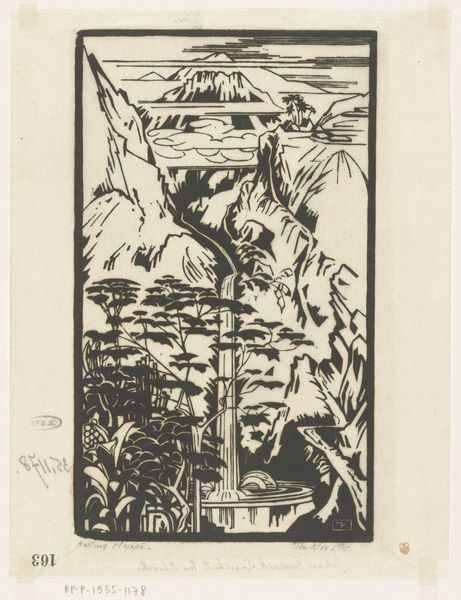
Johannes Frederik Engelbert ten Klooster made this piece, Papoeagraf, with some kind of printmaking technique that allows for rich blacks and sharp contrasts. The whole image is built up of these stark forms, a really interesting take on landscape. The dense, almost impenetrable thicket at the bottom, formed by solid shapes, gives way to the more open structures of the bamboo and the thatched roof above. It’s a real dance of light and dark, solid and void. Then you get to that mountain range in the background, drawn with just a few simple lines, which almost feels like an afterthought, but is actually essential in creating a sense of depth. Ten Klooster’s image reminds me a little of the stark, graphic quality of some of the German Expressionist woodcuts, like those of Erich Heckel, who were also grappling with how to represent nature in a modern, emotionally charged way. Art like this reminds us that seeing is never just about what's in front of us, but about how we choose to frame it.