About this artwork
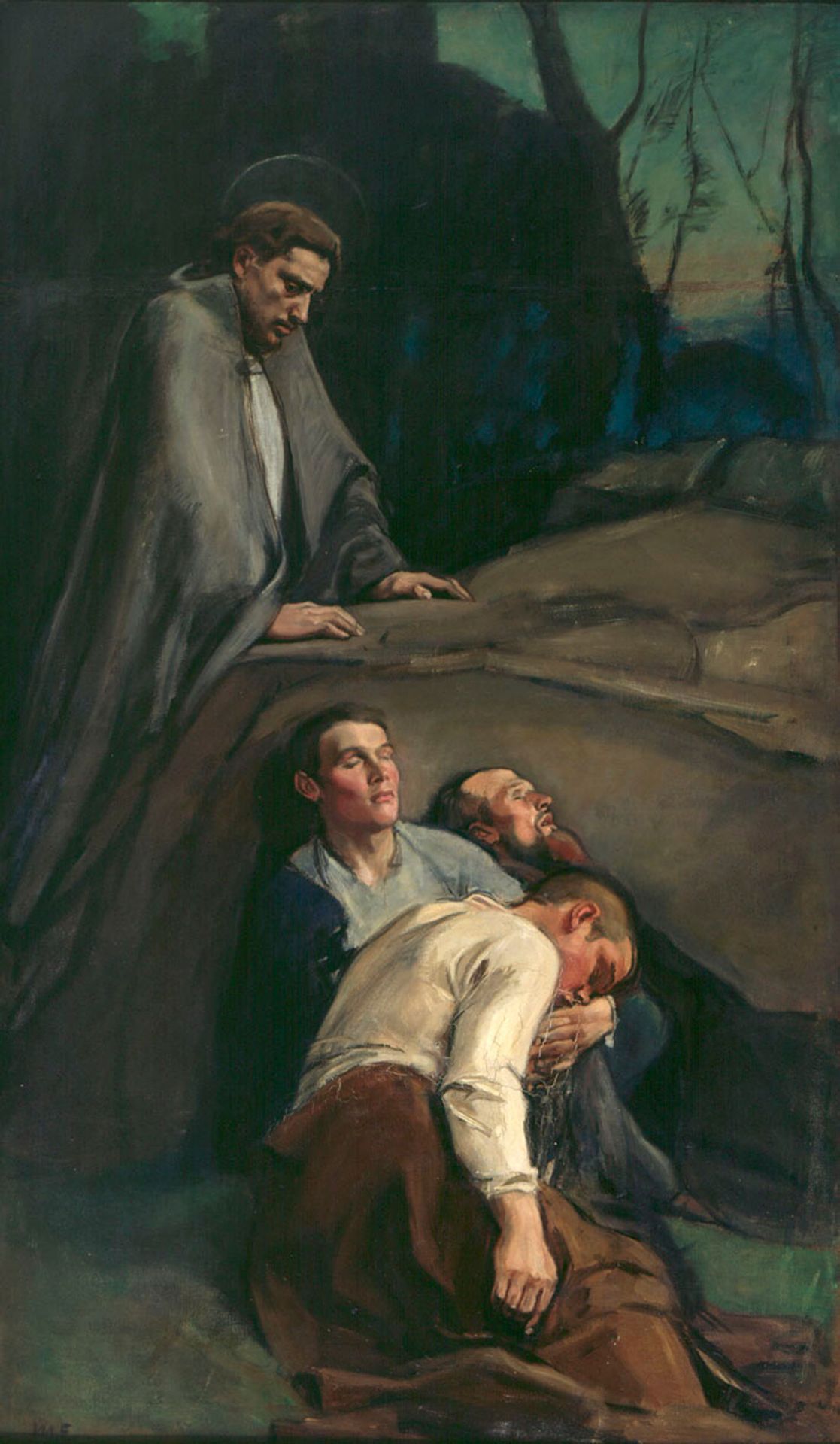
Curator: This painting, titled "Gethsemane," was completed by Magnus Enckell in 1902. You can find it at the Ateneum in Helsinki, Finland. It’s rendered in oil paint and exemplifies symbolism. Editor: Wow, that’s intense. I immediately feel this heavy atmosphere. It's all shadows and muted colors, but the figures are bathed in this odd, almost sickly, light. It feels like witnessing a very private, very painful moment. Curator: Indeed. Enckell situates the figures within a profound theological and social context, tapping into themes of isolation, faith, and humanity’s collective suffering. Note the figures—Christ and the sleeping disciples, an allegory of spiritual crisis within a landscape reflecting emotional turmoil. It invites dialogues about sacrifice, duty, and existential dread. Editor: Absolutely, that comes across strongly. And the way he depicts Christ – not in glory, but in contemplative sadness… there's almost a queer sensibility there, a gentle melancholy that resonates with the Symbolist movement's penchant for interiority. It’s brave, really. I mean, think about questioning these rigid masculine ideas in art, this pushes hard. Curator: Absolutely. And it’s important to recognize how Enckell's own identity intersects with this interpretation. A gay artist in a heteronormative society, his exploration of Christ’s vulnerability opens discussions on marginalized identities and the search for solace. The disciples, seemingly unaware, further heighten a sense of being alone in struggle, a narrative relatable beyond religious interpretations. Editor: Yes, completely. The obliviousness of those figures… it's such a gut punch. It mirrors how people turn away when the reality gets a bit too intense. But, that technique...how the oil paint seems so deliberate but soft around those shadowed faces creates an arresting view into a deep mental anguish. I'm thinking this might be one of the best pieces on this floor. Curator: Its symbolism acts as a bridge, enabling viewers across different identities to reflect on resilience and empathy, something undeniably necessary. Editor: Totally! That hits hard for me too, with all the personal mess in this family and my place in it. What an incredible exploration of isolation.


Artwork details
- Medium
- oil-paint
- Dimensions
- 225.5 x 134 cm
- Location
- Ateneum, Helsinki, Finland
- Copyright
- Public domain
Tags
Comments
Share your thoughts
About this artwork
Curator: This painting, titled "Gethsemane," was completed by Magnus Enckell in 1902. You can find it at the Ateneum in Helsinki, Finland. It’s rendered in oil paint and exemplifies symbolism. Editor: Wow, that’s intense. I immediately feel this heavy atmosphere. It's all shadows and muted colors, but the figures are bathed in this odd, almost sickly, light. It feels like witnessing a very private, very painful moment. Curator: Indeed. Enckell situates the figures within a profound theological and social context, tapping into themes of isolation, faith, and humanity’s collective suffering. Note the figures—Christ and the sleeping disciples, an allegory of spiritual crisis within a landscape reflecting emotional turmoil. It invites dialogues about sacrifice, duty, and existential dread. Editor: Absolutely, that comes across strongly. And the way he depicts Christ – not in glory, but in contemplative sadness… there's almost a queer sensibility there, a gentle melancholy that resonates with the Symbolist movement's penchant for interiority. It’s brave, really. I mean, think about questioning these rigid masculine ideas in art, this pushes hard. Curator: Absolutely. And it’s important to recognize how Enckell's own identity intersects with this interpretation. A gay artist in a heteronormative society, his exploration of Christ’s vulnerability opens discussions on marginalized identities and the search for solace. The disciples, seemingly unaware, further heighten a sense of being alone in struggle, a narrative relatable beyond religious interpretations. Editor: Yes, completely. The obliviousness of those figures… it's such a gut punch. It mirrors how people turn away when the reality gets a bit too intense. But, that technique...how the oil paint seems so deliberate but soft around those shadowed faces creates an arresting view into a deep mental anguish. I'm thinking this might be one of the best pieces on this floor. Curator: Its symbolism acts as a bridge, enabling viewers across different identities to reflect on resilience and empathy, something undeniably necessary. Editor: Totally! That hits hard for me too, with all the personal mess in this family and my place in it. What an incredible exploration of isolation.
Comments
Share your thoughts