About this artwork
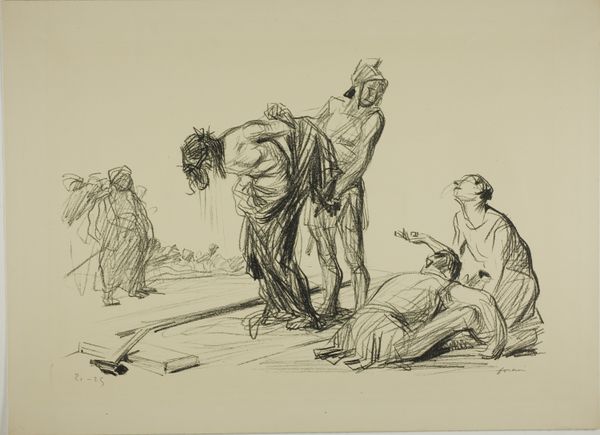
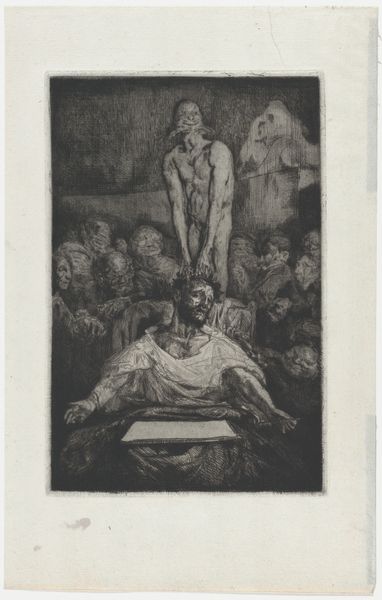
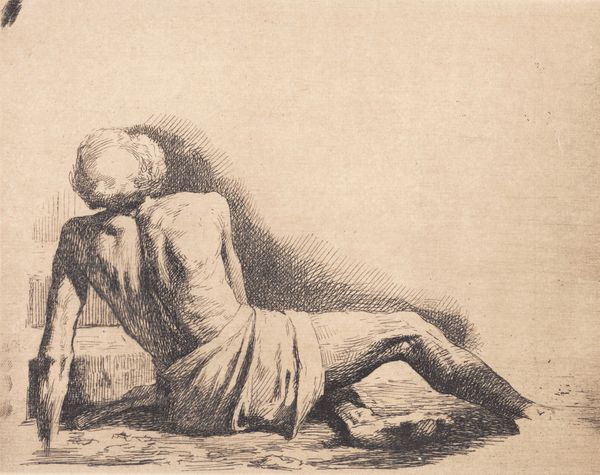
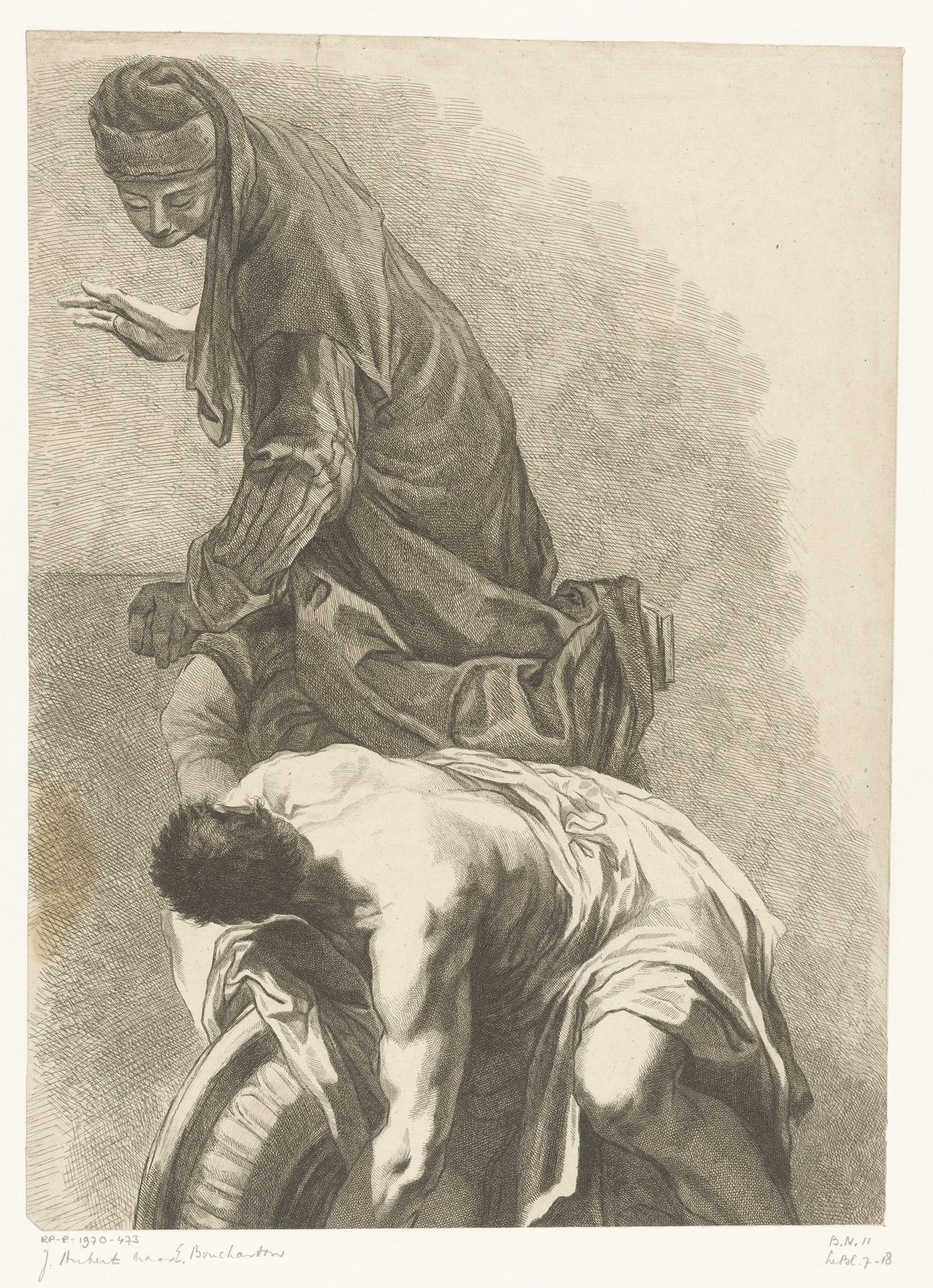
This artwork was made by Jean Aubert, depicting a standing figure next to a hunched-over, bare-chested man. The primary motif is the juxtaposition of the standing figure, draped in fabric, and the slumped, vulnerable man. This iconography has deep roots, echoing themes of protection, mourning, and human frailty. The act of covering or shielding the body is found across cultures, from ancient Greek depictions of lamenting figures to Renaissance interpretations of the Pietà. Consider, for example, how the gesture of covering or shielding the body has evolved. In medieval art, it often symbolized divine protection or mourning, while in later periods, it could represent empathy, grief, or even a more complex interplay of power dynamics. The emotional power of this image lies in its ability to tap into our collective memory of such moments. The slumped posture evokes feelings of pity and compassion. This cycle of vulnerability and protection continues, demonstrating the human condition.
Staande figuur naast een voorovergebogen man met ontbloot bovenlijf
1705 - 1741

Artwork details
- Medium
- drawing, ink, pen
- Dimensions
- height 365 mm, width 270 mm
- Copyright
- Rijks Museum: Open Domain
Tags
Comments
Share your thoughts
About this artwork
This artwork was made by Jean Aubert, depicting a standing figure next to a hunched-over, bare-chested man. The primary motif is the juxtaposition of the standing figure, draped in fabric, and the slumped, vulnerable man. This iconography has deep roots, echoing themes of protection, mourning, and human frailty. The act of covering or shielding the body is found across cultures, from ancient Greek depictions of lamenting figures to Renaissance interpretations of the Pietà. Consider, for example, how the gesture of covering or shielding the body has evolved. In medieval art, it often symbolized divine protection or mourning, while in later periods, it could represent empathy, grief, or even a more complex interplay of power dynamics. The emotional power of this image lies in its ability to tap into our collective memory of such moments. The slumped posture evokes feelings of pity and compassion. This cycle of vulnerability and protection continues, demonstrating the human condition.
Comments
Share your thoughts