About this artwork
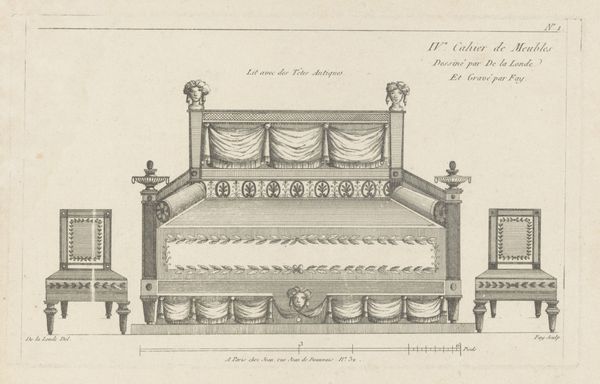
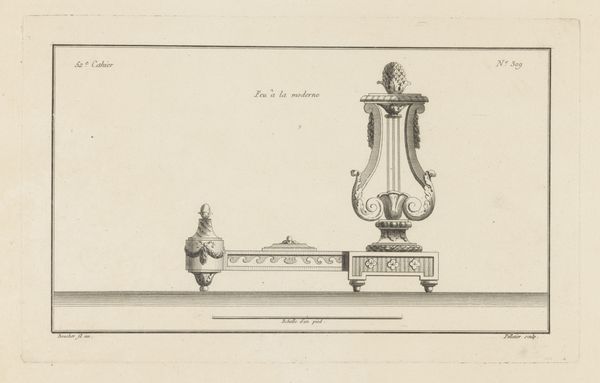
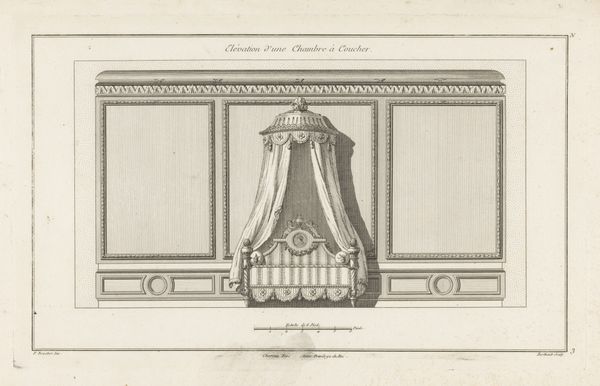
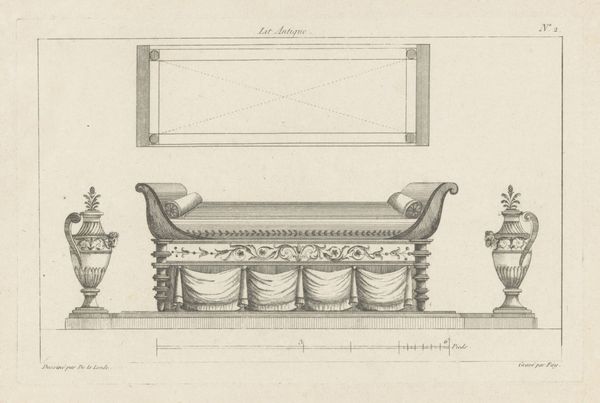
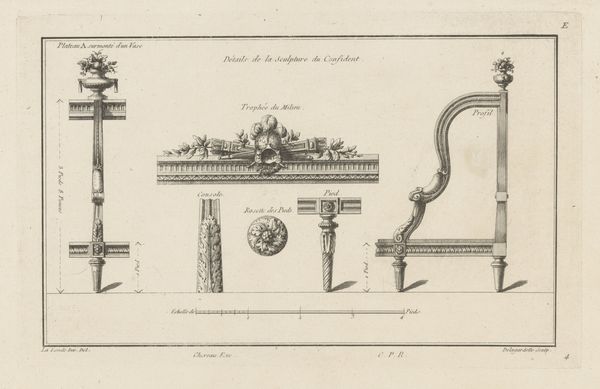
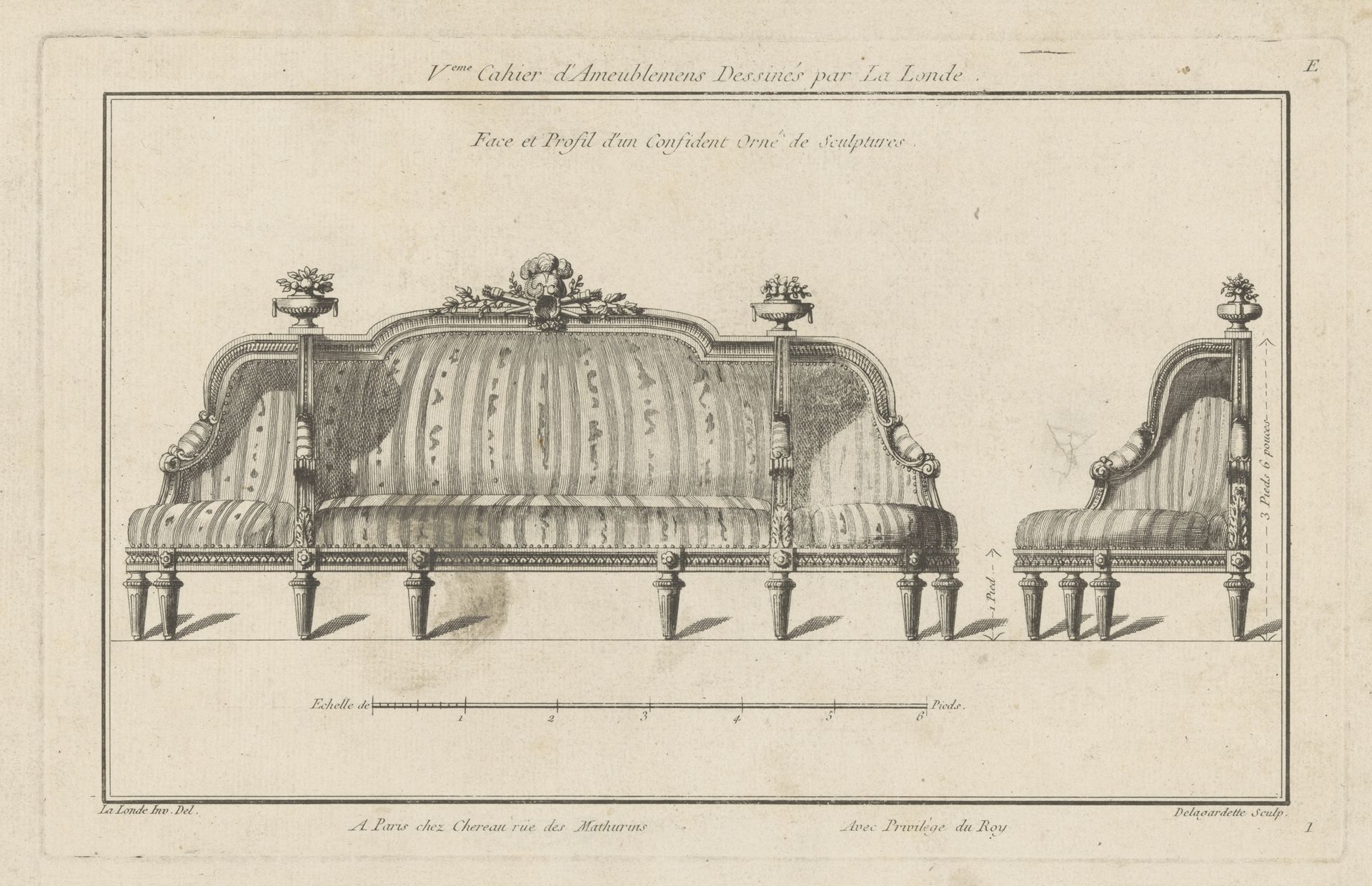
Pierre Claude Delagardette created this print of a three-part sofa, or confessional, sometime before his death in 1782. It offers us a glimpse into the world of 18th-century French furniture design. The print, likely intended for cabinet makers, reflects a culture obsessed with luxury and social etiquette. During this time, furniture became increasingly elaborate, reflecting the opulence of the aristocracy. Ornamentation and the use of costly materials were not merely aesthetic choices but statements of social standing. The print’s precise lines and measured scale also speak to the growing professionalization of design. Institutions such as the Académie Royale d'Architecture shaped artistic production, standardizing taste and dictating what was considered fashionable. Historians use a range of resources, including trade catalogs, inventories, and architectural treatises, to understand the social and institutional context of works like this. By studying these sources, we can better understand the values and aspirations of the society that produced them.
Bank met drie compartimenten 1784 - 1785

Pierre Claude Delagardette
1743 - 1782Location
RijksmuseumArtwork details
- Medium
- drawing, paper, engraving
- Dimensions
- height 188 mm, width 299 mm
- Location
- Rijksmuseum
- Copyright
- Rijks Museum: Open Domain
Tags
drawing
neoclacissism
old engraving style
paper
form
line
decorative-art
engraving
Comments
No comments
About this artwork
Pierre Claude Delagardette created this print of a three-part sofa, or confessional, sometime before his death in 1782. It offers us a glimpse into the world of 18th-century French furniture design. The print, likely intended for cabinet makers, reflects a culture obsessed with luxury and social etiquette. During this time, furniture became increasingly elaborate, reflecting the opulence of the aristocracy. Ornamentation and the use of costly materials were not merely aesthetic choices but statements of social standing. The print’s precise lines and measured scale also speak to the growing professionalization of design. Institutions such as the Académie Royale d'Architecture shaped artistic production, standardizing taste and dictating what was considered fashionable. Historians use a range of resources, including trade catalogs, inventories, and architectural treatises, to understand the social and institutional context of works like this. By studying these sources, we can better understand the values and aspirations of the society that produced them.
Comments
No comments