About this artwork
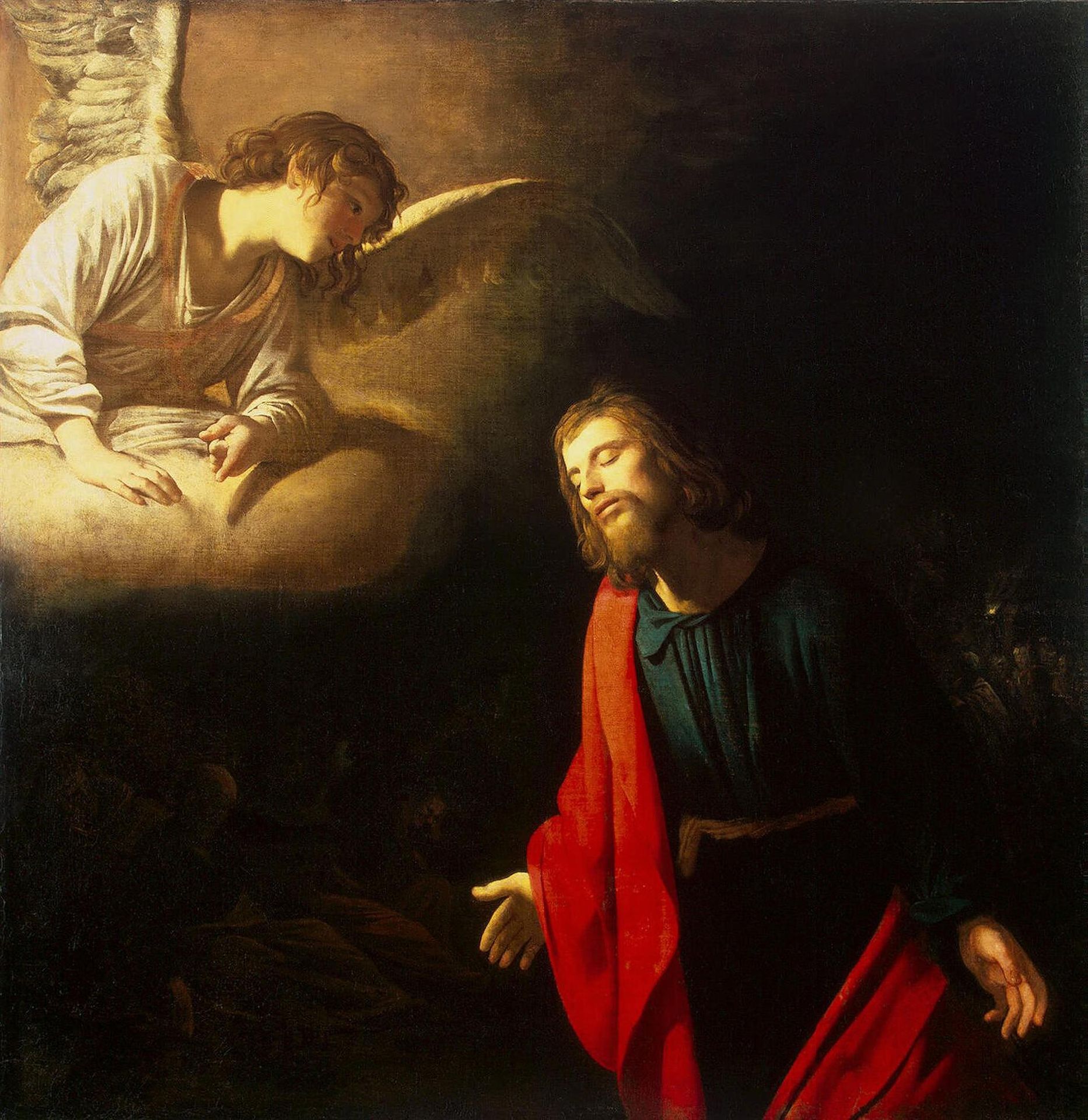
Editor: This is Gerard van Honthorst’s *Christ in the Garden of Gethsemane,* painted in 1617 using oil paint. There's such a strong sense of drama in this piece. The figures are so dramatically lit against the dark background. How do you interpret this work, focusing on its visual language? Curator: This particular scene, often rendered, offers rich symbolic weight. Notice the angel and Christ—their illumination isn’t just dramatic, it guides our understanding. Consider the cloud the angel rests upon: a common visual device signifying divine presence, but also a place of mediation between the divine and earthly realms. How does it make you feel? Editor: Peaceful, almost… otherworldly. Like they exist in a separate space, defined by light, from the rest of the dark, undefined area behind them. Curator: Exactly. The sharp contrast isn't only visual; it is designed to provoke deep introspection. Light and shadow become visual metaphors. What about the color? The use of red draws my eye. What do you see? Editor: It stands out so much against the darkness. It almost feels like a warning sign... given the context of the scene, maybe it refers to sacrifice or maybe blood? Curator: Precisely! This symbolic connection persists over time. Consider how in various cultures, red represents vital life force. Honthorst utilizes color here to cue into layers of pre-existing, widely recognized imagery and cultural meaning. It certainly made its mark on me. Editor: This has helped me to see beyond the initial drama and start thinking about these enduring symbols, and it makes the work resonate differently. Curator: Me too! It's exciting to see old artworks in new light. I had fun seeing these artworks through the fresh perspectives of art students, as they encourage new reflections and perspectives.
Christ in the Garden of Gethsemane (The Agony in the Garden) 1617

Artwork details
- Medium
- oil-paint
- Copyright
- Public domain
Tags
baroque
oil-paint
figuration
history-painting
Comments
No comments
About this artwork
Editor: This is Gerard van Honthorst’s *Christ in the Garden of Gethsemane,* painted in 1617 using oil paint. There's such a strong sense of drama in this piece. The figures are so dramatically lit against the dark background. How do you interpret this work, focusing on its visual language? Curator: This particular scene, often rendered, offers rich symbolic weight. Notice the angel and Christ—their illumination isn’t just dramatic, it guides our understanding. Consider the cloud the angel rests upon: a common visual device signifying divine presence, but also a place of mediation between the divine and earthly realms. How does it make you feel? Editor: Peaceful, almost… otherworldly. Like they exist in a separate space, defined by light, from the rest of the dark, undefined area behind them. Curator: Exactly. The sharp contrast isn't only visual; it is designed to provoke deep introspection. Light and shadow become visual metaphors. What about the color? The use of red draws my eye. What do you see? Editor: It stands out so much against the darkness. It almost feels like a warning sign... given the context of the scene, maybe it refers to sacrifice or maybe blood? Curator: Precisely! This symbolic connection persists over time. Consider how in various cultures, red represents vital life force. Honthorst utilizes color here to cue into layers of pre-existing, widely recognized imagery and cultural meaning. It certainly made its mark on me. Editor: This has helped me to see beyond the initial drama and start thinking about these enduring symbols, and it makes the work resonate differently. Curator: Me too! It's exciting to see old artworks in new light. I had fun seeing these artworks through the fresh perspectives of art students, as they encourage new reflections and perspectives.
Comments
No comments