About this artwork
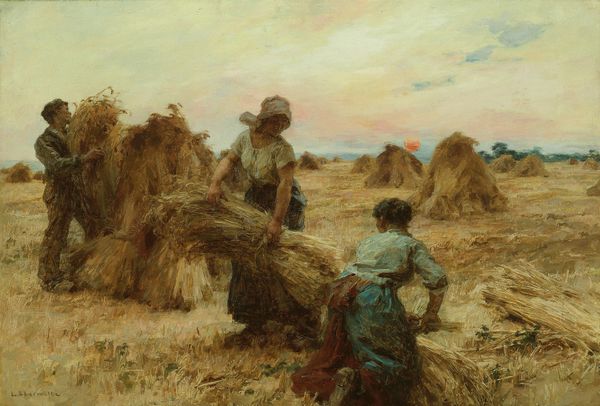
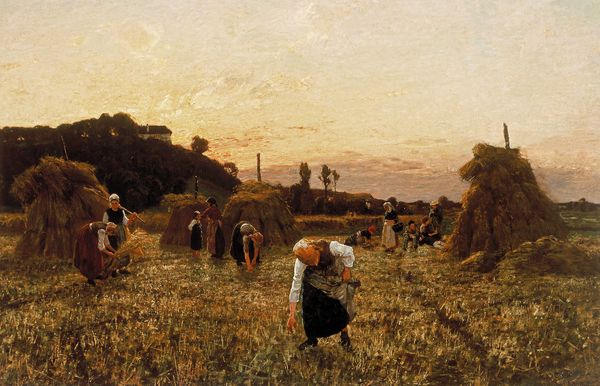
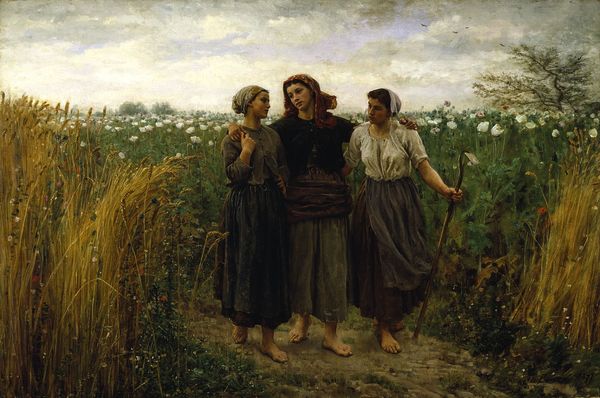
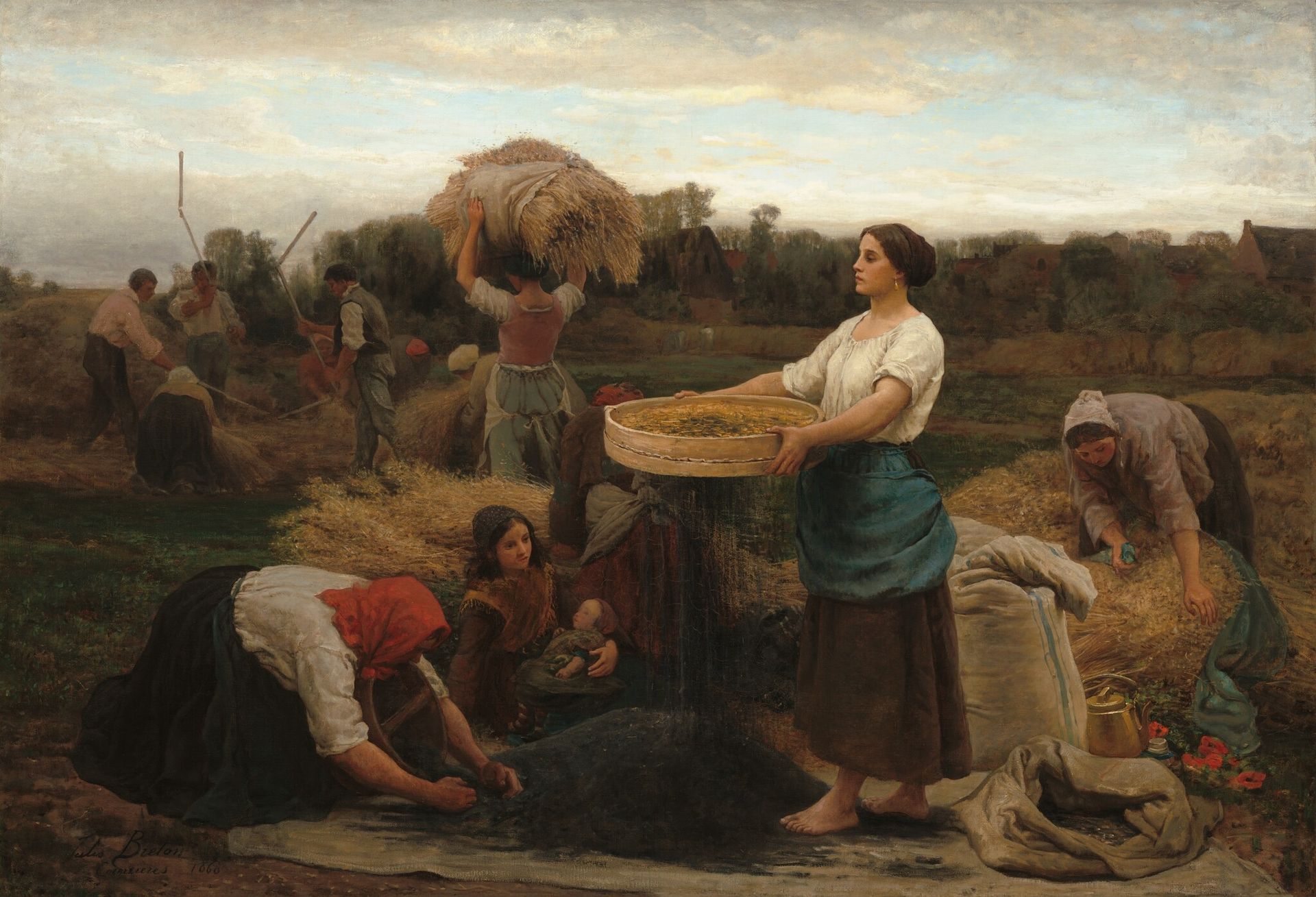
Jules Breton's oil on canvas, "Harvesting Rapeseed" invites us into the world of 19th-century French rural life, a world increasingly idealized amidst rapid industrialization. Breton, painting during the Second Empire and Third Republic, presents a scene of collective labor. It's a snapshot of agricultural work, but it also reflects the social and economic structures of the time. The figures, rendered with a certain dignity, embody the romanticized view of peasant life prevalent in French art. Rapeseed was used in many common products at the time, for example, as a lubricant in machinery. This image speaks to the role of art in shaping perceptions of labor and class. Was Breton aiming to critique the societal structures of his time, or to reinforce a conservative nostalgia for a vanishing way of life? To truly understand this work, we need to look at the art market, Salon culture, and the broader social discourses of 19th-century France. Only then can we grasp the complex interplay of art, labor, and social identity embedded in this seemingly simple scene.
Harvesting Rapeseed
1860

Jules Breton
1827 - 1906
National Gallery of Art, Washington DC
National Gallery of Art, Washington, DC, USArtwork details
- Medium
- painting, oil-paint
- Dimensions
- 93.9 x 137.1 cm
- Location
- National Gallery of Art, Washington, DC, US
- Copyright
- Public domain
Tags
Comments
Share your thoughts
About this artwork
Jules Breton's oil on canvas, "Harvesting Rapeseed" invites us into the world of 19th-century French rural life, a world increasingly idealized amidst rapid industrialization. Breton, painting during the Second Empire and Third Republic, presents a scene of collective labor. It's a snapshot of agricultural work, but it also reflects the social and economic structures of the time. The figures, rendered with a certain dignity, embody the romanticized view of peasant life prevalent in French art. Rapeseed was used in many common products at the time, for example, as a lubricant in machinery. This image speaks to the role of art in shaping perceptions of labor and class. Was Breton aiming to critique the societal structures of his time, or to reinforce a conservative nostalgia for a vanishing way of life? To truly understand this work, we need to look at the art market, Salon culture, and the broader social discourses of 19th-century France. Only then can we grasp the complex interplay of art, labor, and social identity embedded in this seemingly simple scene.
Comments
Share your thoughts