About this artwork
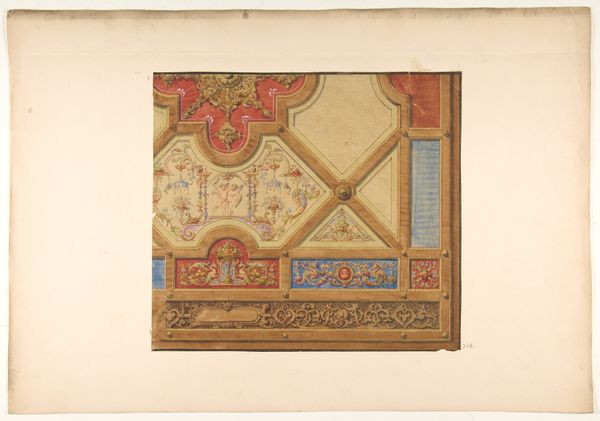
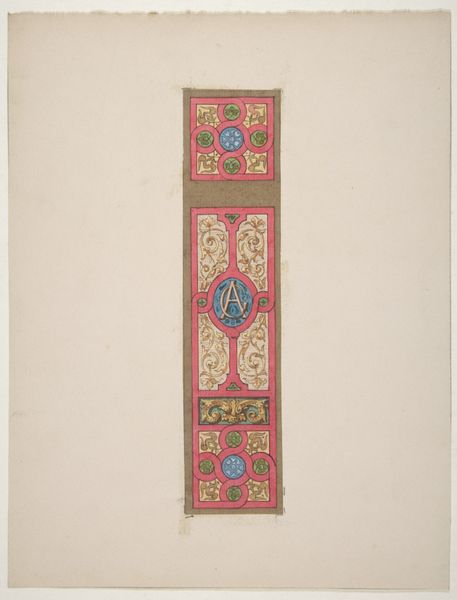
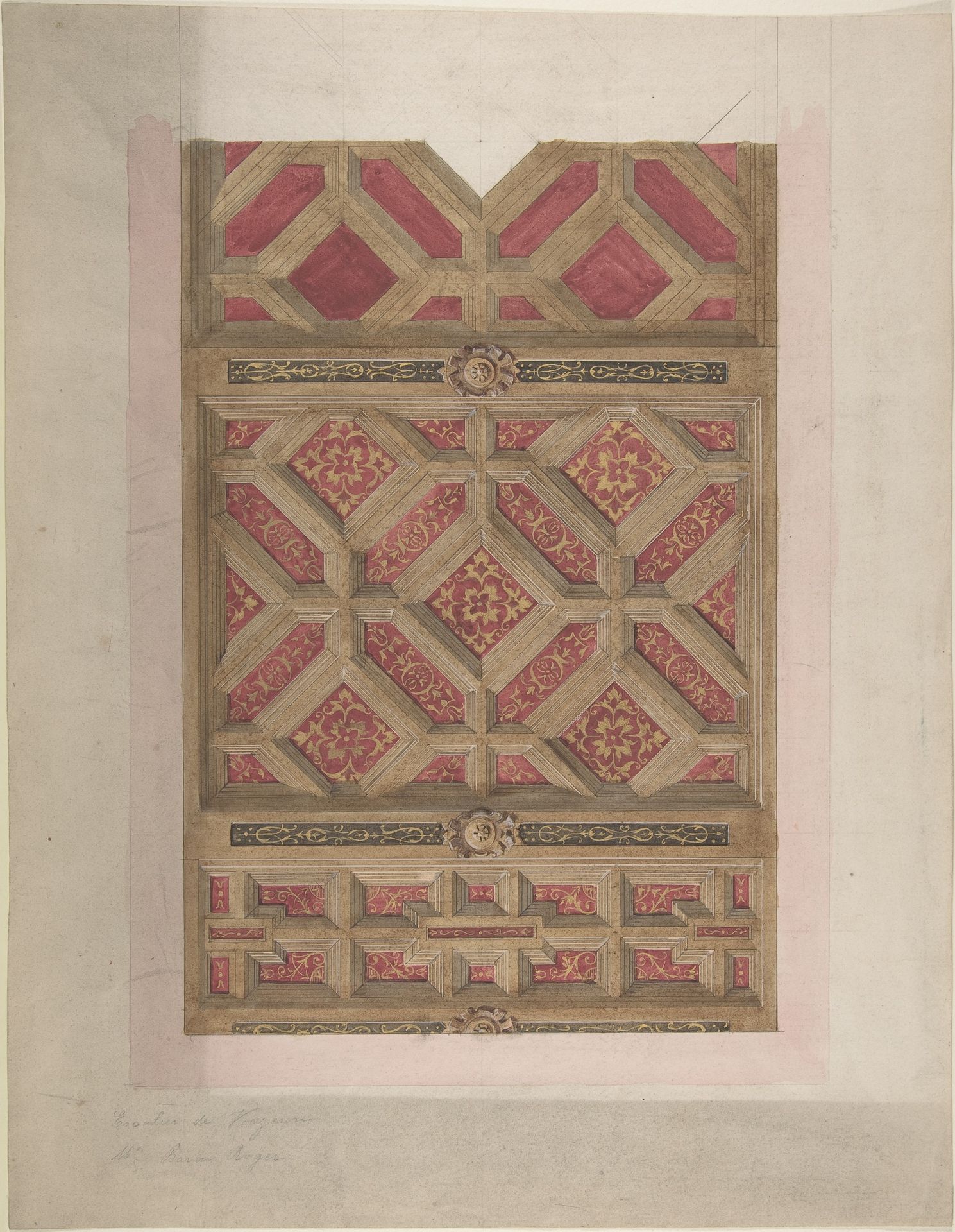
Jules-Edmond-Charles Lachaise designed this coffered ceiling in red and gold, though the exact date is unknown. The design is rendered in pencil, watercolor, and gouache on paper. A coffered ceiling is essentially a grid of recessed panels, often highly ornamented, with its origins in ancient architecture. The design here suggests a richly decorated surface, evoking luxury through its intricate geometric forms. The contrast between the wooden beams and the red and gold infill creates visual interest, drawing the eye upward, toward the ornate plasterwork rosettes and guilloche frieze. What’s interesting about this drawing is the way that it reduces the immense labor required to produce a coffered ceiling to a delicate design. The skilled woodworkers, plasterers, and painters, essential to bringing this kind of architectural feature to life, are rendered invisible. This design captures a moment in time, between the original architectural concept and its realization through collective labor. It reminds us to consider the material, the making, and the social context in which it was produced.
Design for Coffered Ceiling in Red and Gold
1850 - 1900

Jules-Edmond-Charles Lachaise
1897
The Metropolitan Museum of Art
Metropolitan Museum of Art, New York, NYArtwork details
- Dimensions
- 17 1/8 x 13 1/4 in. (43.5 x 33.7 cm)
- Location
- Metropolitan Museum of Art, New York, NY
- Copyright
- Public Domain
Comments
Share your thoughts
About this artwork
Jules-Edmond-Charles Lachaise designed this coffered ceiling in red and gold, though the exact date is unknown. The design is rendered in pencil, watercolor, and gouache on paper. A coffered ceiling is essentially a grid of recessed panels, often highly ornamented, with its origins in ancient architecture. The design here suggests a richly decorated surface, evoking luxury through its intricate geometric forms. The contrast between the wooden beams and the red and gold infill creates visual interest, drawing the eye upward, toward the ornate plasterwork rosettes and guilloche frieze. What’s interesting about this drawing is the way that it reduces the immense labor required to produce a coffered ceiling to a delicate design. The skilled woodworkers, plasterers, and painters, essential to bringing this kind of architectural feature to life, are rendered invisible. This design captures a moment in time, between the original architectural concept and its realization through collective labor. It reminds us to consider the material, the making, and the social context in which it was produced.
Comments
Share your thoughts