About this artwork
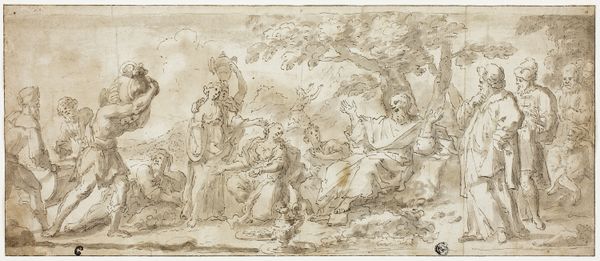
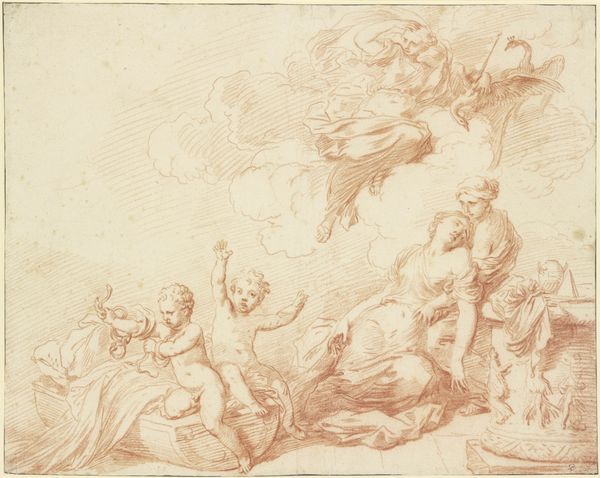
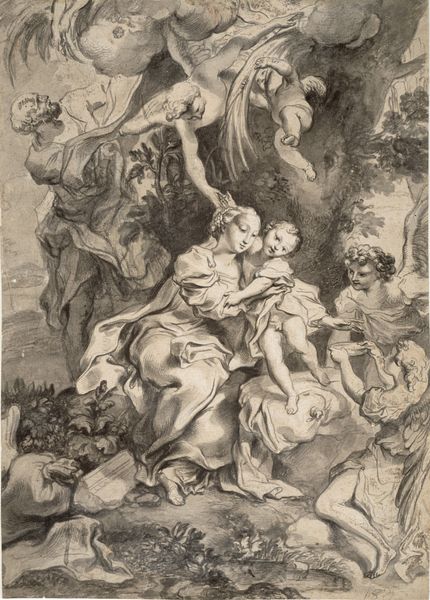
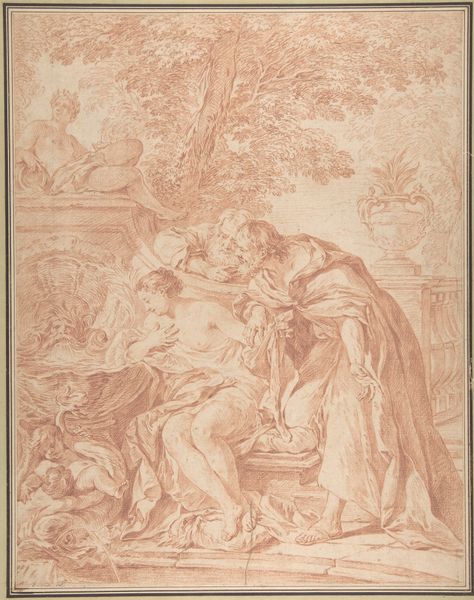
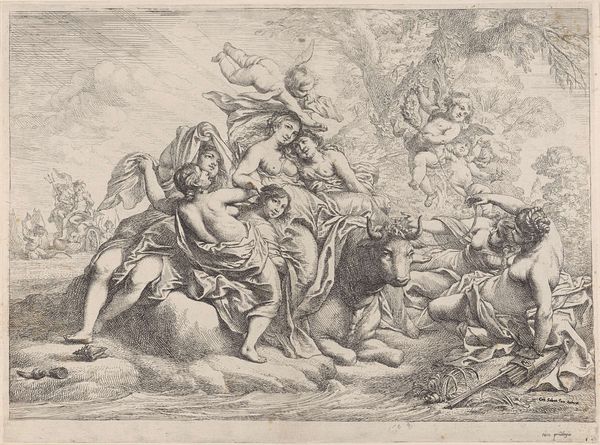
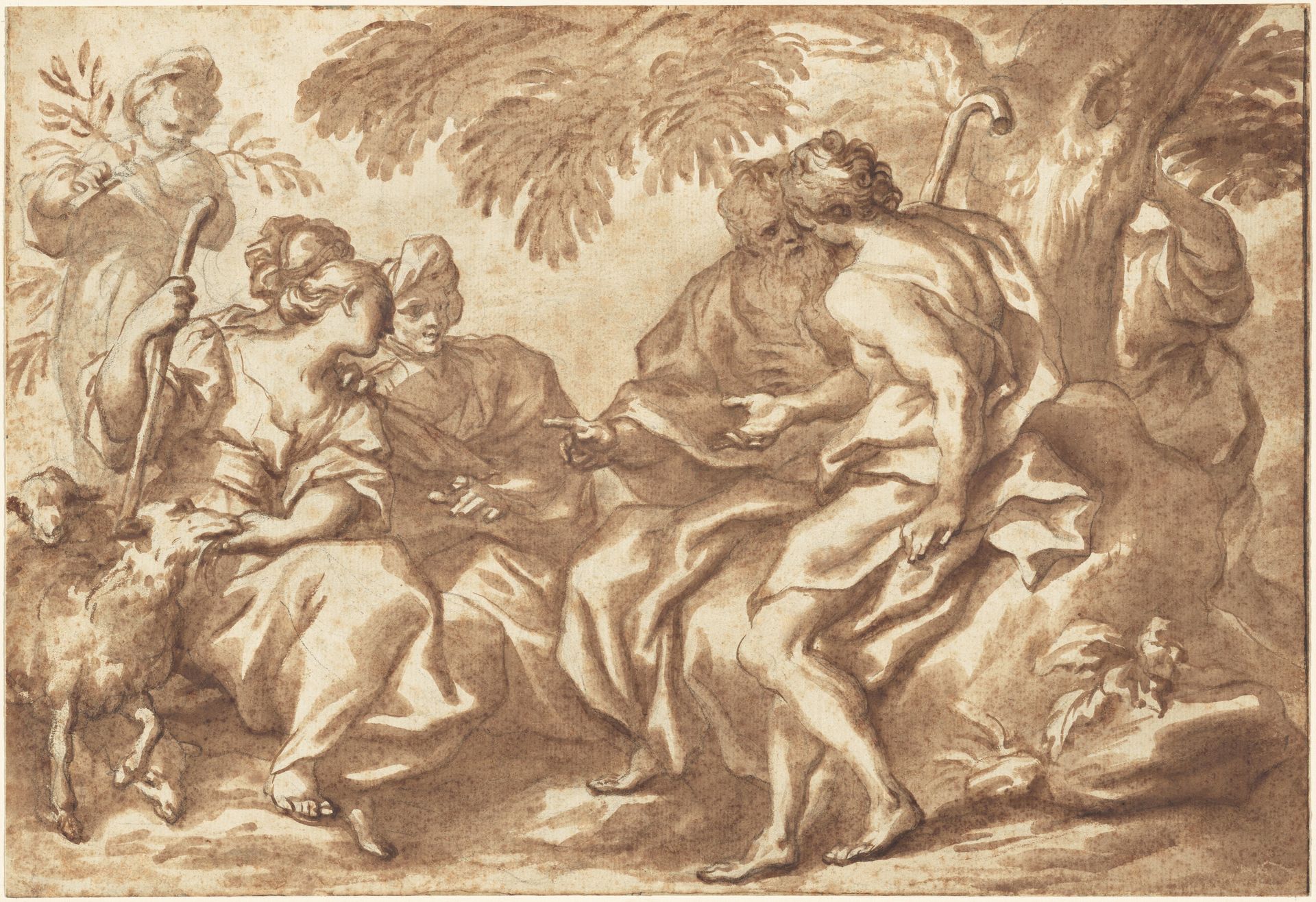
Domenico Piola rendered "The Meeting of Jacob and Rachel" with pen and brown wash on paper, capturing a pivotal biblical encounter. Here, the shepherd's crook, carried by Rachel, transcends its pastoral utility. It symbolizes guidance, authority, and divine providence, echoing the scepter of ancient rulers and the staff of Moses. Consider how this motif reappears throughout art history, from classical depictions of Hermes with his caduceus to Christian imagery of bishops with their crosiers. The crook, or staff, becomes a visual shorthand for leadership and spiritual power. Yet, in Piola’s rendering, its placement in Rachel’s hand adds a layer of complexity, suggesting feminine strength and a subtle inversion of patriarchal norms. The subconscious pull of such symbols is undeniable. We respond to them instinctively, drawing upon a collective memory of archetypal figures and their attributes. This emotive recognition engages us on a profound level, reminding us of the cyclical nature of symbols, constantly evolving and re-emerging across time and cultures.
The Meeting of Jacob and Rachel
c. 1670s


Artwork details
- Medium
- drawing, ink, charcoal
- Dimensions
- sheet: 29.5 × 43.1 cm (11 5/8 × 16 15/16 in.) mount: 35.5 × 59.2 cm (14 × 23 5/16 in.)
- Copyright
- National Gallery of Art: CC0 1.0
Tags
drawing
narrative-art
baroque
charcoal drawing
figuration
charcoal art
ink
genre-painting
charcoal
history-painting
Comments
Be the first to share your thoughts about this work.
About this artwork
Domenico Piola rendered "The Meeting of Jacob and Rachel" with pen and brown wash on paper, capturing a pivotal biblical encounter. Here, the shepherd's crook, carried by Rachel, transcends its pastoral utility. It symbolizes guidance, authority, and divine providence, echoing the scepter of ancient rulers and the staff of Moses. Consider how this motif reappears throughout art history, from classical depictions of Hermes with his caduceus to Christian imagery of bishops with their crosiers. The crook, or staff, becomes a visual shorthand for leadership and spiritual power. Yet, in Piola’s rendering, its placement in Rachel’s hand adds a layer of complexity, suggesting feminine strength and a subtle inversion of patriarchal norms. The subconscious pull of such symbols is undeniable. We respond to them instinctively, drawing upon a collective memory of archetypal figures and their attributes. This emotive recognition engages us on a profound level, reminding us of the cyclical nature of symbols, constantly evolving and re-emerging across time and cultures.
Comments
Be the first to share your thoughts about this work.