About this artwork
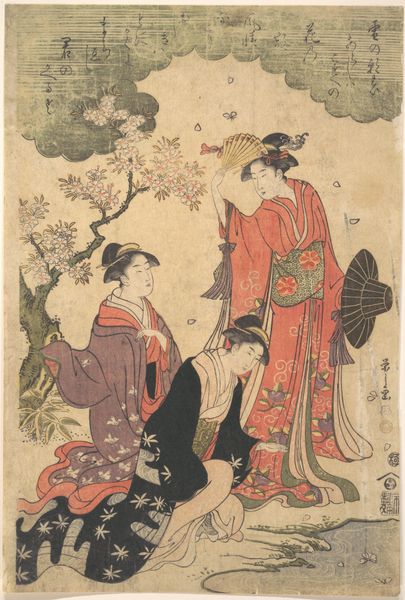
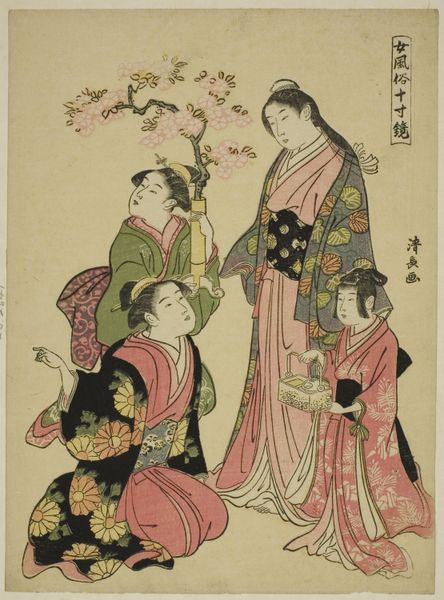
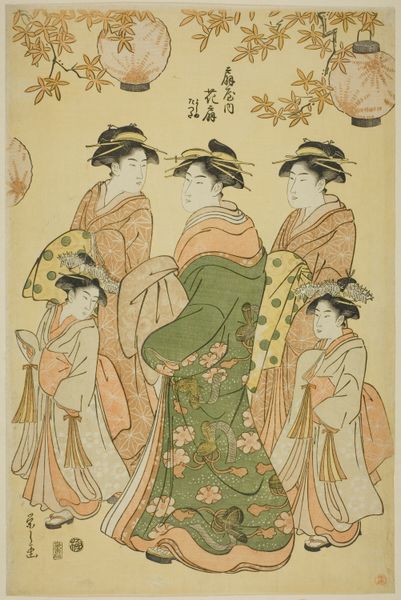
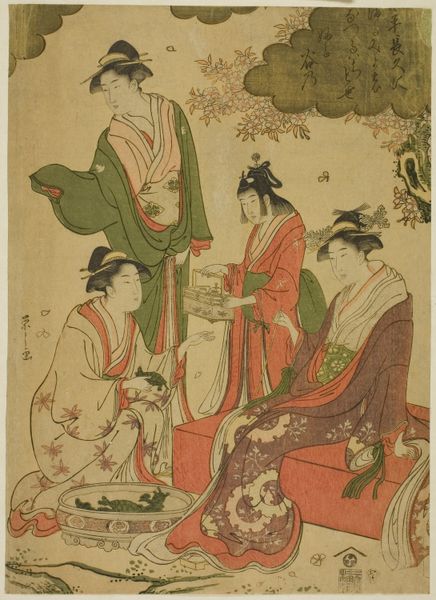
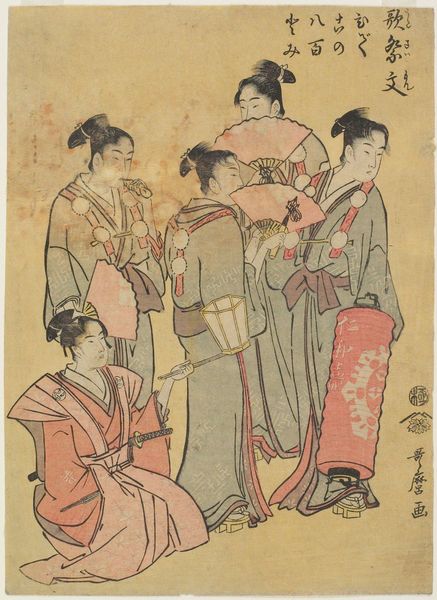
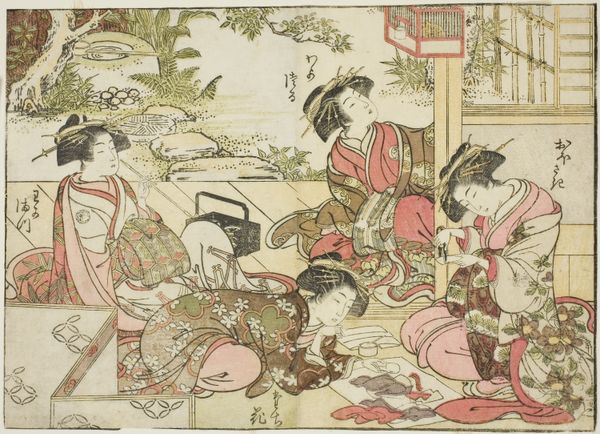
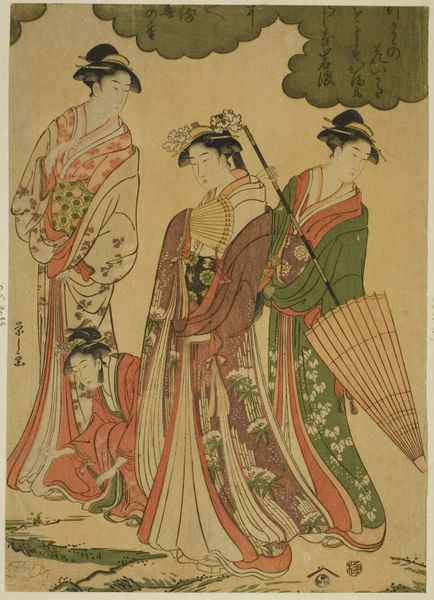
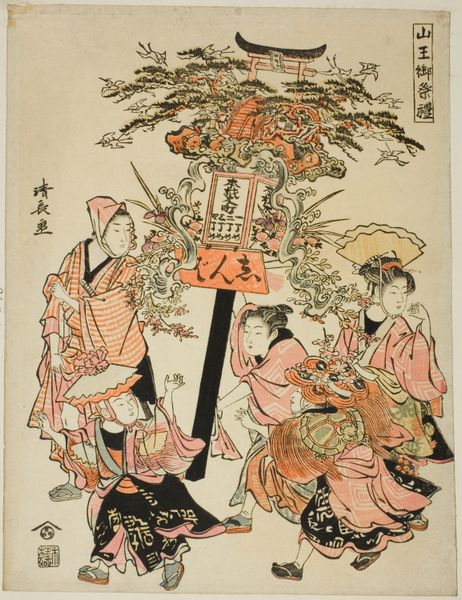
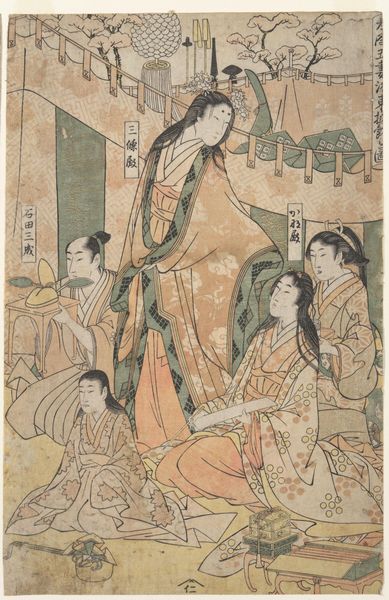
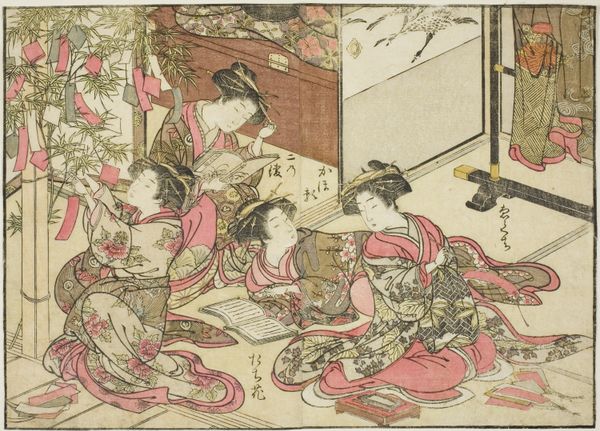
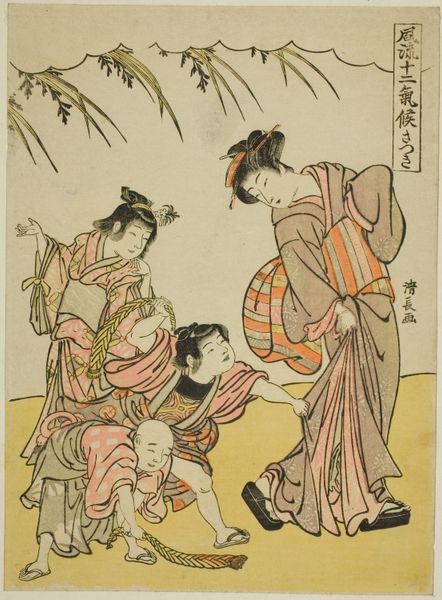
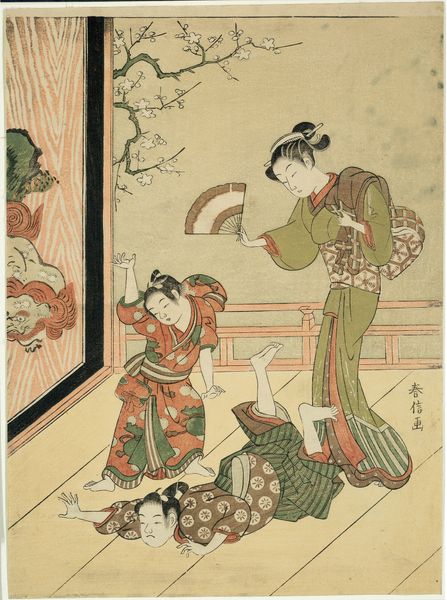
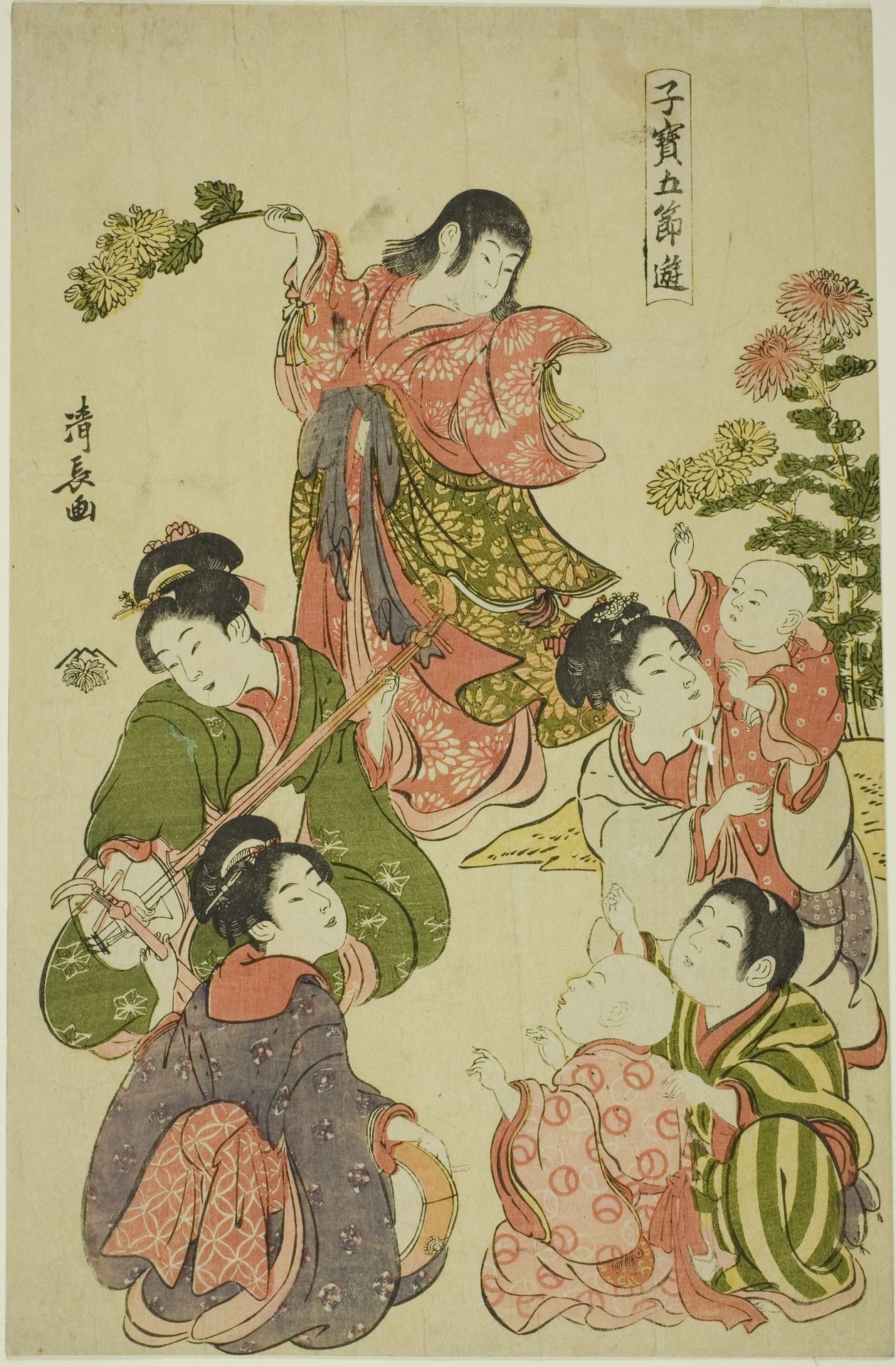
Torii Kiyonaga created this print, "Chrysanthemum Festival," as part of the "Precious Children's Games of the Five Festivals" series. Here, the artist's emphasis on line, color, and composition constructs a serene yet playful environment, inviting us to consider the deeper cultural meanings embedded within. The composition arranges figures in a gently curved formation, creating a sense of harmony and balance. Notice how the flowing lines of the women's robes contrast with the circular patterns and shapes of the chrysanthemums, which are important symbols of longevity and rejuvenation. The women, placed in a variety of poses around children playing, are rendered in soft, muted colors, enhancing the dreamlike quality of the scene. The figures are not merely decorative; their arrangement and interactions convey a complex interplay between social rituals, aesthetics, and the symbolic importance of children. The act of playing, so central to this image, disrupts traditional notions of decorum, challenging fixed meanings. These images are more than a celebration of children; they symbolize cultural renewal and the negotiation of societal values.
Chrysanthemum festival, from the series "Precious Children's Games of the Five Festivals (Kodakara gosetsu asobi)" c. 1801


Artwork details
- Medium
- print, woodblock-print
- Dimensions
- 36.8 × 24.1 cm
- Location
- The Art Institute of Chicago
- Copyright
- Public Domain
Tags
asian-art
ukiyo-e
figuration
woodblock-print
genre-painting
erotic-art
Comments
No comments
About this artwork
Torii Kiyonaga created this print, "Chrysanthemum Festival," as part of the "Precious Children's Games of the Five Festivals" series. Here, the artist's emphasis on line, color, and composition constructs a serene yet playful environment, inviting us to consider the deeper cultural meanings embedded within. The composition arranges figures in a gently curved formation, creating a sense of harmony and balance. Notice how the flowing lines of the women's robes contrast with the circular patterns and shapes of the chrysanthemums, which are important symbols of longevity and rejuvenation. The women, placed in a variety of poses around children playing, are rendered in soft, muted colors, enhancing the dreamlike quality of the scene. The figures are not merely decorative; their arrangement and interactions convey a complex interplay between social rituals, aesthetics, and the symbolic importance of children. The act of playing, so central to this image, disrupts traditional notions of decorum, challenging fixed meanings. These images are more than a celebration of children; they symbolize cultural renewal and the negotiation of societal values.
Comments
No comments