c. 1937
Wooden Indian


Listen to curator's interpretation
Curatorial notes
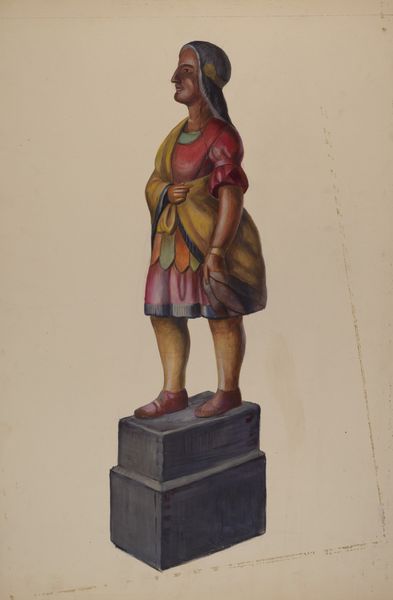
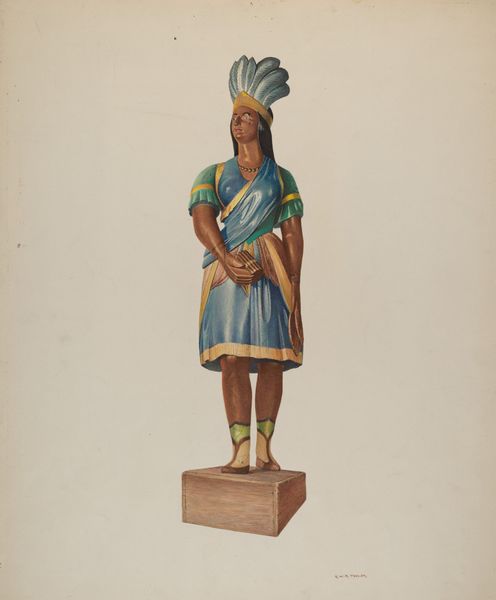
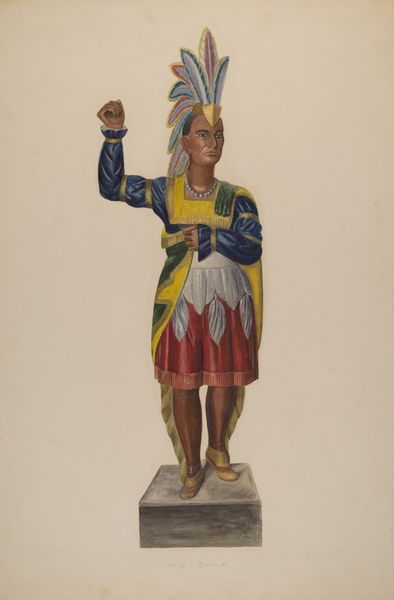
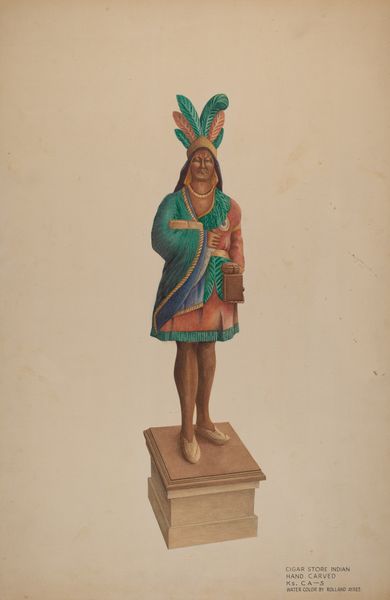
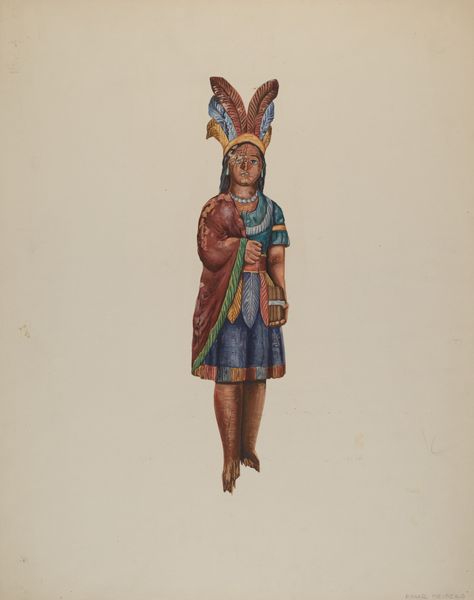
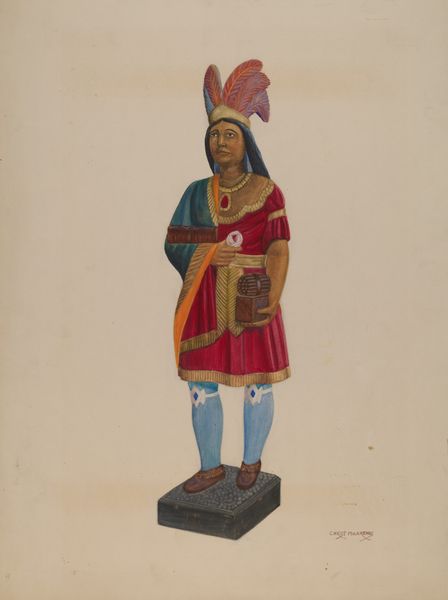
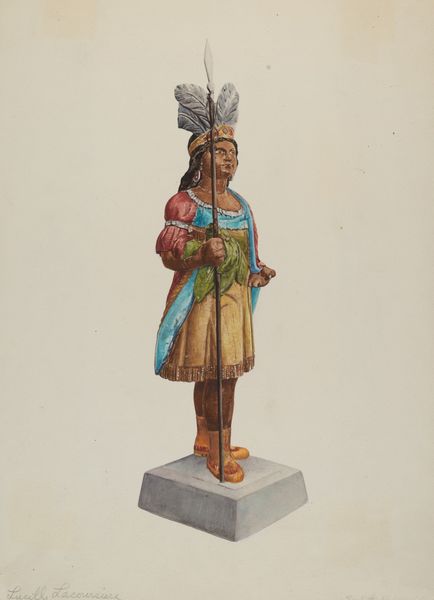
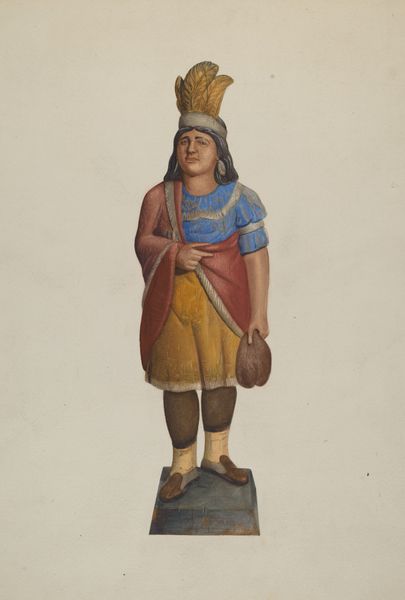
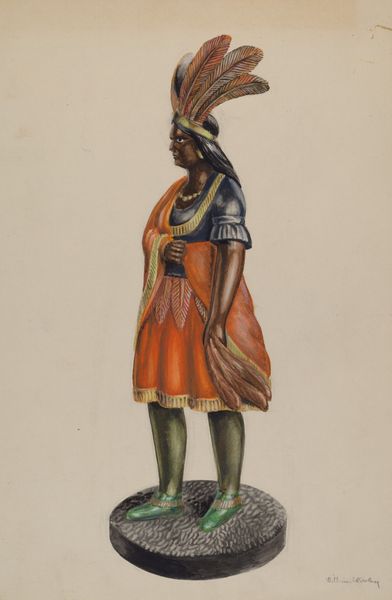
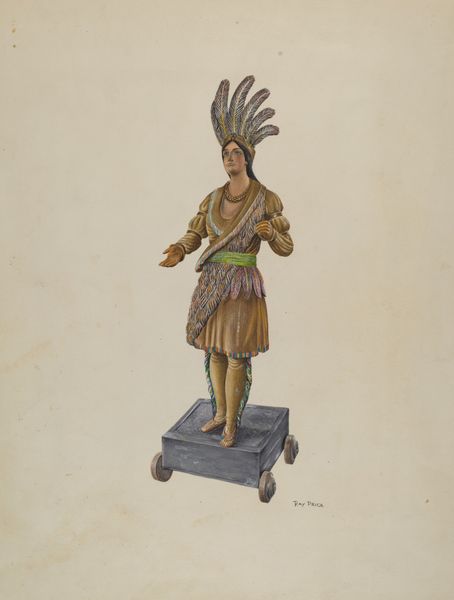
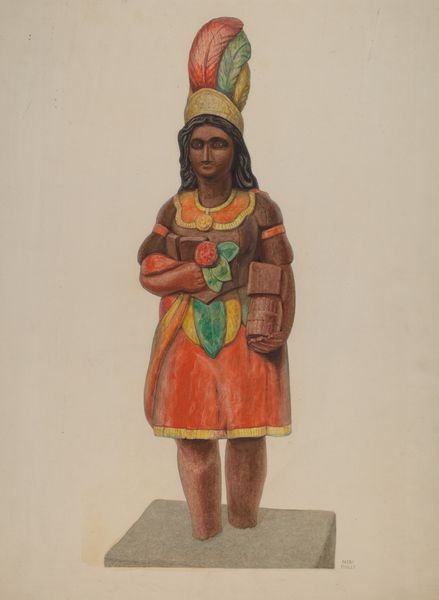
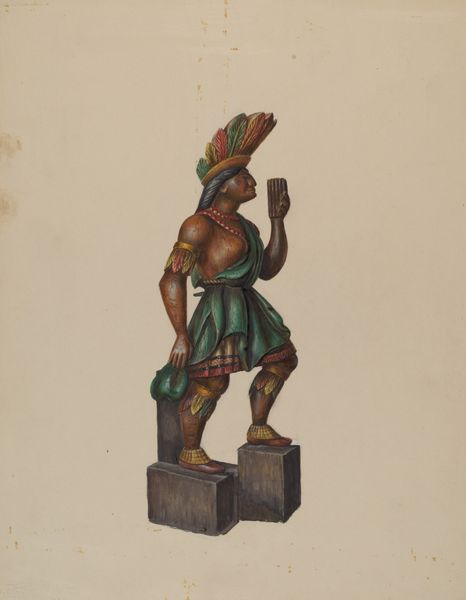
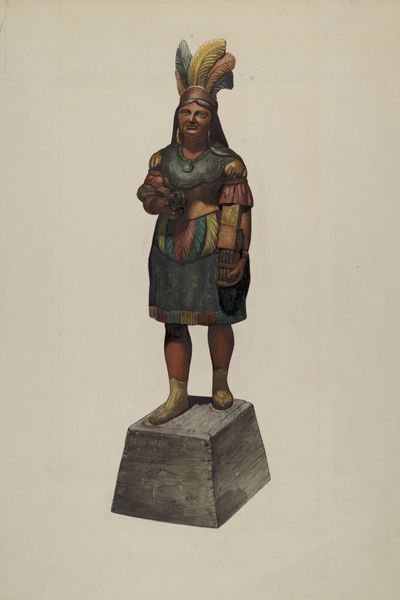
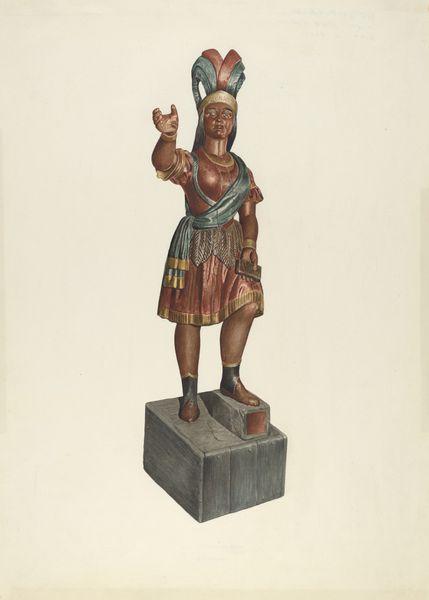
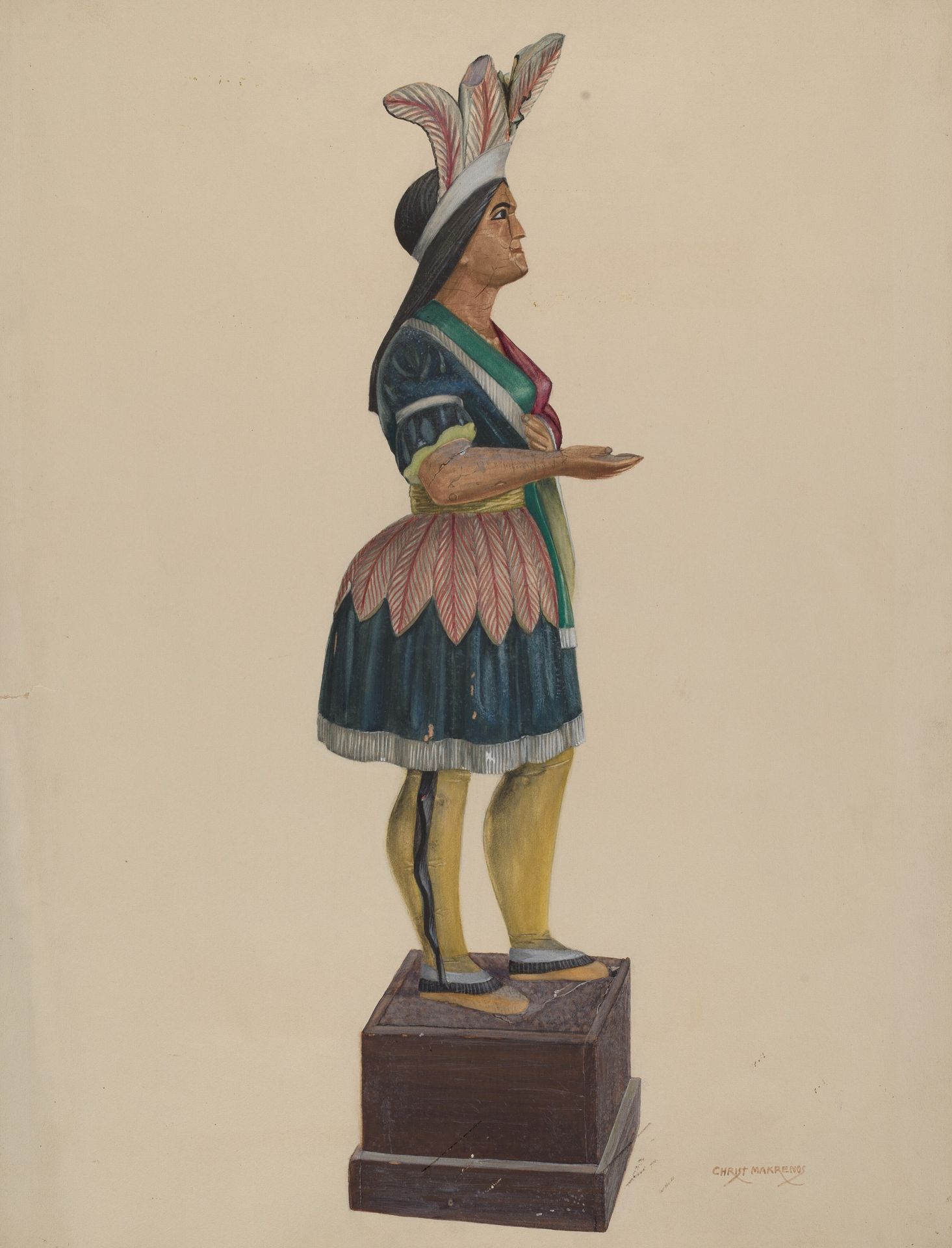
Editor: So this watercolor piece is called "Wooden Indian," dating from around 1937. It's a portrait of what seems to be a cigar store figure, isn't it? It's surprisingly delicate for such a commercial subject. What can you tell me about this, beyond the obvious? Curator: The "obvious," as you say, is often the most revealing. These figures, once ubiquitous, represent a fraught chapter in American history and advertising. How were Indigenous peoples represented and exploited in commercial culture at this time? Editor: I guess I never thought of them beyond being quirky figures outside shops. But you're right; it’s clearly appropriative. How did these images shape public perception? Curator: These figures contributed to a romanticized, often demeaning, stereotype. They flatten the complexity of Indigenous cultures into a single, easily digestible image. Watercolors, often seen as less 'serious' than oil paintings, may seem a less aggressive medium for this. But does its inherent ‘delicacy’ somehow soften or even excuse the problematic subject? Editor: That's a fascinating point! The choice of medium almost camouflages the underlying issues. It also seems to monumentalize the statue, giving it importance that the caricature maybe doesn't deserve. Curator: Precisely. Consider the socio-political climate of the 1930s. What role did art, particularly government-sponsored art, play in shaping national identity during the Depression era? Was this artist aware of the problematic nature of these figures, or simply documenting a common sight? Editor: I never really thought of the bigger picture! Now I’m not only seeing the image itself, but also its cultural ramifications. Curator: The painting serves as a lens through which to view historical attitudes, both the artist's and our own. Hopefully now, with greater critical awareness.