About this artwork
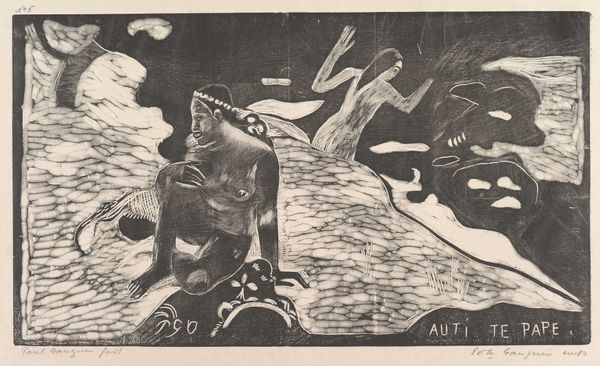
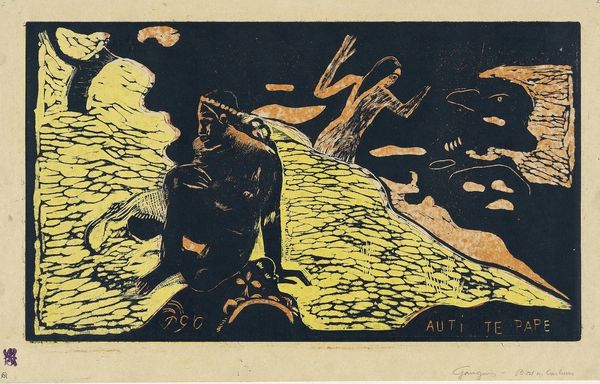
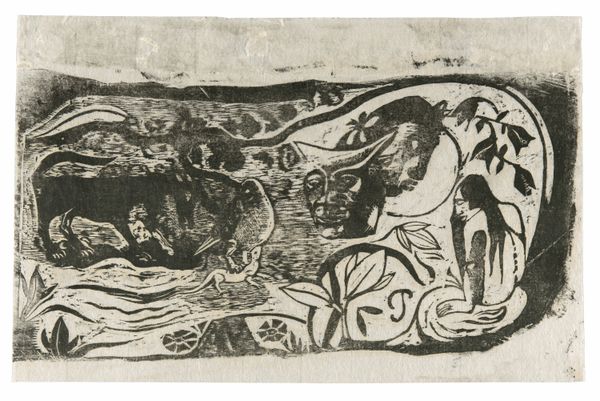
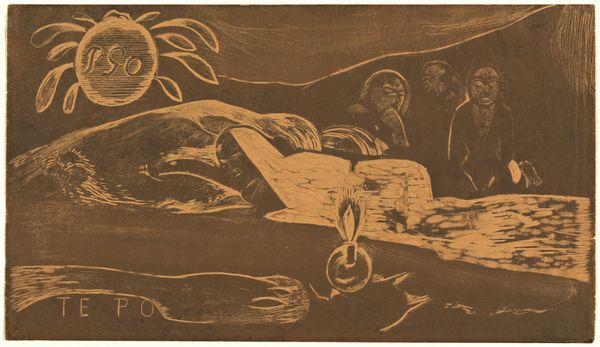
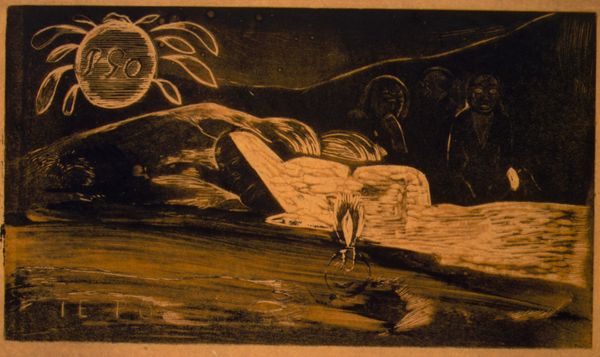
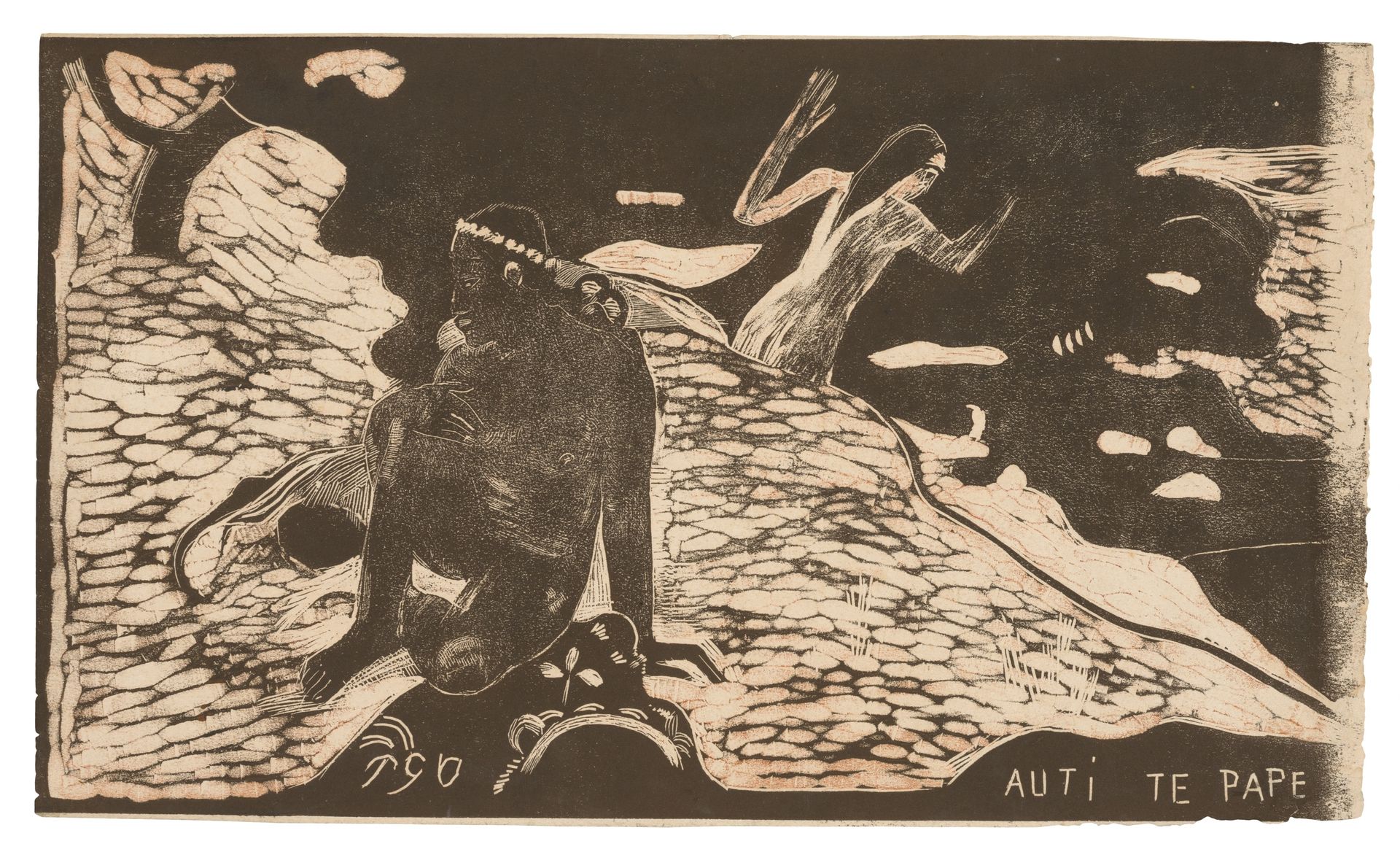
Paul Gauguin created this woodcut, "Auti te pape (Women at the River)," as part of his Noa Noa Suite. These prints were made to accompany his writings about his time in Tahiti, seeking an escape from European modernity in the late 19th century. Gauguin’s vision of Tahiti was filtered through his own artistic lens, influenced by his desire to find a more “primitive” and authentic culture. The stark contrasts and simplified forms of the woodcut emphasize a sense of the exotic. Gauguin's work was made during a period of increasing French colonial presence in the Pacific, a movement that drastically changed the social and cultural landscape of Tahiti. Gauguin, who sought to critique the institutions of art, ironically became a figure within them. Understanding this artwork requires acknowledging the artist’s role in shaping perceptions of non-European cultures. We can use sources such as colonial archives, ethnographies, and postcolonial theory, to interpret Gauguin’s work. This helps reveal the complex interplay between art, colonialism, and cultural representation.
Auti te pape (Women at the River), from the Noa Noa Suite
1893 - 1894


Artwork details
- Medium
- print, paper, ink, woodcut
- Dimensions
- 204 × 348 mm (image); 207 × 348 mm (sheet)
- Location
- The Art Institute of Chicago
- Copyright
- Public Domain
Tags
Comments
Share your thoughts
About this artwork
Paul Gauguin created this woodcut, "Auti te pape (Women at the River)," as part of his Noa Noa Suite. These prints were made to accompany his writings about his time in Tahiti, seeking an escape from European modernity in the late 19th century. Gauguin’s vision of Tahiti was filtered through his own artistic lens, influenced by his desire to find a more “primitive” and authentic culture. The stark contrasts and simplified forms of the woodcut emphasize a sense of the exotic. Gauguin's work was made during a period of increasing French colonial presence in the Pacific, a movement that drastically changed the social and cultural landscape of Tahiti. Gauguin, who sought to critique the institutions of art, ironically became a figure within them. Understanding this artwork requires acknowledging the artist’s role in shaping perceptions of non-European cultures. We can use sources such as colonial archives, ethnographies, and postcolonial theory, to interpret Gauguin’s work. This helps reveal the complex interplay between art, colonialism, and cultural representation.
Comments
Share your thoughts