About this artwork
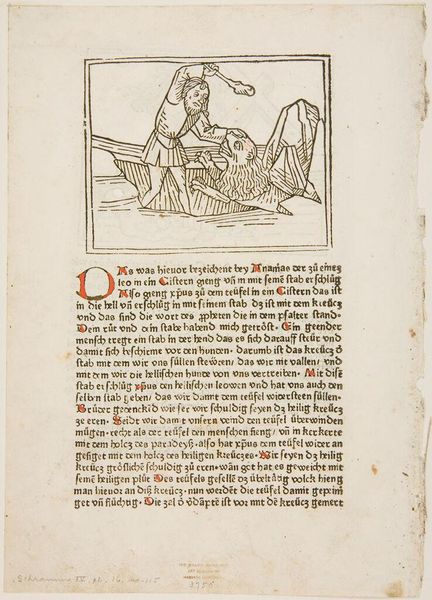
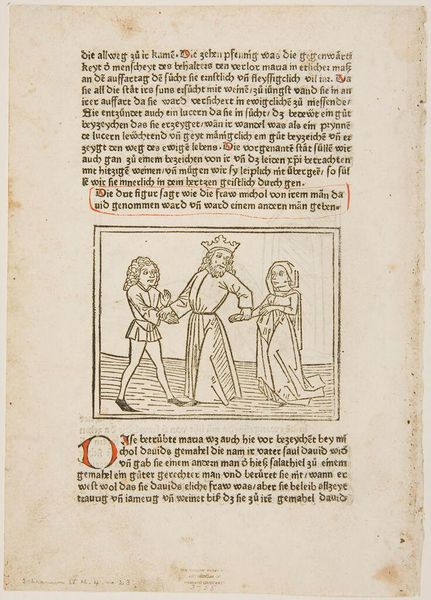
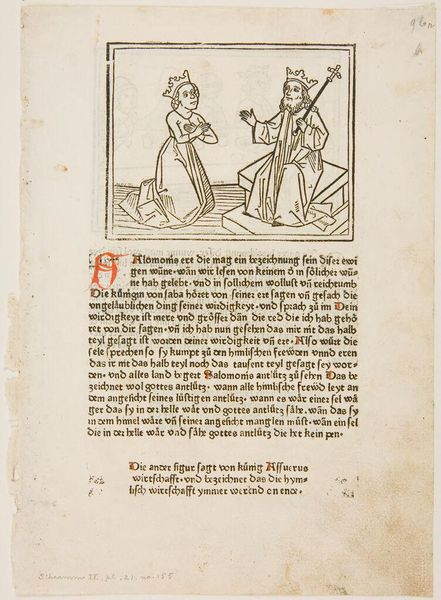
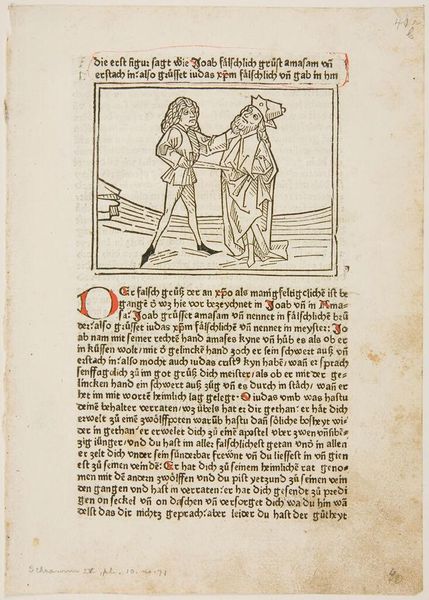
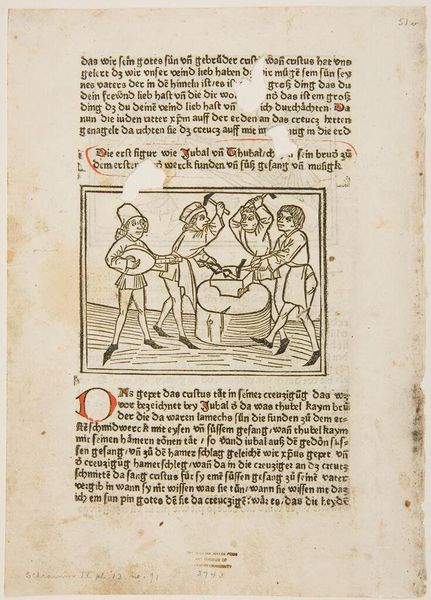
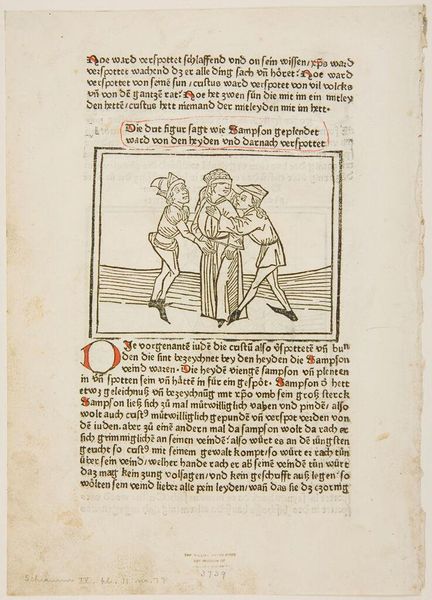
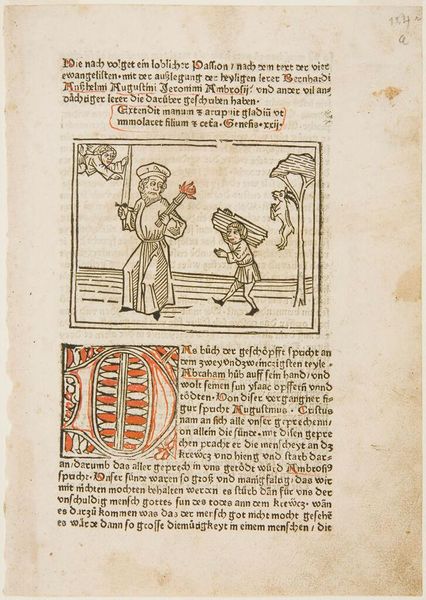
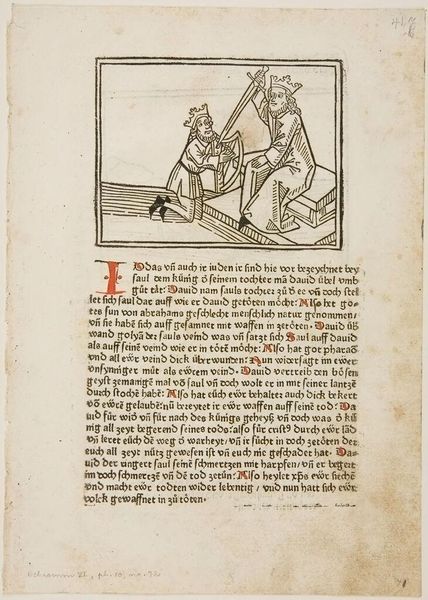
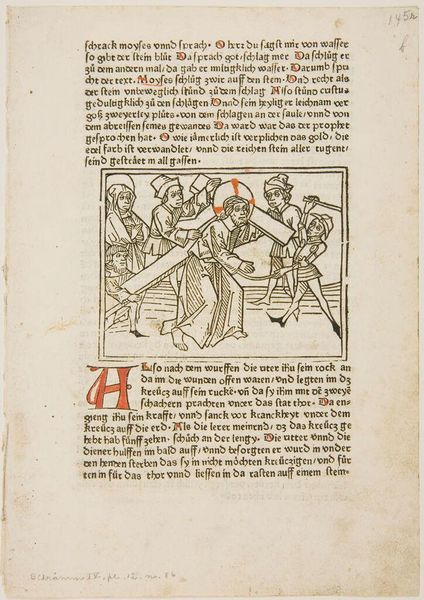
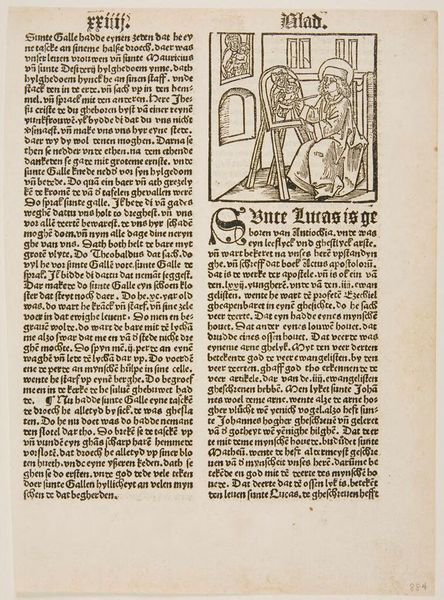
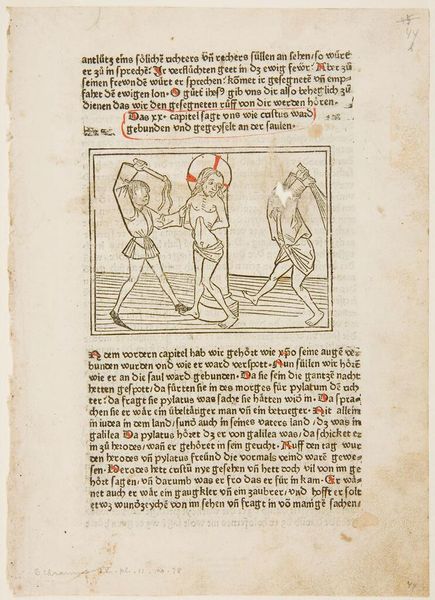
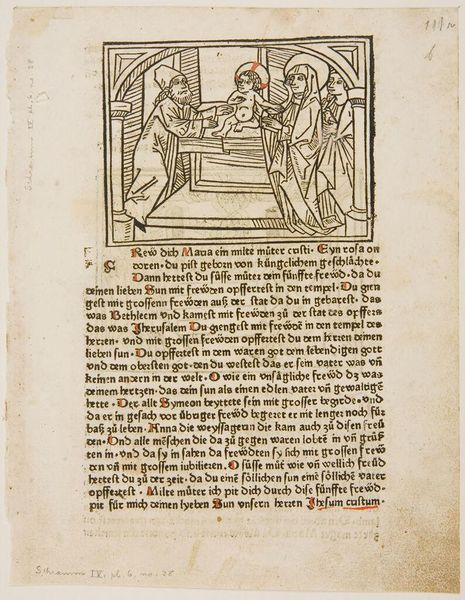
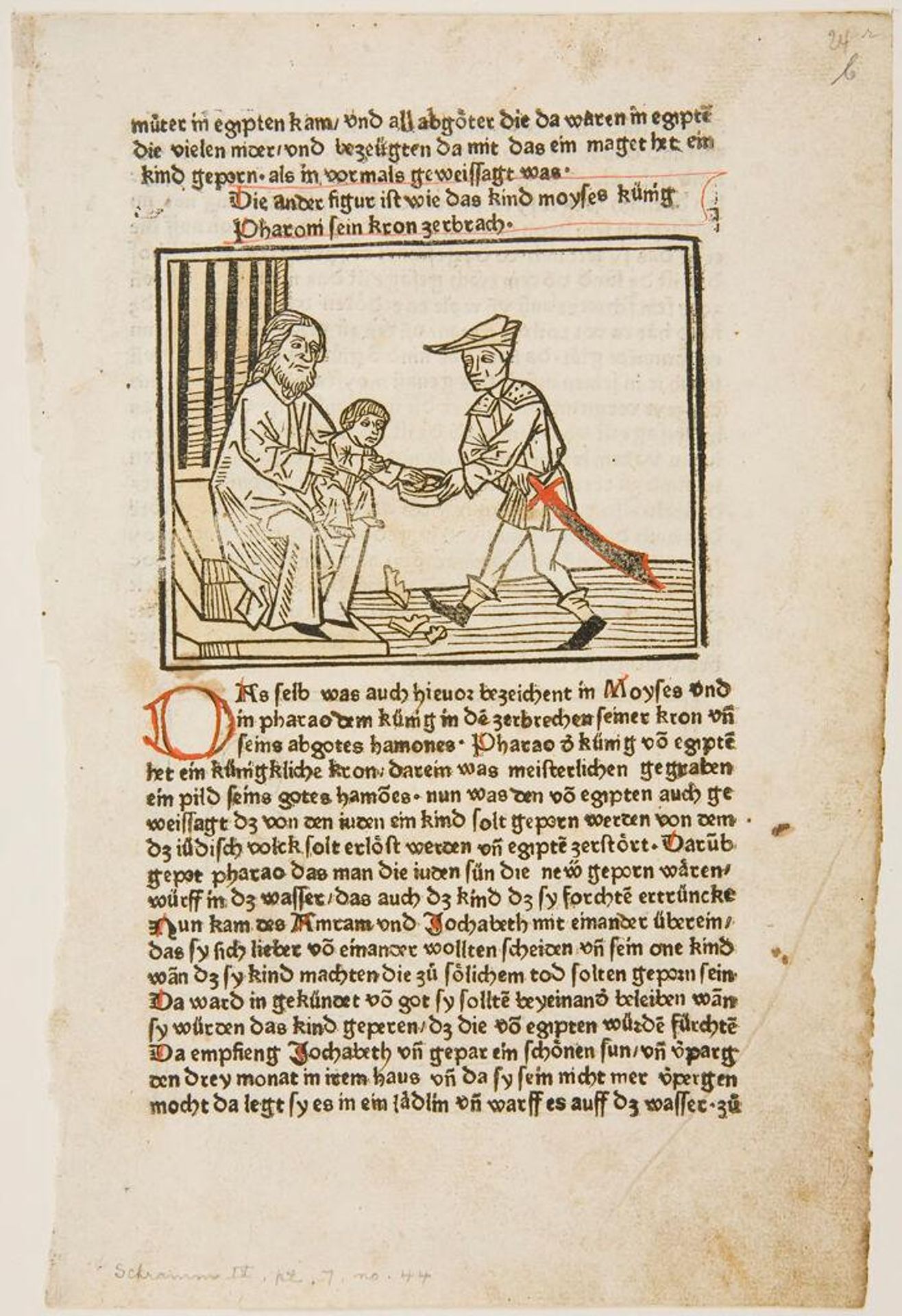
Editor: This is a woodcut titled "Moses with the Pharaoh; verso: Nebuchadnezzar's Dream of a High Tree," created by an anonymous artist. It depicts a rather stark scene, and the lines seem quite bold. What can you tell me about it? Curator: Let’s look at the production of this piece. Woodcuts like this were easily reproducible, creating accessibility for a wider audience, yes? This challenges the notion of art as a precious commodity for the elite. Note the crude lines, the visible labor in its creation. What does the materiality itself tell us about its intended purpose and audience? Editor: It's interesting to think about how the process shapes the meaning. So, the roughness wasn't a flaw, but part of the message? Curator: Precisely. The art isn't just *what* it depicts, but *how* it's made and *who* it's for. Reflect on the consumption of images like this and its accessibility to the common person. Editor: I see, it's a more democratic approach to artmaking. Thanks, I’ll remember to consider not just the image, but also its production.
Moses with the Pharoah; verso: Nebuchadnezzar's Dream of a High Tree
c. 15th century


Artwork details
- Location
- Harvard Art Museums
- Copyright
- CC0 1.0
Comments
Share your thoughts
About this artwork
Editor: This is a woodcut titled "Moses with the Pharaoh; verso: Nebuchadnezzar's Dream of a High Tree," created by an anonymous artist. It depicts a rather stark scene, and the lines seem quite bold. What can you tell me about it? Curator: Let’s look at the production of this piece. Woodcuts like this were easily reproducible, creating accessibility for a wider audience, yes? This challenges the notion of art as a precious commodity for the elite. Note the crude lines, the visible labor in its creation. What does the materiality itself tell us about its intended purpose and audience? Editor: It's interesting to think about how the process shapes the meaning. So, the roughness wasn't a flaw, but part of the message? Curator: Precisely. The art isn't just *what* it depicts, but *how* it's made and *who* it's for. Reflect on the consumption of images like this and its accessibility to the common person. Editor: I see, it's a more democratic approach to artmaking. Thanks, I’ll remember to consider not just the image, but also its production.
Comments
Share your thoughts