1762 - 1816
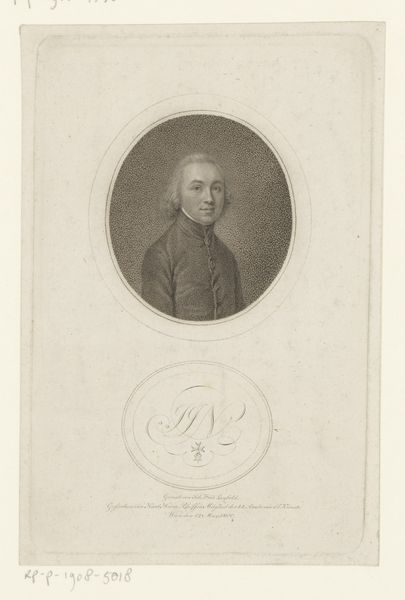
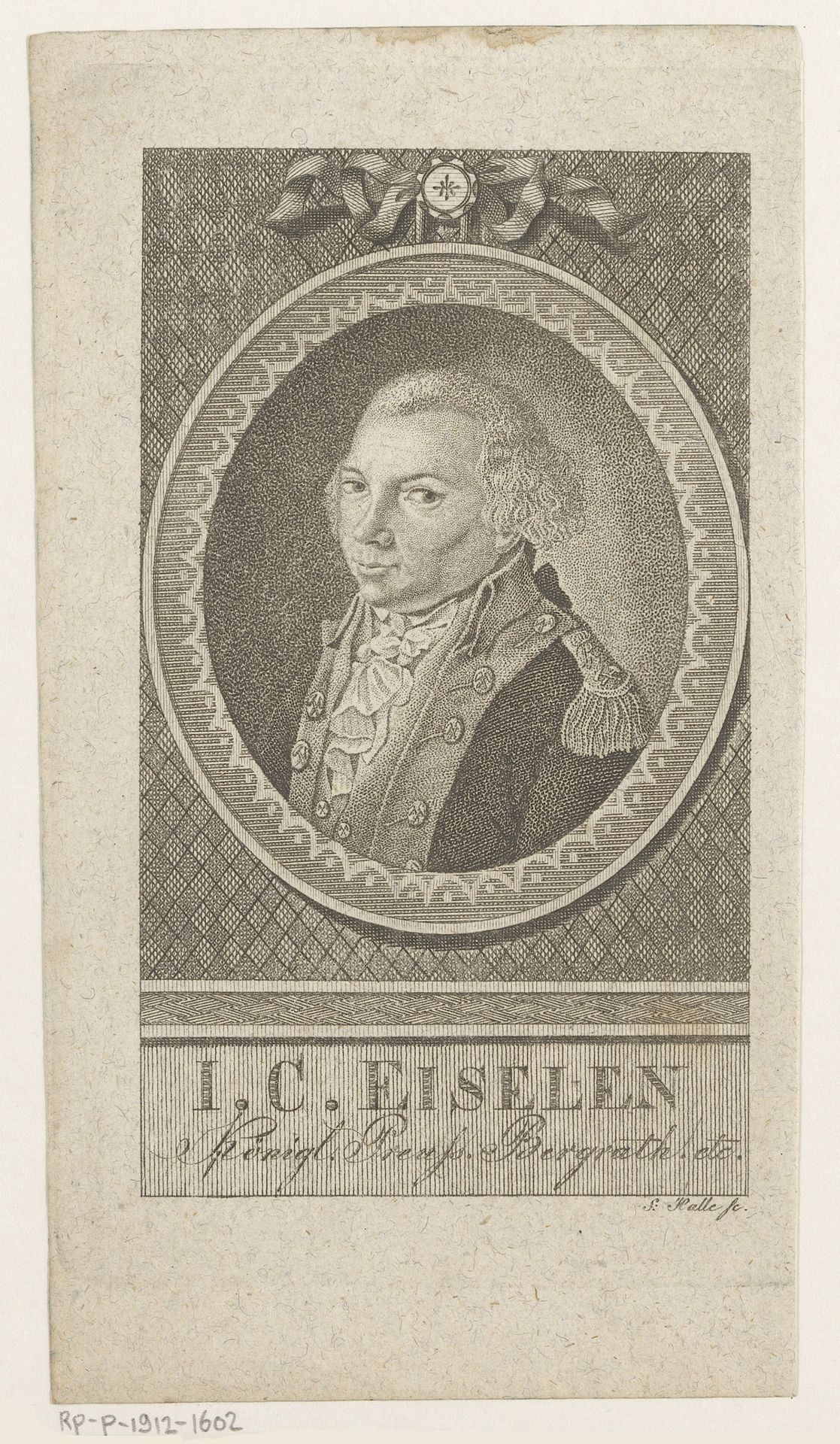
Portret van Johann Christoph Eiselen

Listen to curator's interpretation
Curatorial notes
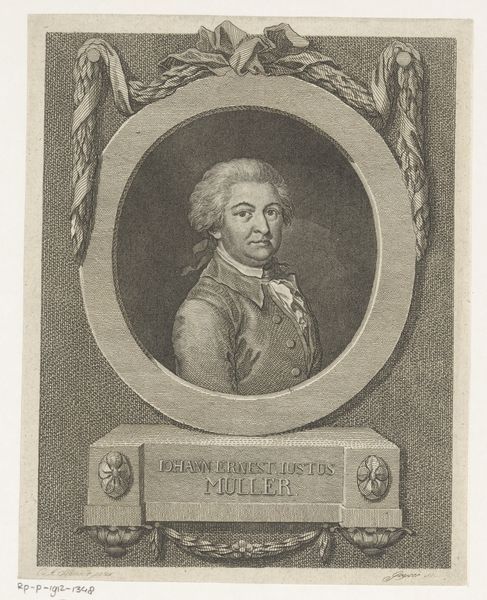
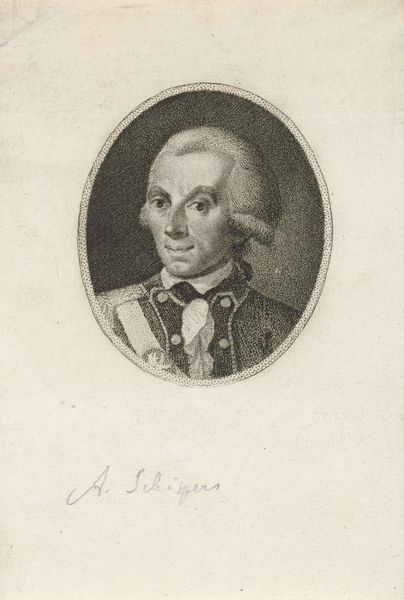
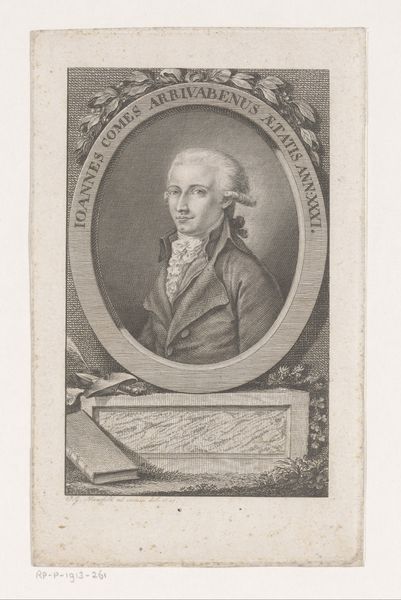
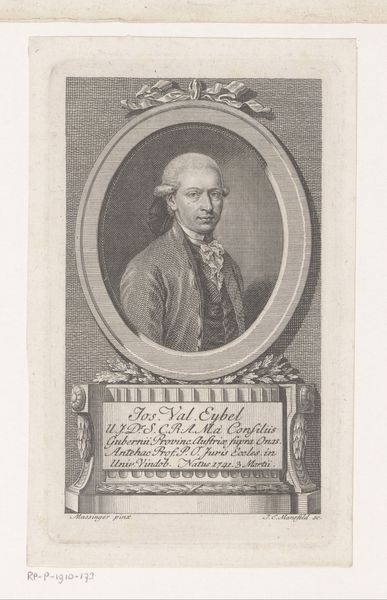
Editor: So, this engraving, "Portret van Johann Christoph Eiselen," made sometime between 1762 and 1816 by J.S.L. Halle, presents a man in a decorative oval frame. There's a certain formality to it, a very...buttoned-up feel, and I wonder, what kind of story do you see hidden in the lines of this portrait? Curator: I see a powerful encoding of social identity. Look at the sitter’s gaze: direct, confident, claiming his space. Then consider the inscription noting his title: ‘Koenigl. Preuss. Bergrath etc.’ which translates to ‘Royal Prussian Mining Councilor, etc.’ This isn’t just a portrait of an individual; it's a representation of authority, of the merging of personal identity with state power. How do you think this type of portrait functions within the larger narrative of Prussian society at the time? Editor: That's interesting. I hadn't considered how his profession might play into the construction of his image. The title suggests an association with industry and perhaps progress, fitting within the broader ambitions of the Prussian state. Is it meant to inspire a certain level of respect? Curator: Precisely. These portraits weren’t merely decorative. They served to legitimize power structures. Think of the role mining played in the Prussian economy. Eiselen, in his position, was a key player in this system, and his portrait broadcast that role. The "etc." is doing some work here, too. It shows not only his station but its importance, with the unspoken idea that we already understand how powerful he is, perhaps hinting at social circles or a family name? What do you make of the artistic choices here? Editor: Now that you mention it, I see how the artist might be signaling Eiselen's authority through choices of medium and the clean style. I initially interpreted it as simple portraiture, but understanding the context of Prussian society transforms how I see the artwork! Curator: Absolutely! By understanding the interplay between the portrait, the man, and the socio-political context, we reveal these historical power dynamics.