About this artwork
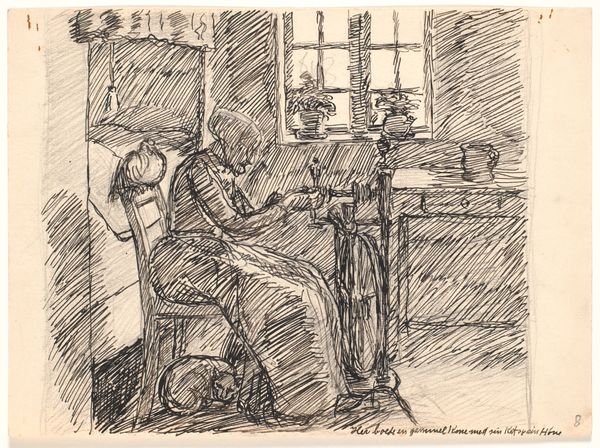
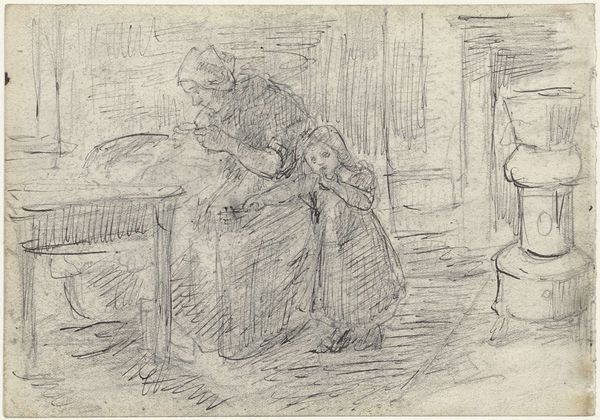
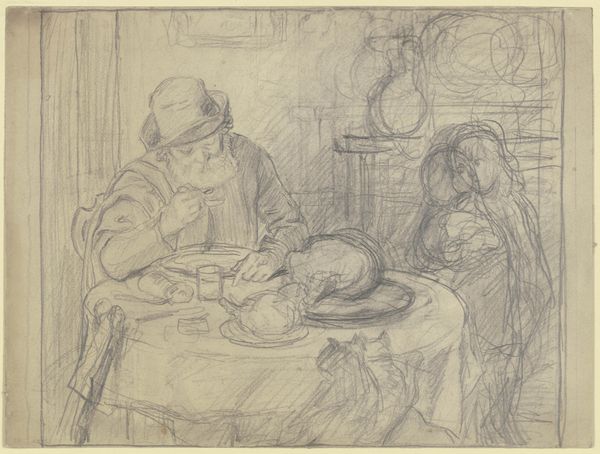
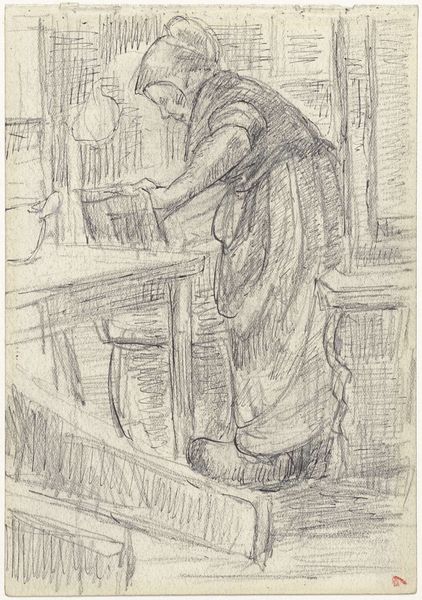
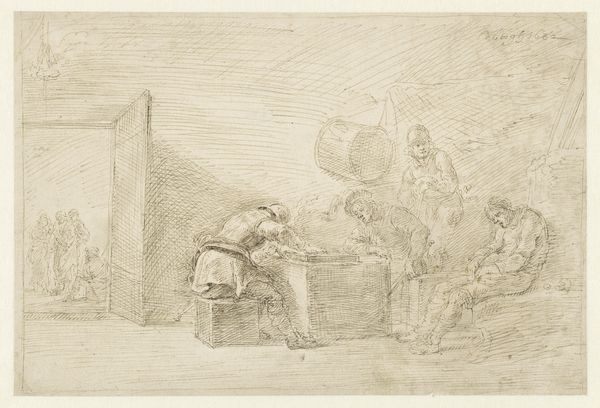
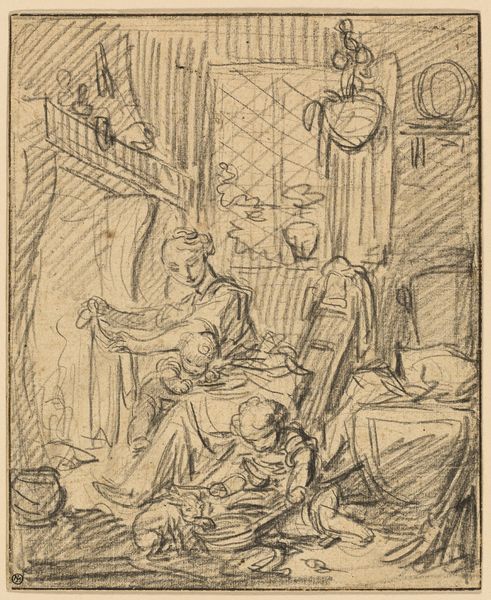
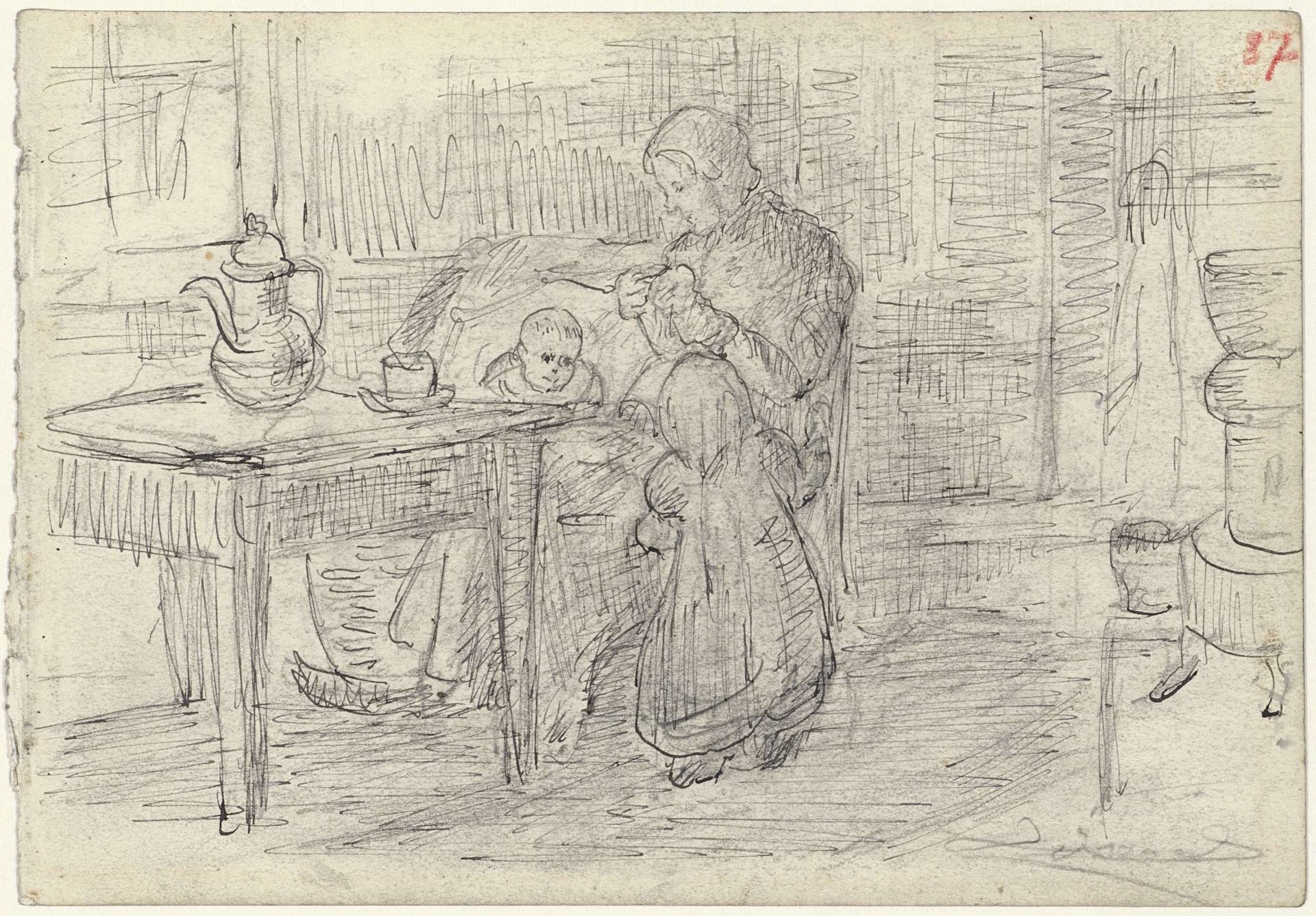
Jozef Israëls made this drawing of an interior with a woman doing needlework, surrounded by her children, using graphite on paper. Here, the artist explores the intimate setting of a domestic scene. Look at the repetitive strokes that define the forms, building volume and depth with a limited palette. Notice how the textural qualities of the graphite convey a sense of warmth and enclosure. The woman’s needlework, the central activity depicted, is a form of labor deeply embedded in social and cultural significance. The artwork invites us to reflect on the domestic sphere and the labor often associated with women. Israëls elevates this everyday scene, infusing it with a sense of dignity and quiet resilience. By focusing on the materials and processes involved in both the creation of the drawing and the subject’s needlework, we can appreciate the artwork's deeper connection to the social and cultural fabric of its time. It challenges us to reconsider the value we place on different forms of making and their role in shaping our understanding of art.
Interieur met handwerkende vrouw met twee kinderen
1834 - 1911

Jozef Israëls
1824 - 1911Location
RijksmuseumArtwork details
- Medium
- drawing, paper, ink, pencil
- Dimensions
- height 125 mm, width 182 mm
- Location
- Rijksmuseum
- Copyright
- Rijks Museum: Open Domain
Tags
Comments
Share your thoughts
About this artwork
Jozef Israëls made this drawing of an interior with a woman doing needlework, surrounded by her children, using graphite on paper. Here, the artist explores the intimate setting of a domestic scene. Look at the repetitive strokes that define the forms, building volume and depth with a limited palette. Notice how the textural qualities of the graphite convey a sense of warmth and enclosure. The woman’s needlework, the central activity depicted, is a form of labor deeply embedded in social and cultural significance. The artwork invites us to reflect on the domestic sphere and the labor often associated with women. Israëls elevates this everyday scene, infusing it with a sense of dignity and quiet resilience. By focusing on the materials and processes involved in both the creation of the drawing and the subject’s needlework, we can appreciate the artwork's deeper connection to the social and cultural fabric of its time. It challenges us to reconsider the value we place on different forms of making and their role in shaping our understanding of art.
Comments
Share your thoughts