About this artwork
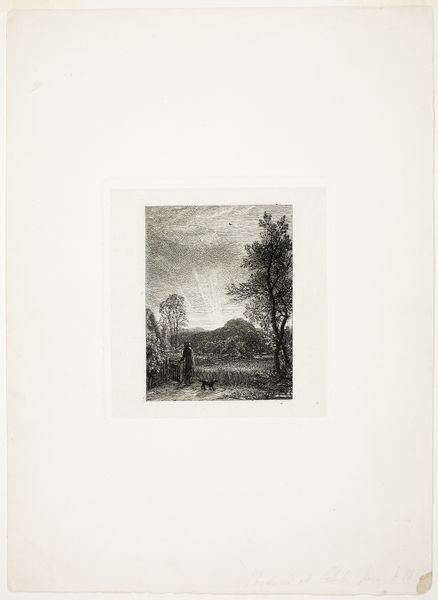
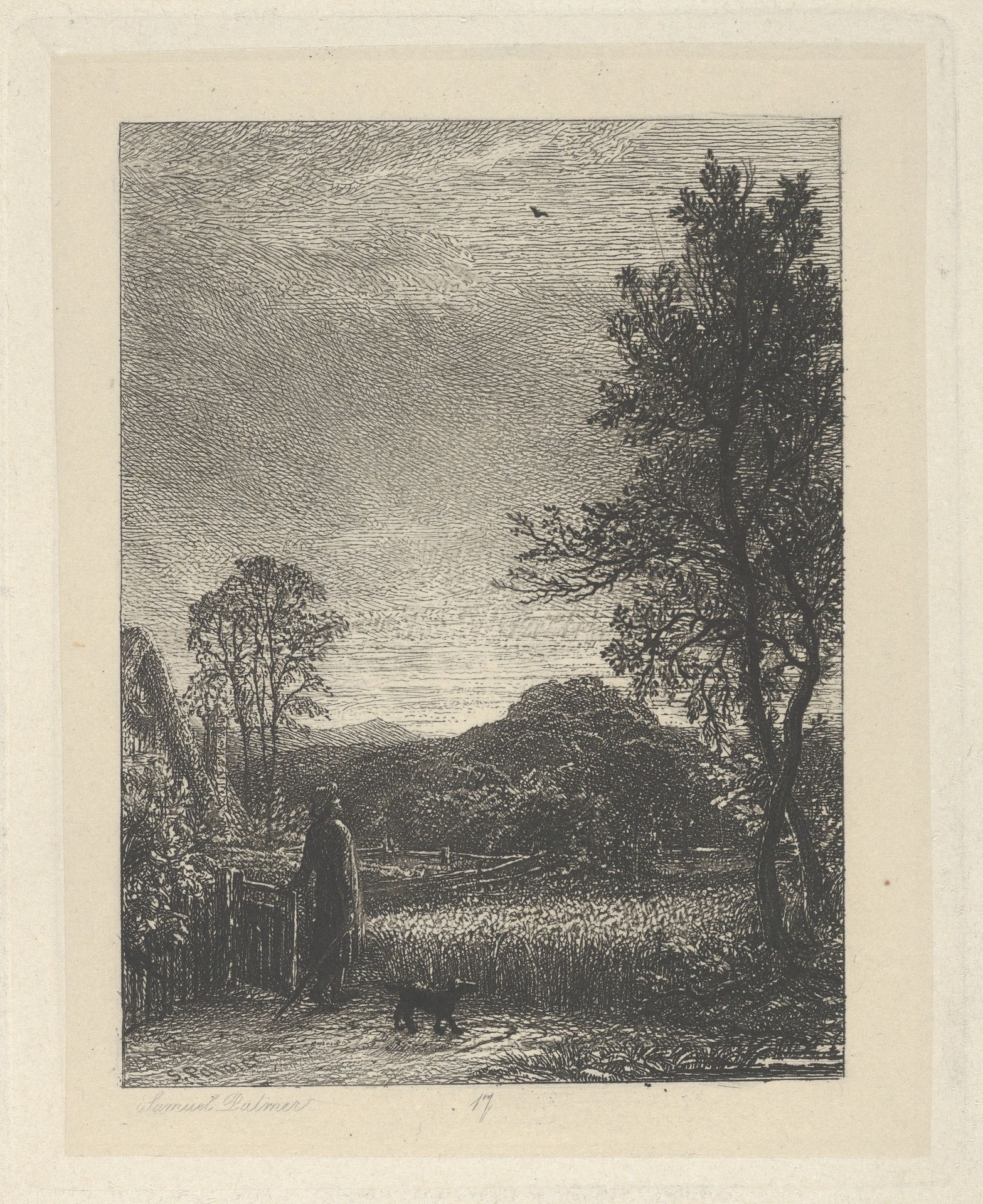
Samuel Palmer created "The Skylark" as an etching, a medium well-suited to capturing the subtleties of light and shadow in the natural world. Palmer was part of a group of artists who were reacting against the industrial revolution and urbanization of England. In "The Skylark," nature is presented as a refuge, a space of innocence and spiritual purity, yet, this idealization of rural life often obscures the harsh realities faced by agricultural laborers. The figure at the gate and the small dog introduce a narrative element, inviting viewers to imagine their own stories within the scene. Palmer's work encourages us to reflect on our relationship with the environment, and the cultural meanings we attach to the natural world. The image is a testament to the enduring human desire for connection with nature, a theme as relevant today as it was in the 19th century.
The Skylark
1850


Artwork details
- Medium
- drawing, print, etching
- Dimensions
- sheet: 14 7/16 x 10 5/8 in. (36.7 x 27 cm) plate: 4 3/4 x 3 13/16 in. (12 x 9.7 cm) image: 3 7/8 x 2 15/16 in. (9.9 x 7.4 cm)
- Location
- Metropolitan Museum of Art, New York, NY
- Copyright
- Public Domain
Tags
Comments
Share your thoughts
About this artwork
Samuel Palmer created "The Skylark" as an etching, a medium well-suited to capturing the subtleties of light and shadow in the natural world. Palmer was part of a group of artists who were reacting against the industrial revolution and urbanization of England. In "The Skylark," nature is presented as a refuge, a space of innocence and spiritual purity, yet, this idealization of rural life often obscures the harsh realities faced by agricultural laborers. The figure at the gate and the small dog introduce a narrative element, inviting viewers to imagine their own stories within the scene. Palmer's work encourages us to reflect on our relationship with the environment, and the cultural meanings we attach to the natural world. The image is a testament to the enduring human desire for connection with nature, a theme as relevant today as it was in the 19th century.
Comments
Share your thoughts