About this artwork
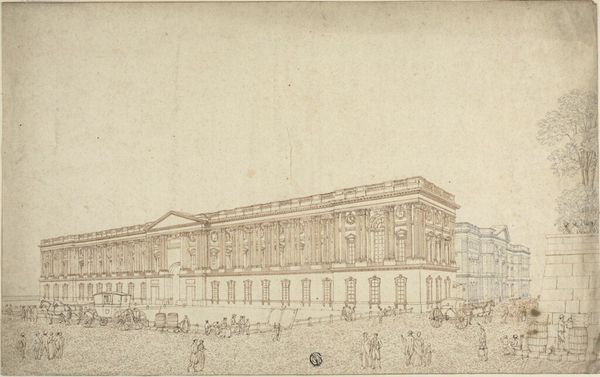
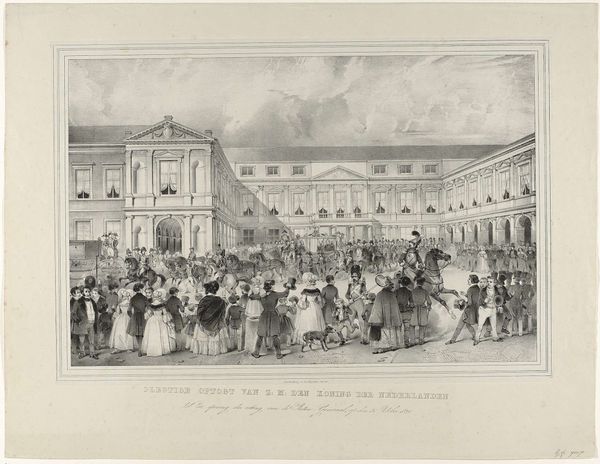
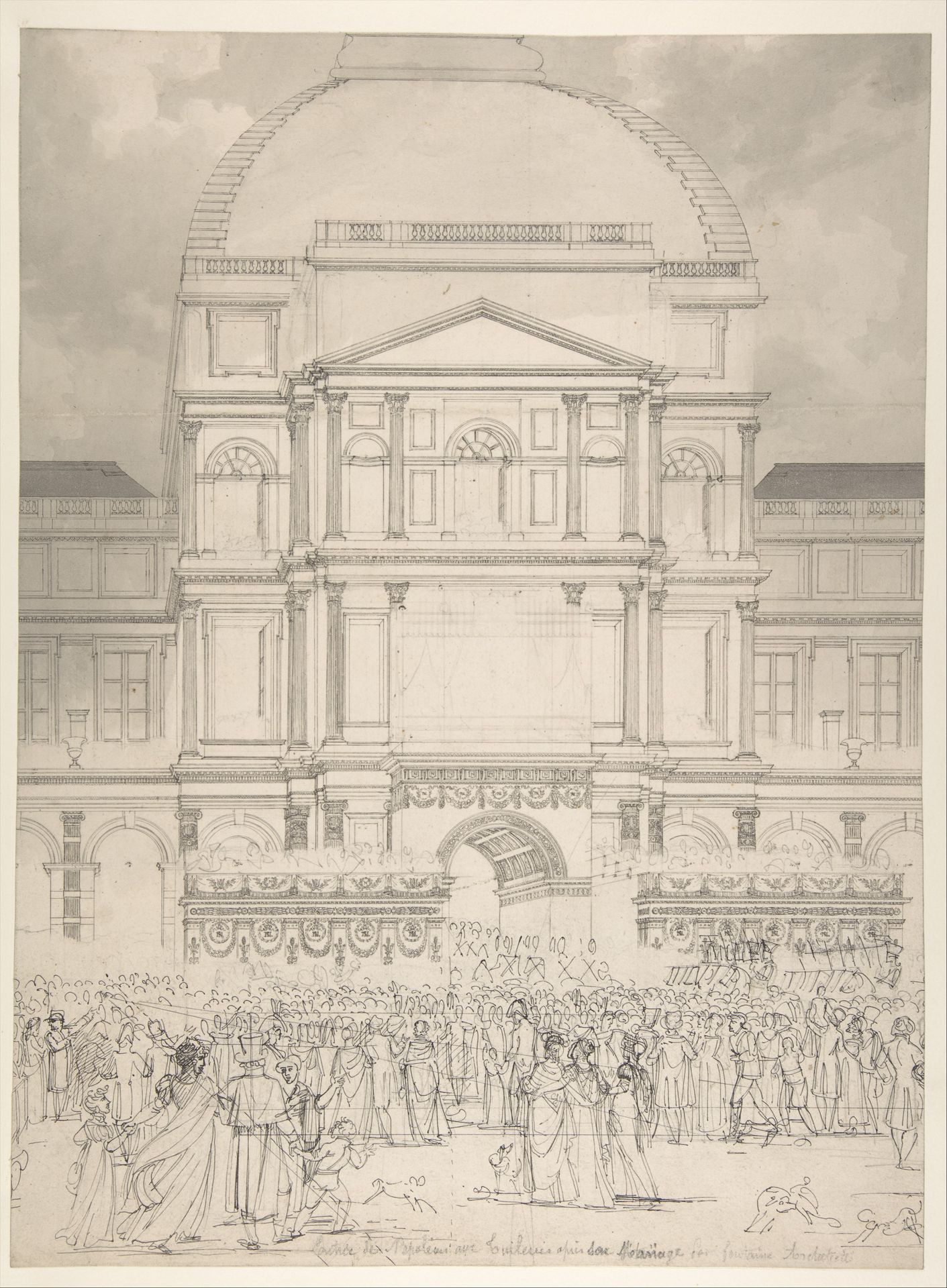
Charles Percier captured the scene of Napoleon's wedding to Marie-Louise of Austria in this drawing using graphite and gray wash. The Tuileries Palace, a symbol of power, looms large in the background, while garlands and swags decorate the architecture to celebrate the union of the two powerful empires. Such displays of decorative motifs are not new. Garlands, derived from ancient Roman traditions, symbolized celebration and victory; a visual language adopted, transformed, and repeated throughout history. In classical times, they were hung to honor gods or victorious leaders, while in the Renaissance, they adorned art and architecture, signifying rebirth and renewal. Here, Percier uses them to link Napoleon’s reign to the glory of past empires, embedding layers of meaning within the collective memory of its viewers. This intentional invocation of historical and cultural associations engages viewers on a subconscious level, evoking feelings of awe, respect, and a sense of connection to the historical narrative of power. The cycle continues.
Crowd in Front of the Tuileries Palace During the Wedding of Napoleon to Marie-Louise of Austria
1810


Artwork details
- Medium
- drawing, print, pencil
- Dimensions
- 16 3/8 x 12 1/8 in. (41.6 x 30.8 cm)
- Location
- Metropolitan Museum of Art, New York, NY
- Copyright
- Public Domain
Tags
portrait
drawing
neoclacissism
group-portraits
pencil
cityscape
history-painting
Comments
Be the first to share your thoughts about this work.
About this artwork
Charles Percier captured the scene of Napoleon's wedding to Marie-Louise of Austria in this drawing using graphite and gray wash. The Tuileries Palace, a symbol of power, looms large in the background, while garlands and swags decorate the architecture to celebrate the union of the two powerful empires. Such displays of decorative motifs are not new. Garlands, derived from ancient Roman traditions, symbolized celebration and victory; a visual language adopted, transformed, and repeated throughout history. In classical times, they were hung to honor gods or victorious leaders, while in the Renaissance, they adorned art and architecture, signifying rebirth and renewal. Here, Percier uses them to link Napoleon’s reign to the glory of past empires, embedding layers of meaning within the collective memory of its viewers. This intentional invocation of historical and cultural associations engages viewers on a subconscious level, evoking feelings of awe, respect, and a sense of connection to the historical narrative of power. The cycle continues.
Comments
Be the first to share your thoughts about this work.