About this artwork
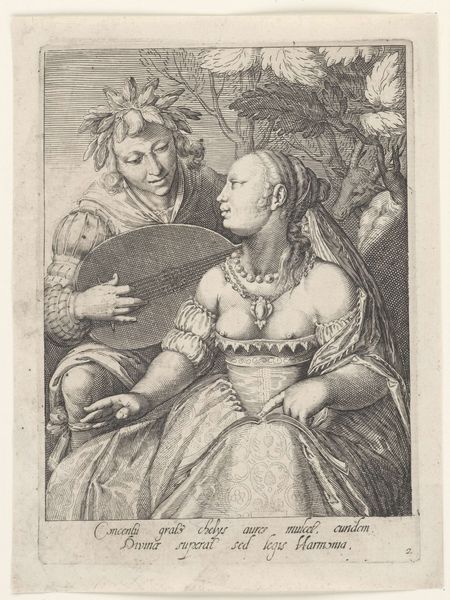
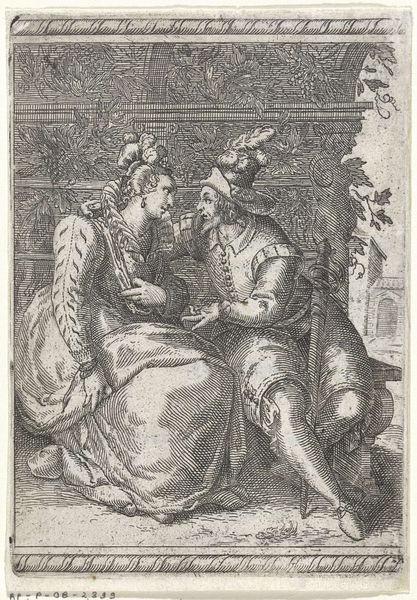
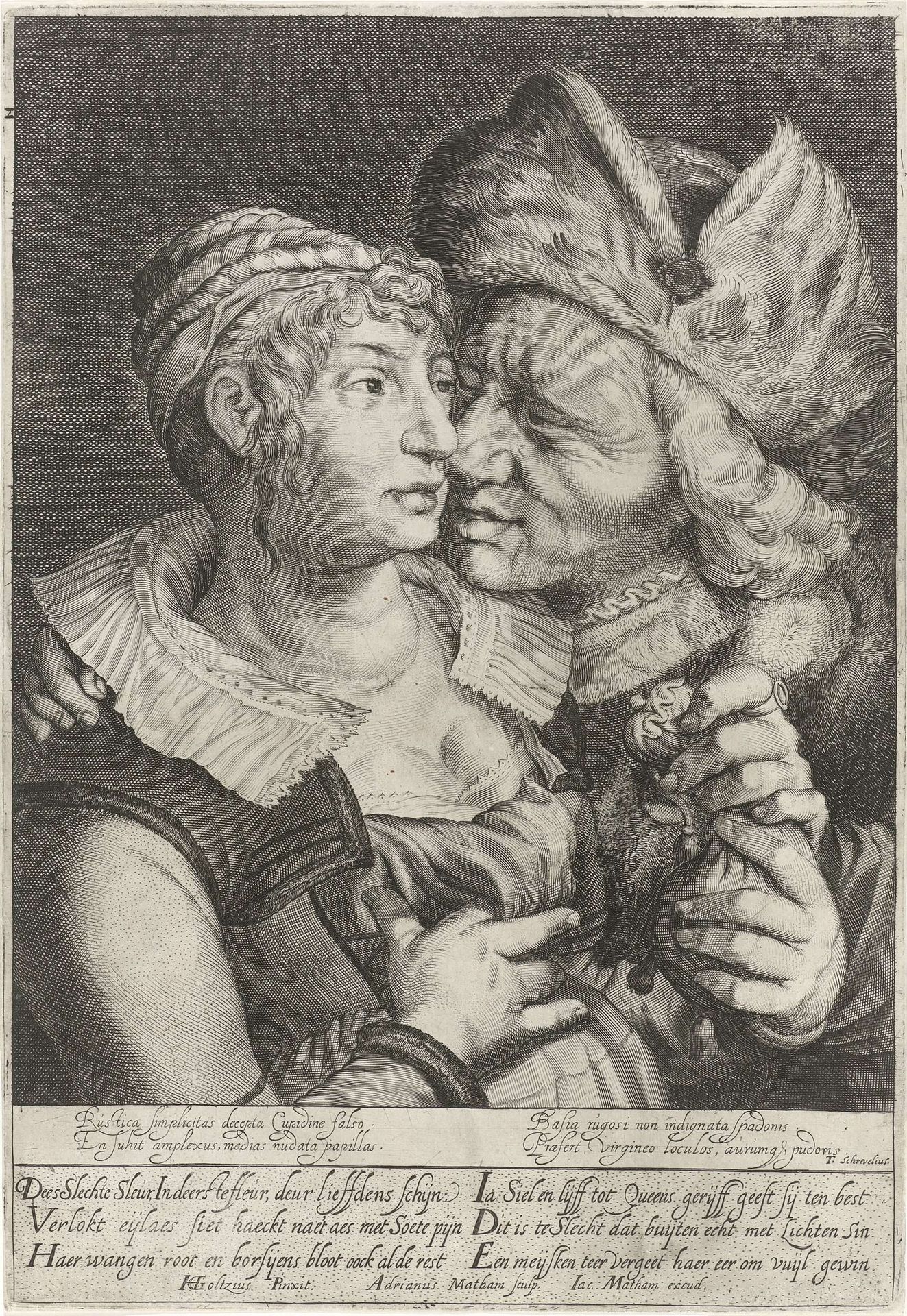
Editor: This engraving, "Ongelijke liefde," or "Unequal Love," by Adriaen Matham, dates from 1615 to 1631. It’s currently held at the Rijksmuseum. The piece definitely evokes a sense of unease; the contrast between the two figures is quite stark. What do you see in this work that maybe I'm missing? Curator: This print plunges us into the uncomfortable dynamics of power and exchange, doesn't it? Look at the way Matham depicts the older figure, adorned with opulent furs and clutching a purse – symbols of wealth and dominance. Then contrast that with the younger figure, whose vulnerability is emphasized by her exposed neckline. Editor: I do notice that, the sort of trading places implied. It's interesting and definitely hints at class disparities and the economics of relationships in that era. It feels deliberately confrontational. Curator: Exactly. Think about the social context. Who was able to access art? Who were these images meant to titillate or even caution? This print isn't just a snapshot of a relationship, but a commentary on broader societal issues, like the commodification of intimacy and the disparities in wealth that allowed such exchanges to occur. What's your reaction to how gender plays a role here? Editor: That's really insightful. It makes me think about the female figure's agency – or lack thereof. She seems more like a passive object in this transaction. It is commentary on societal roles forced onto women in the 17th century. Curator: Precisely! It’s a sharp critique of those imbalances. I think this reminds us how art can both reflect and reinforce social norms, but also serve as a catalyst for questioning them. It prompts important conversations about inequality that we continue to grapple with today. Editor: That really shifts how I see the artwork now. I'm definitely going to remember that and consider more of the history surrounding it when studying other pieces.

Artwork details
- Medium
- print, engraving
- Dimensions
- height 435 mm, width 300 mm
- Location
- Rijksmuseum
- Copyright
- Rijks Museum: Open Domain
Tags
Comments
Share your thoughts
About this artwork
Editor: This engraving, "Ongelijke liefde," or "Unequal Love," by Adriaen Matham, dates from 1615 to 1631. It’s currently held at the Rijksmuseum. The piece definitely evokes a sense of unease; the contrast between the two figures is quite stark. What do you see in this work that maybe I'm missing? Curator: This print plunges us into the uncomfortable dynamics of power and exchange, doesn't it? Look at the way Matham depicts the older figure, adorned with opulent furs and clutching a purse – symbols of wealth and dominance. Then contrast that with the younger figure, whose vulnerability is emphasized by her exposed neckline. Editor: I do notice that, the sort of trading places implied. It's interesting and definitely hints at class disparities and the economics of relationships in that era. It feels deliberately confrontational. Curator: Exactly. Think about the social context. Who was able to access art? Who were these images meant to titillate or even caution? This print isn't just a snapshot of a relationship, but a commentary on broader societal issues, like the commodification of intimacy and the disparities in wealth that allowed such exchanges to occur. What's your reaction to how gender plays a role here? Editor: That's really insightful. It makes me think about the female figure's agency – or lack thereof. She seems more like a passive object in this transaction. It is commentary on societal roles forced onto women in the 17th century. Curator: Precisely! It’s a sharp critique of those imbalances. I think this reminds us how art can both reflect and reinforce social norms, but also serve as a catalyst for questioning them. It prompts important conversations about inequality that we continue to grapple with today. Editor: That really shifts how I see the artwork now. I'm definitely going to remember that and consider more of the history surrounding it when studying other pieces.
Comments
Share your thoughts