1499
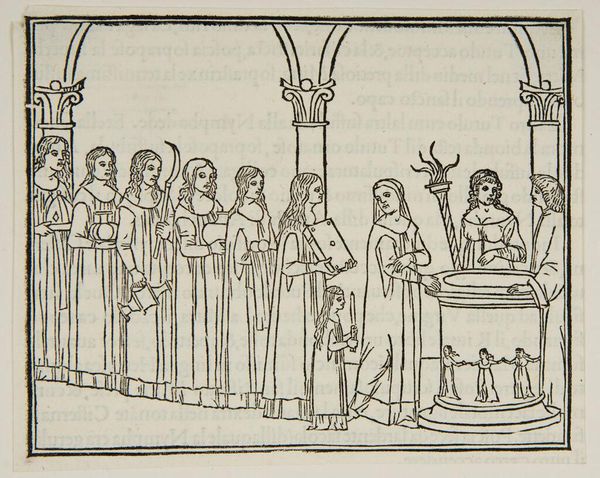
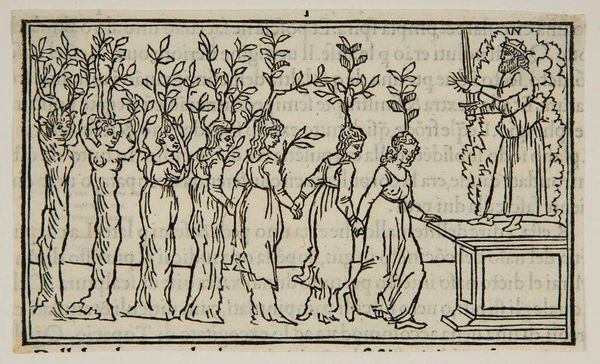
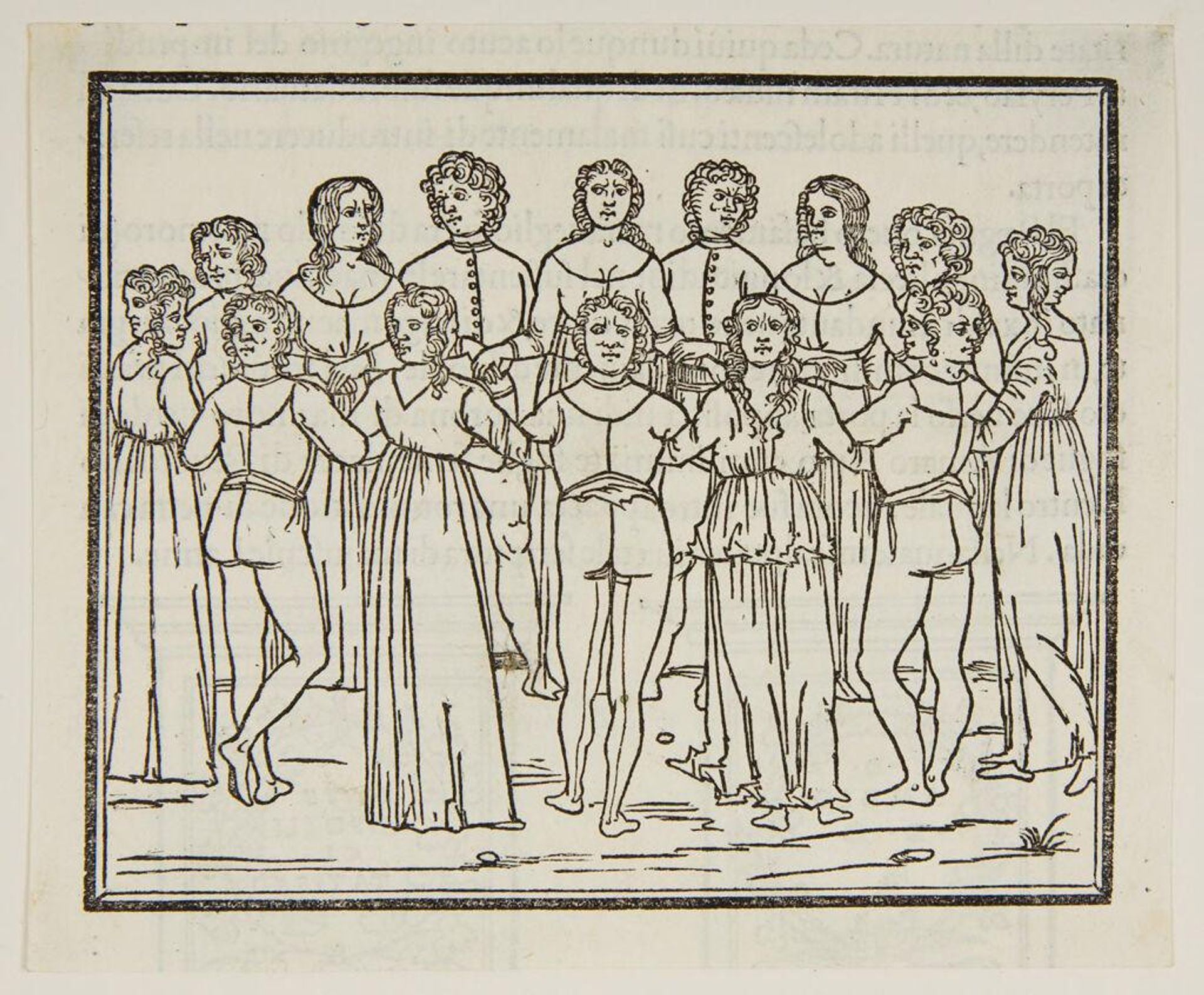
One of the sides of the pedestal of the bronze horse, with a relief of two-faced youths and nymphs dancing (fol. b v verso)


Listen to curator's interpretation
Curatorial notes
Curator: This woodcut, now residing at the Harvard Art Museums, is titled "One of the sides of the pedestal of the bronze horse, with a relief of two-faced youths and nymphs dancing." Editor: It has a strangely unsettling energy, doesn’t it? The figures are holding hands in a circle, but their expressions seem… vacant. Curator: The two-faced youths, likely representing Janus, Roman god of beginnings and transitions, suggest a duality. The dance itself may symbolize the cyclical nature of time and existence. Editor: Yet there's a distinct lack of joy in this supposed celebration. The rough lines and stark contrast create a somber mood, a public display perhaps masking private turmoil. Curator: Indeed. The image taps into primal, perhaps repressed, anxieties about identity, connection, and the passage of time. Editor: Leaving me to wonder what other secrets lie hidden in plain sight within this deceptively simple composition.