About this artwork
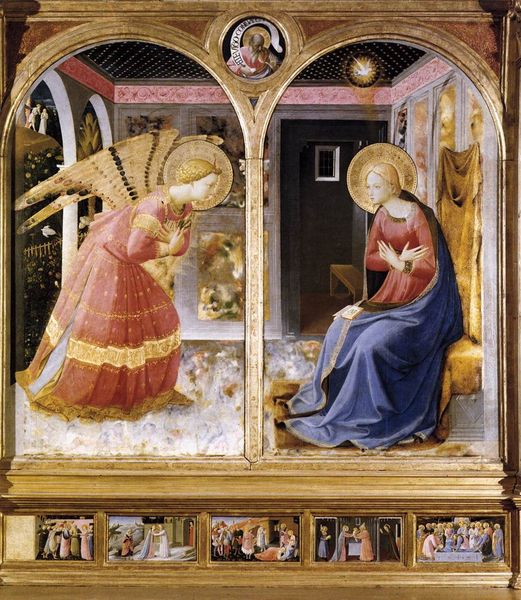
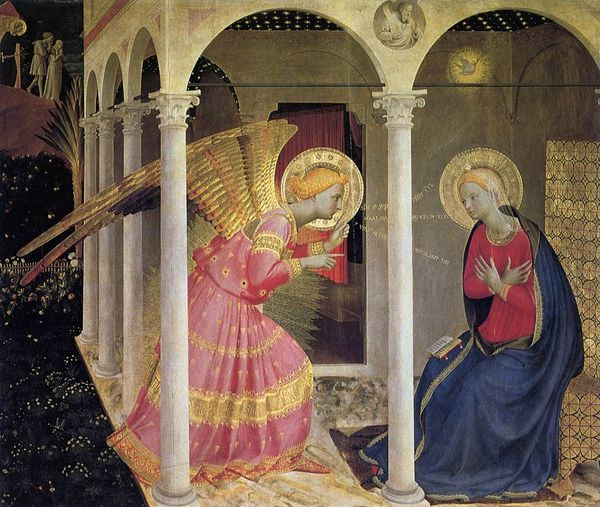
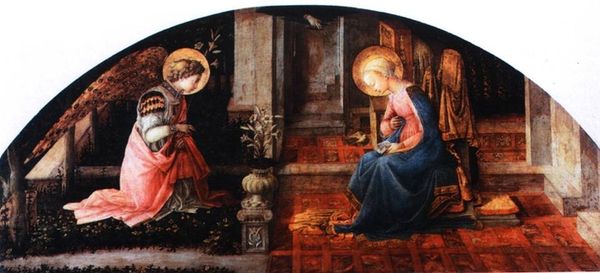
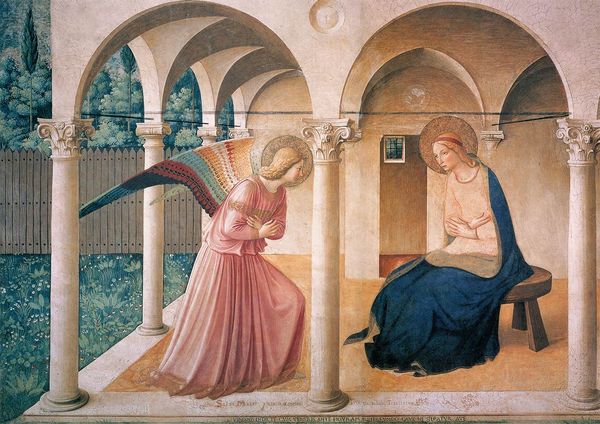
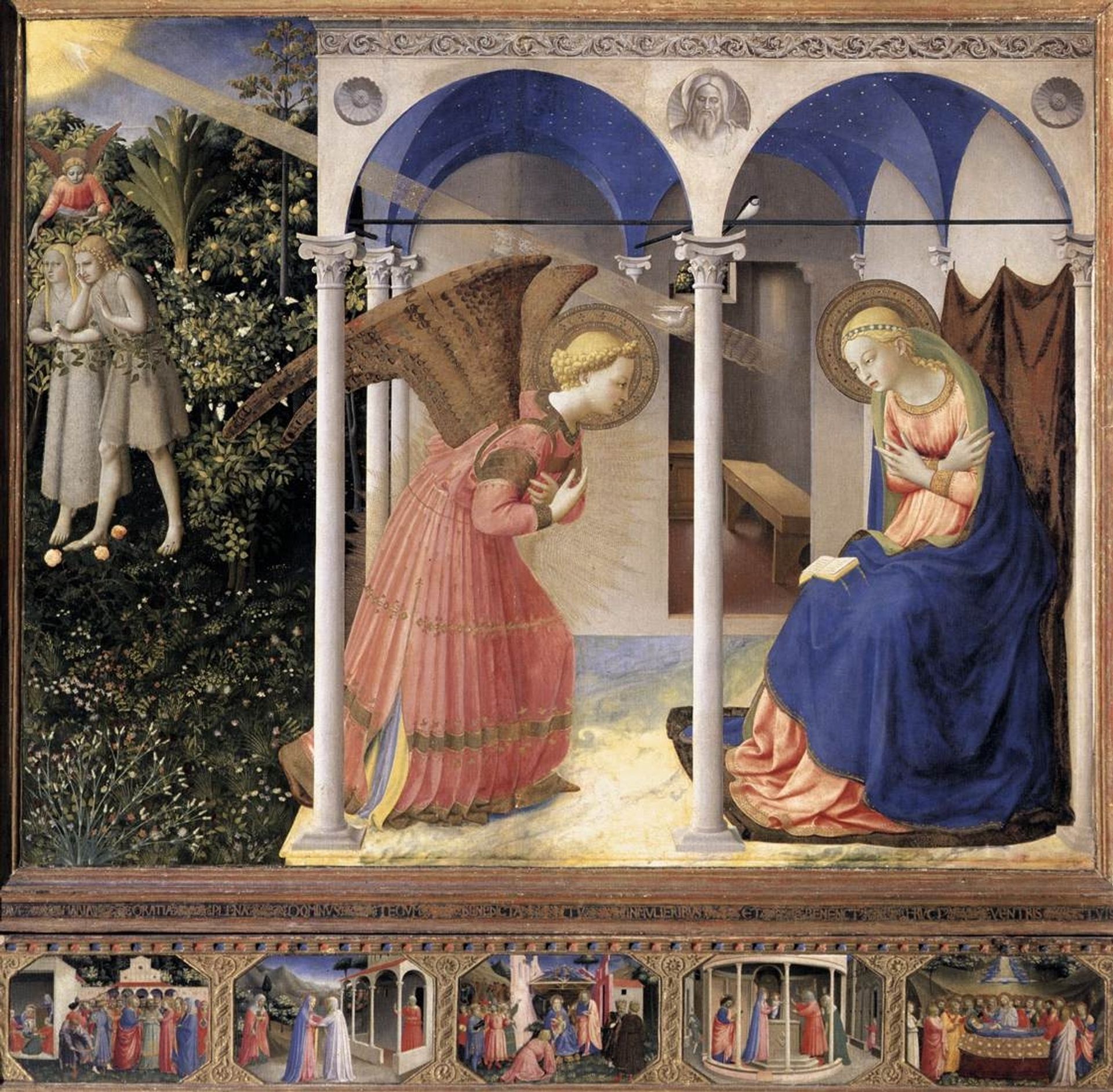
Fra Angelico's 'Annunciation,' painted with tempera on wood, presents a pivotal biblical scene. The egg tempera, made by mixing pigment with egg yolk, gives the colors a luminous, jewel-like quality, very different from the later oil paints. Angelico’s mastery lies in how he merges the spiritual with the tangible, using line and color to create depth and emotion. The figures’ drapery folds, the architectural details, and the serene expressions of the figures, show a skilled hand at work. We can see the influence of the painter's own background in manuscript illumination in the attention to detail. Gold leaf, now dulled with age, would have originally enhanced the divine nature of the moment, catching and reflecting light. Looking at the amount of work involved, we must remember the social context of 15th century Florence. The creation of such a complex piece was labor-intensive and costly, and the artist a highly respected artisan. 'Annunciation' embodies the rich intersection of devotion, craft, and commerce that defined Florentine Renaissance art.

Artwork details
- Medium
- painting, fresco
- Location
- Museo del Prado, Madrid, Spain
- Copyright
- Public domain
Tags
Comments
Share your thoughts
About this artwork
Fra Angelico's 'Annunciation,' painted with tempera on wood, presents a pivotal biblical scene. The egg tempera, made by mixing pigment with egg yolk, gives the colors a luminous, jewel-like quality, very different from the later oil paints. Angelico’s mastery lies in how he merges the spiritual with the tangible, using line and color to create depth and emotion. The figures’ drapery folds, the architectural details, and the serene expressions of the figures, show a skilled hand at work. We can see the influence of the painter's own background in manuscript illumination in the attention to detail. Gold leaf, now dulled with age, would have originally enhanced the divine nature of the moment, catching and reflecting light. Looking at the amount of work involved, we must remember the social context of 15th century Florence. The creation of such a complex piece was labor-intensive and costly, and the artist a highly respected artisan. 'Annunciation' embodies the rich intersection of devotion, craft, and commerce that defined Florentine Renaissance art.
Comments
Share your thoughts