About this artwork
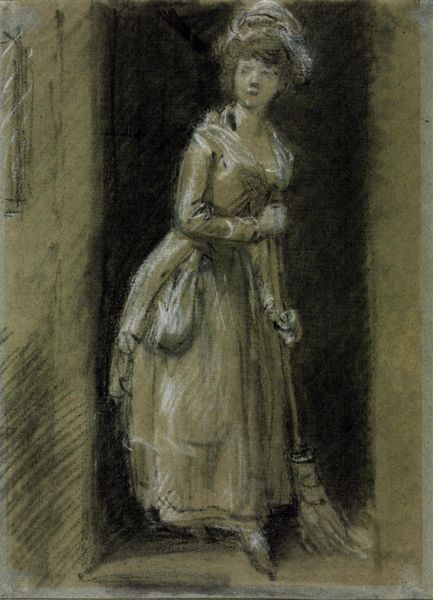
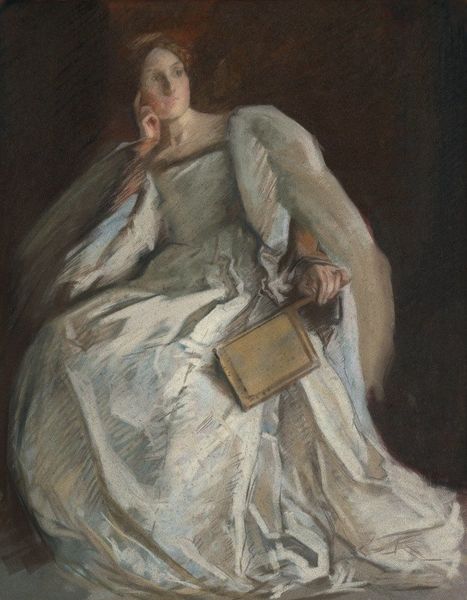
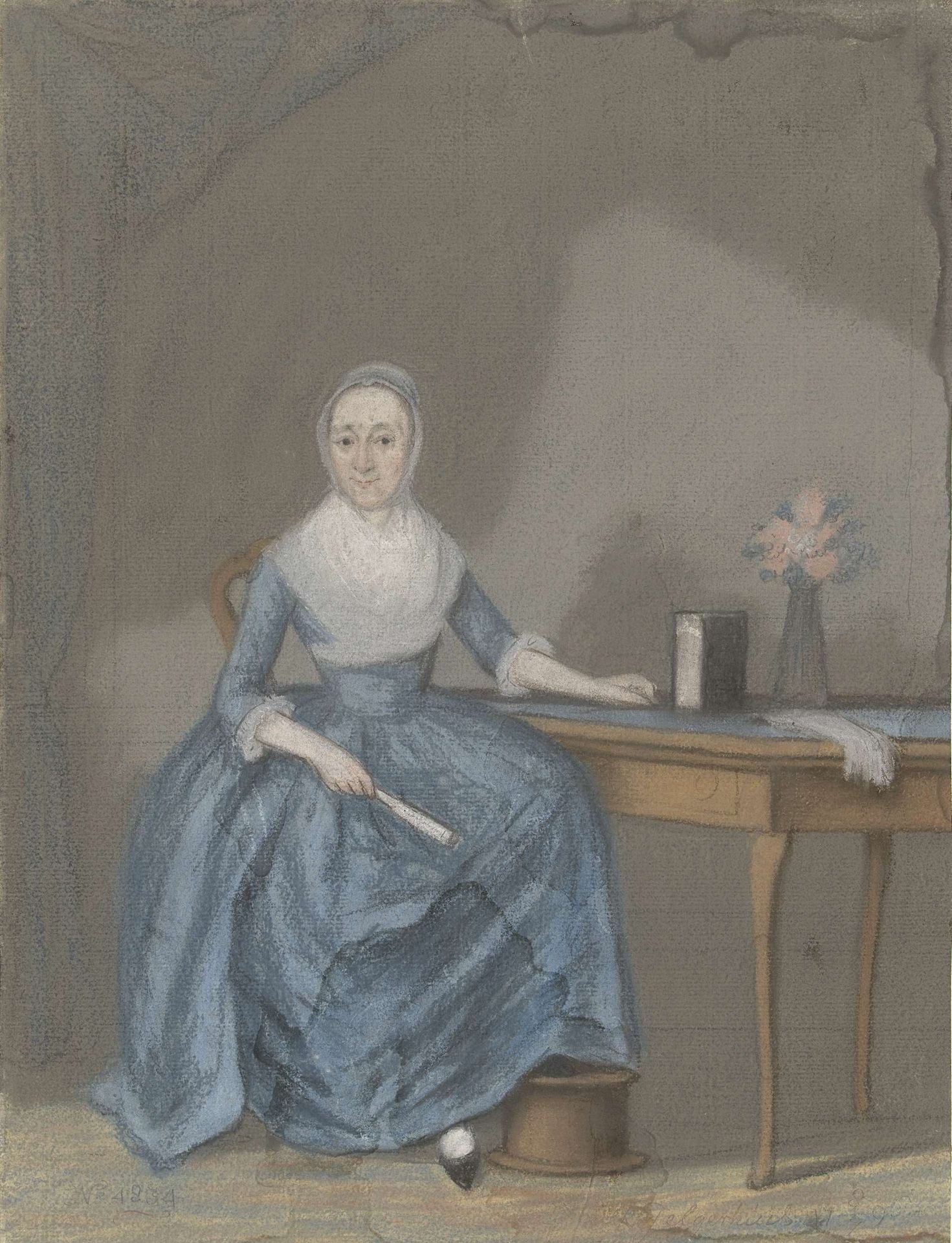
Rienk Jelgerhuis rendered this portrait of Maria de Clerck in pastel, presenting us with a study in contrasts and textures. The muted background sets the stage for the figure, whose dress is rendered in detailed, flowing lines that evoke the soft folds of the fabric. The composition is carefully arranged, balancing the soft curves of Maria's dress with the hard lines of the table and hat box. The pastel medium allows for a subtle blending of colors, creating a soft, almost dreamlike quality. Jelgerhuis uses light to define form, with gentle highlights on Maria's face and dress, creating a sense of volume and depth. Look closely at the way the artist captures the texture of the dress and the smooth surface of the table. These details are not merely decorative; they are integral to the work's meaning, inviting the viewer to consider the material world and its representation through art. It’s a study in materiality, where the very substance of the pastel contributes to our understanding of the subject.
Portret van Maria de Clerck, echtgenote van Pieter van Lockhorst Possibly 1796 - 1798

Artwork details
- Medium
- watercolor
- Dimensions
- height 420 mm, width 320 mm
- Copyright
- Rijks Museum: Open Domain
Tags
portrait
figuration
watercolor
romanticism
genre-painting
watercolor
Comments
No comments
About this artwork
Rienk Jelgerhuis rendered this portrait of Maria de Clerck in pastel, presenting us with a study in contrasts and textures. The muted background sets the stage for the figure, whose dress is rendered in detailed, flowing lines that evoke the soft folds of the fabric. The composition is carefully arranged, balancing the soft curves of Maria's dress with the hard lines of the table and hat box. The pastel medium allows for a subtle blending of colors, creating a soft, almost dreamlike quality. Jelgerhuis uses light to define form, with gentle highlights on Maria's face and dress, creating a sense of volume and depth. Look closely at the way the artist captures the texture of the dress and the smooth surface of the table. These details are not merely decorative; they are integral to the work's meaning, inviting the viewer to consider the material world and its representation through art. It’s a study in materiality, where the very substance of the pastel contributes to our understanding of the subject.
Comments
No comments