About this artwork
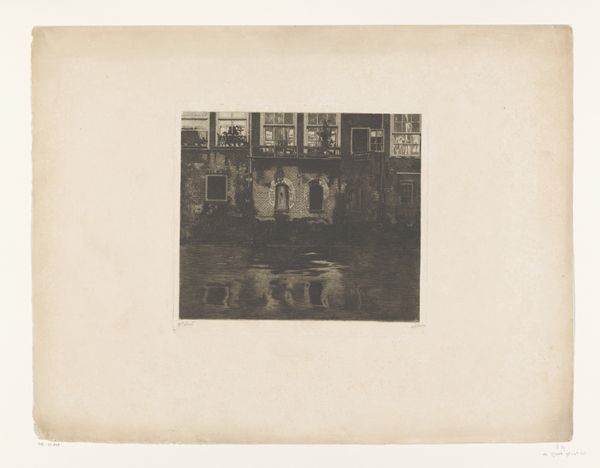
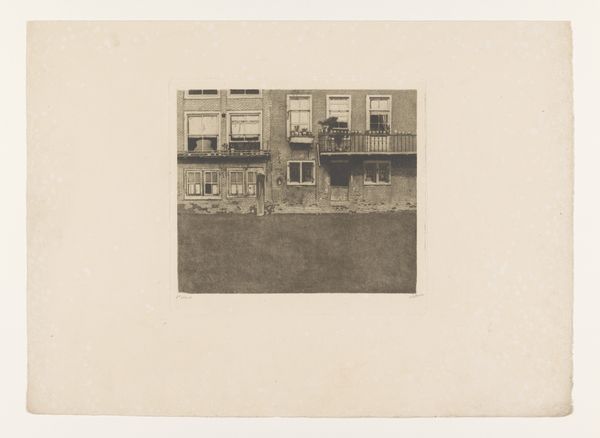
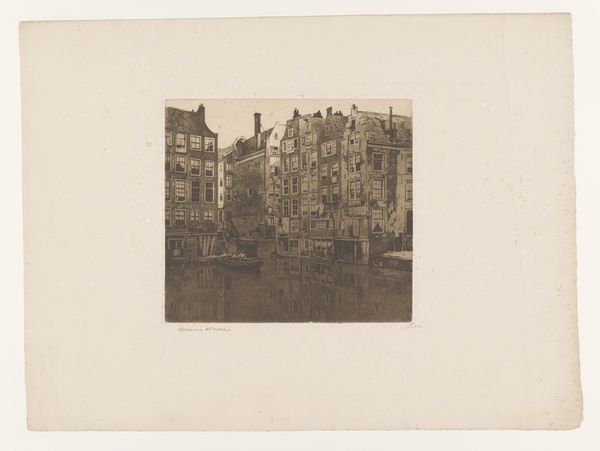
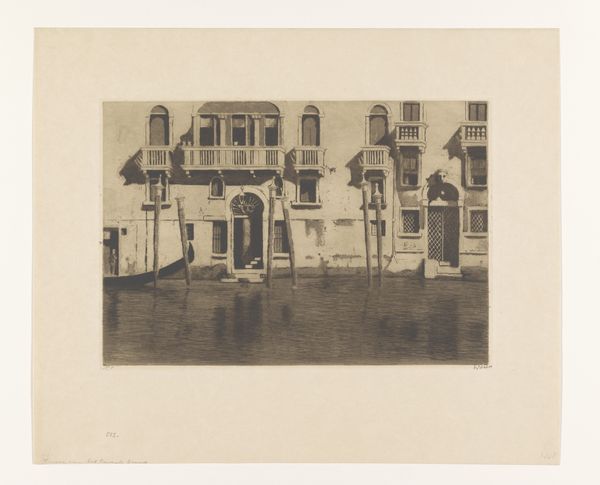
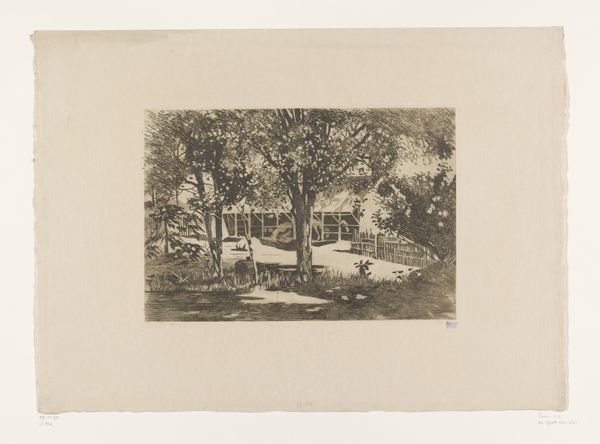
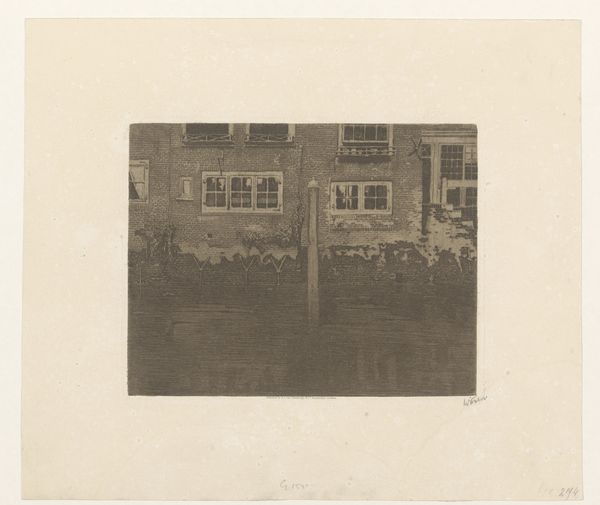
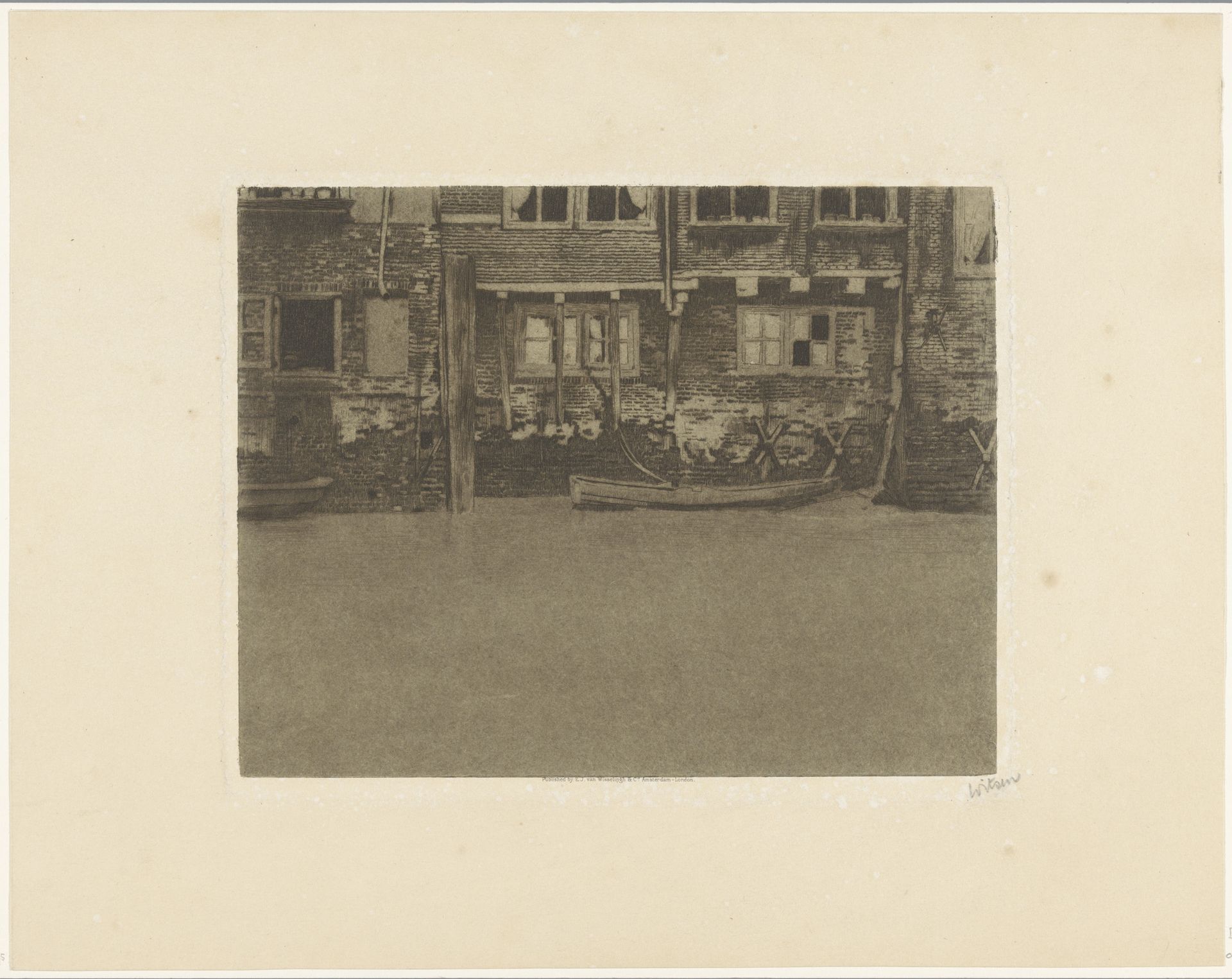
Willem Witsen made this etching, "Achtergevels van de Voorstraat 463, 461 en 459 in Dordrecht," using a technique that allows for detailed, tonal representations, likely at the turn of the 20th century. Witsen, who came from an upper-class background, often depicted Amsterdam and Dordrecht, capturing the quiet, often melancholic, beauty of urban life. This work presents the rear facades of buildings reflected in the water, which obscures a clear distinction between the architecture and its watery reflection. The lack of human presence evokes a sense of stillness and solitude. There’s an interesting tension in his work: though he came from privilege, he was drawn to these more humble and often overlooked scenes of the city. The way the buildings seem to blend into the water might be suggestive of the more fluid boundaries of class and identity in a rapidly changing society. This etching invites us to consider how we find beauty and value in the everyday, and how our perceptions are shaped by our own social positions.
Achtergevels van de Voorstraat 463, 461 en 459 in Dordrecht
c. 1898 - 1900

Willem Witsen
1860 - 1923Location
RijksmuseumArtwork details
- Dimensions
- height 188 mm, width 240 mm
- Location
- Rijksmuseum
- Copyright
- Rijks Museum: Open Domain
Comments
Share your thoughts
About this artwork
Willem Witsen made this etching, "Achtergevels van de Voorstraat 463, 461 en 459 in Dordrecht," using a technique that allows for detailed, tonal representations, likely at the turn of the 20th century. Witsen, who came from an upper-class background, often depicted Amsterdam and Dordrecht, capturing the quiet, often melancholic, beauty of urban life. This work presents the rear facades of buildings reflected in the water, which obscures a clear distinction between the architecture and its watery reflection. The lack of human presence evokes a sense of stillness and solitude. There’s an interesting tension in his work: though he came from privilege, he was drawn to these more humble and often overlooked scenes of the city. The way the buildings seem to blend into the water might be suggestive of the more fluid boundaries of class and identity in a rapidly changing society. This etching invites us to consider how we find beauty and value in the everyday, and how our perceptions are shaped by our own social positions.
Comments
Share your thoughts