About this artwork
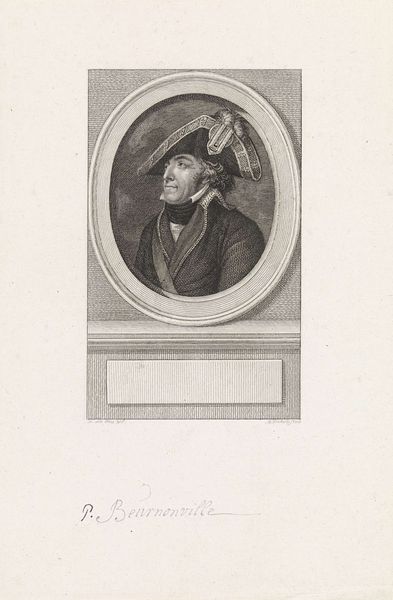
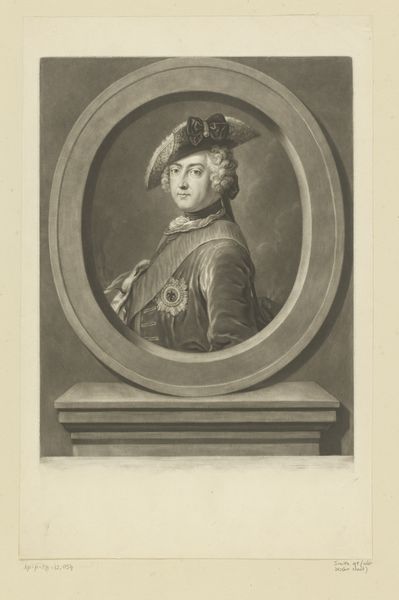
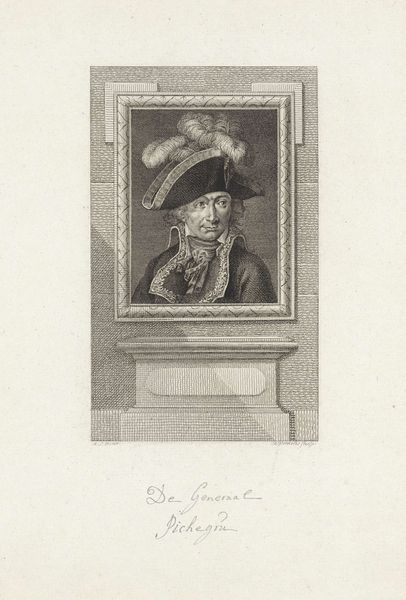
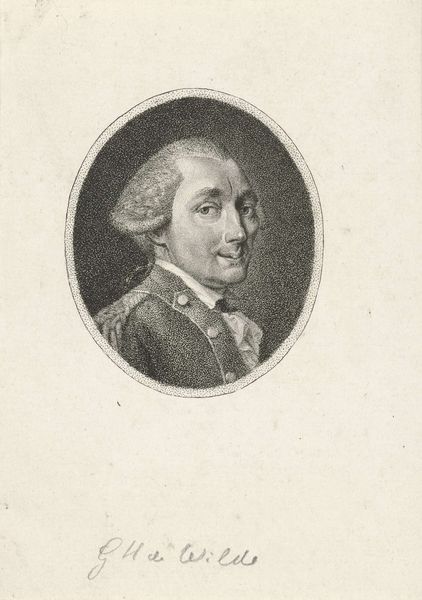
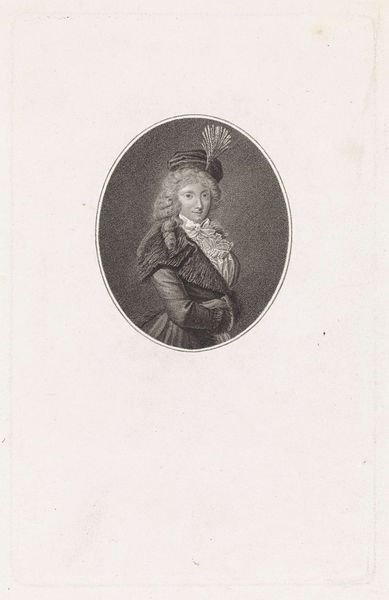
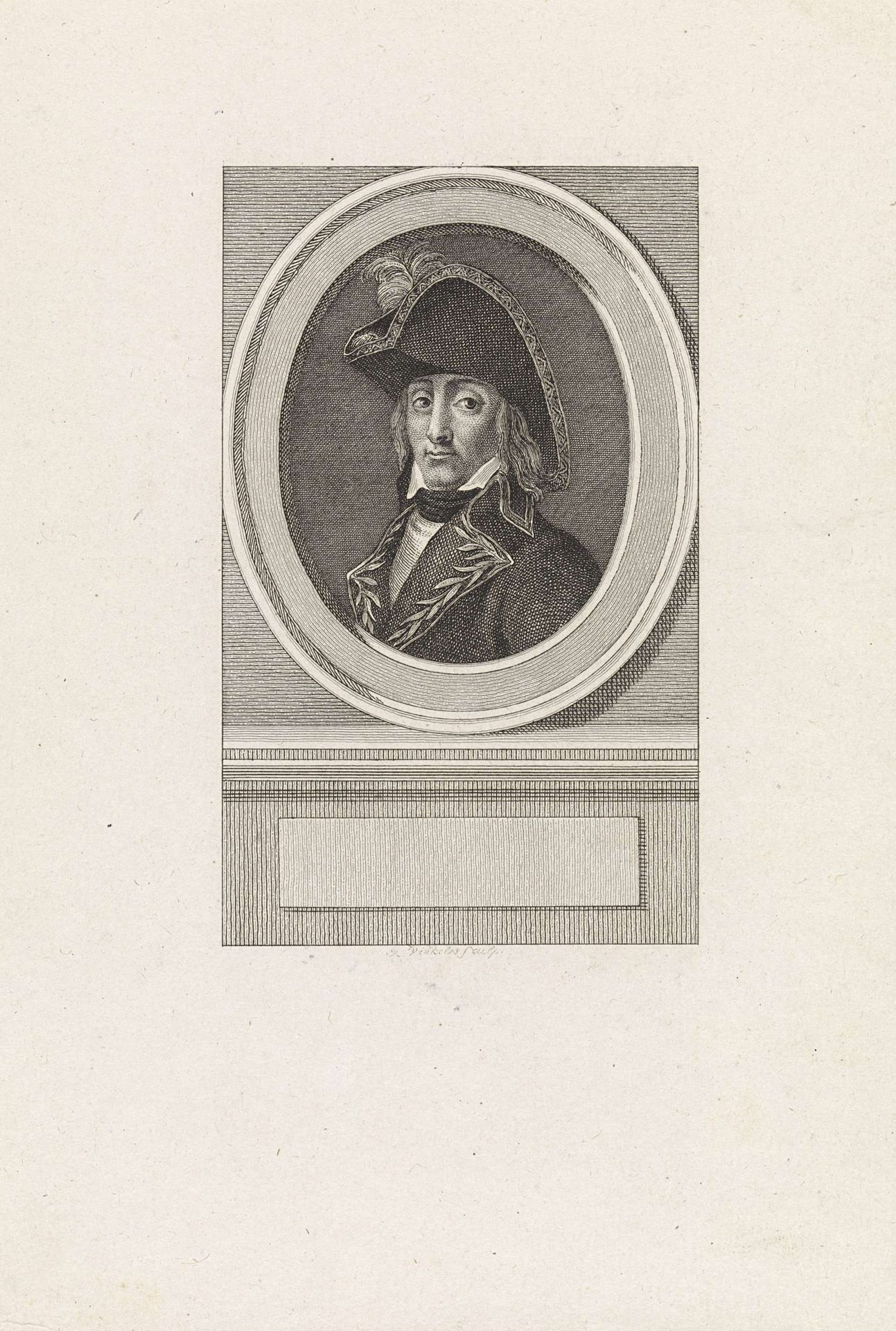
Curator: There's a striking severity in this image, a formality that seems so characteristic of its time. Editor: Yes, that intense, almost theatrical presence. This is a portrait of Pierre François Charles Augereau, dating from sometime between 1751 and 1816, rendered as an engraving. Curator: The oval frame within the engraving really adds to that sense of historical distance, like viewing a figure frozen in a specific moment. Is that a standard frame used during this period? Editor: It's a framing device that speaks volumes, historically. Ovals were fashionable, often employed to ennoble the subject, lending an air of classical antiquity, particularly appealing in the Neoclassical era. They mimic cameo brooches and suggest enduring status, like the busts of Emperors in Ancient Rome. Curator: It works so well to communicate authority. Tell me, how would this have circulated? Was it meant for the public or just members of his social circle? Editor: Engravings like this were often produced for wider distribution. They allowed for the reproduction and dissemination of images, functioning almost as the photographs of their day, spreading ideals about leadership and status among a growing public audience. It allowed Augereau to solidify his legacy and position himself as an exemplary figure within French society. Curator: The hat is particularly symbolic. Note the decorative feather. Was this a status symbol too? Editor: Absolutely, everything within the frame has meaning! That hat declares his military standing, its embellishments indicative of rank and accomplishment. This attention to detail broadcasts clear messages regarding power dynamics and military might of the Napoleonic Era. The lack of color concentrates the eye on the intricate textures achieved with such simplicity and stark lines. Curator: I see echoes of the ideals of the time—of order, reason, and this drive to immortalize figures… It speaks volumes about the values being projected. I can definitely explore the layers of status encoded here! Editor: And I was struck by how engravings such as this created visual legacies and further built social capital during a pivotal moment in French history. They had more function than only documenting appearance.
Portret van Pierre François Charles Augereau
1751 - 1816

Reinier Vinkeles
1741 - 1816Location
RijksmuseumArtwork details
- Medium
- engraving
- Dimensions
- height 246 mm, width 169 mm
- Location
- Rijksmuseum
- Copyright
- Rijks Museum: Open Domain
Tags
Comments
Share your thoughts
About this artwork
Curator: There's a striking severity in this image, a formality that seems so characteristic of its time. Editor: Yes, that intense, almost theatrical presence. This is a portrait of Pierre François Charles Augereau, dating from sometime between 1751 and 1816, rendered as an engraving. Curator: The oval frame within the engraving really adds to that sense of historical distance, like viewing a figure frozen in a specific moment. Is that a standard frame used during this period? Editor: It's a framing device that speaks volumes, historically. Ovals were fashionable, often employed to ennoble the subject, lending an air of classical antiquity, particularly appealing in the Neoclassical era. They mimic cameo brooches and suggest enduring status, like the busts of Emperors in Ancient Rome. Curator: It works so well to communicate authority. Tell me, how would this have circulated? Was it meant for the public or just members of his social circle? Editor: Engravings like this were often produced for wider distribution. They allowed for the reproduction and dissemination of images, functioning almost as the photographs of their day, spreading ideals about leadership and status among a growing public audience. It allowed Augereau to solidify his legacy and position himself as an exemplary figure within French society. Curator: The hat is particularly symbolic. Note the decorative feather. Was this a status symbol too? Editor: Absolutely, everything within the frame has meaning! That hat declares his military standing, its embellishments indicative of rank and accomplishment. This attention to detail broadcasts clear messages regarding power dynamics and military might of the Napoleonic Era. The lack of color concentrates the eye on the intricate textures achieved with such simplicity and stark lines. Curator: I see echoes of the ideals of the time—of order, reason, and this drive to immortalize figures… It speaks volumes about the values being projected. I can definitely explore the layers of status encoded here! Editor: And I was struck by how engravings such as this created visual legacies and further built social capital during a pivotal moment in French history. They had more function than only documenting appearance.
Comments
Share your thoughts