About this artwork
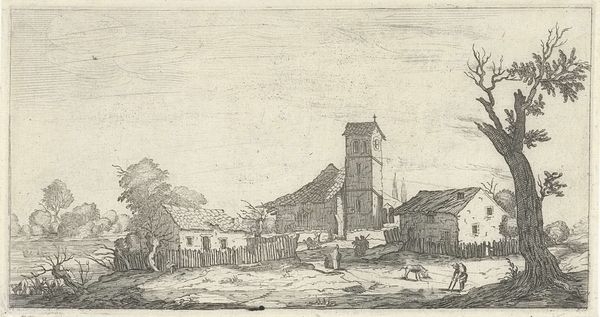
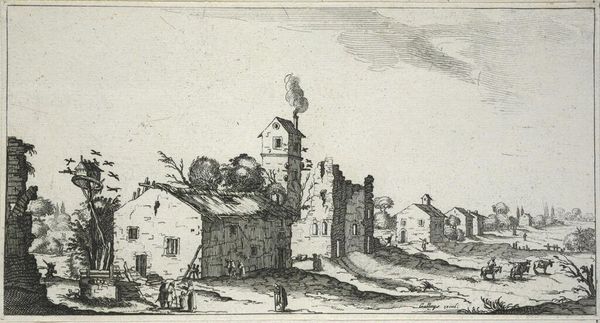
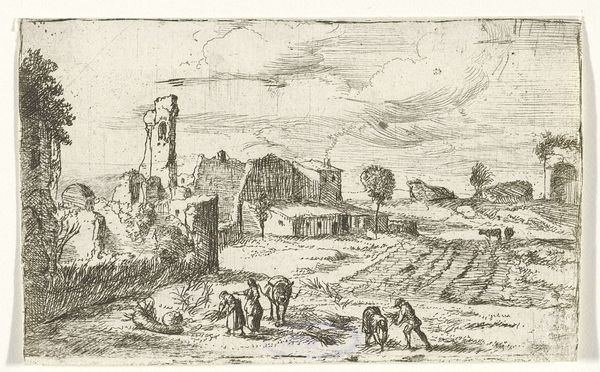
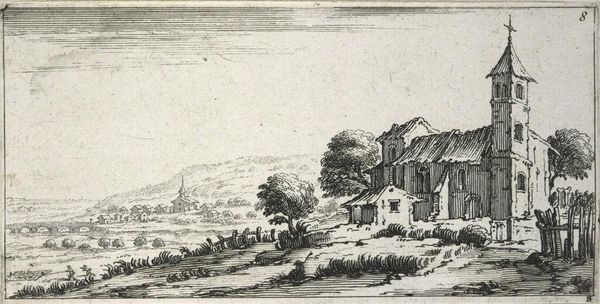
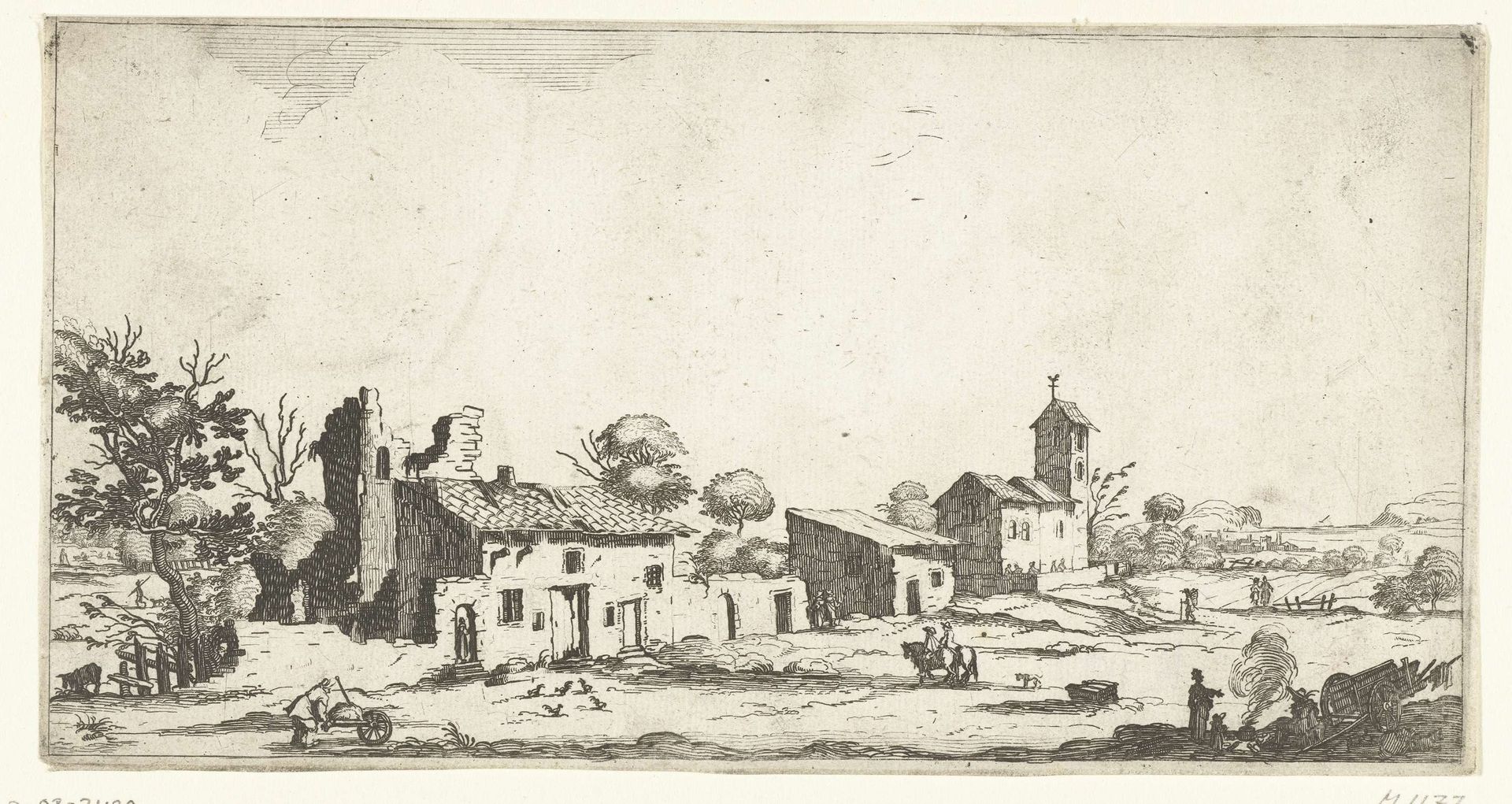
François Collignon created this landscape with church and man with wheelbarrow sometime in the 17th century, using etching techniques. The artist incised lines into a metal plate with a sharp needle, then bathed it in acid. This process eats away at the exposed lines, creating grooves. Ink is then applied to the plate, filling these grooves, and the surface is wiped clean. Finally, paper is pressed against the plate, transferring the image. What is compelling here is how Collignon used the graphic language of etching to depict the textures of everyday life. See how the etched lines delicately define form, volume, and surface? You can almost feel the rough stone of the dilapidated buildings, the weight of the wheelbarrow, and the vastness of the landscape. This attention to material reality brings a sense of dignity to the common laborer, and asks us to consider the relationship between people, place, and the work that sustains them. It's a reminder that even the humblest materials and processes can yield profound artistic expression.
Landschap met kerk en man met kruiwagen 1620 - 1687

François Collignon
1605 - 1687Location
RijksmuseumArtwork details
- Medium
- print, etching
- Dimensions
- height 111 mm, width 211 mm
- Location
- Rijksmuseum
- Copyright
- Rijks Museum: Open Domain
Tags
baroque
etching
landscape
Comments
No comments
About this artwork
François Collignon created this landscape with church and man with wheelbarrow sometime in the 17th century, using etching techniques. The artist incised lines into a metal plate with a sharp needle, then bathed it in acid. This process eats away at the exposed lines, creating grooves. Ink is then applied to the plate, filling these grooves, and the surface is wiped clean. Finally, paper is pressed against the plate, transferring the image. What is compelling here is how Collignon used the graphic language of etching to depict the textures of everyday life. See how the etched lines delicately define form, volume, and surface? You can almost feel the rough stone of the dilapidated buildings, the weight of the wheelbarrow, and the vastness of the landscape. This attention to material reality brings a sense of dignity to the common laborer, and asks us to consider the relationship between people, place, and the work that sustains them. It's a reminder that even the humblest materials and processes can yield profound artistic expression.
Comments
No comments