About this artwork
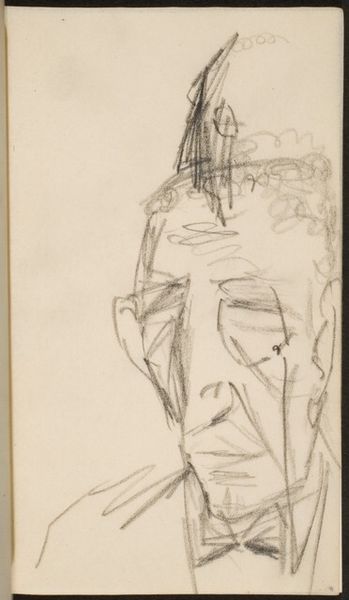
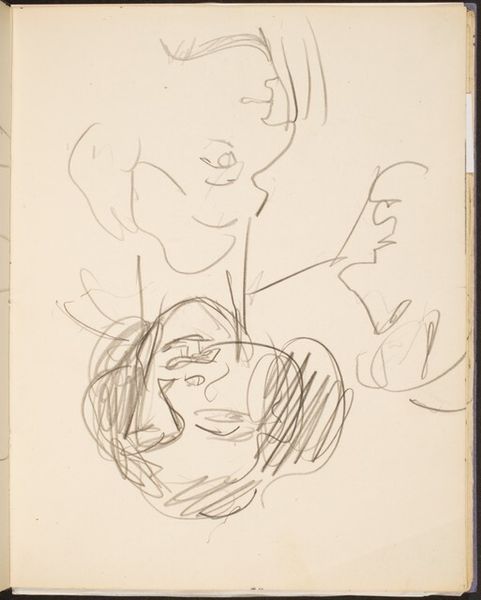
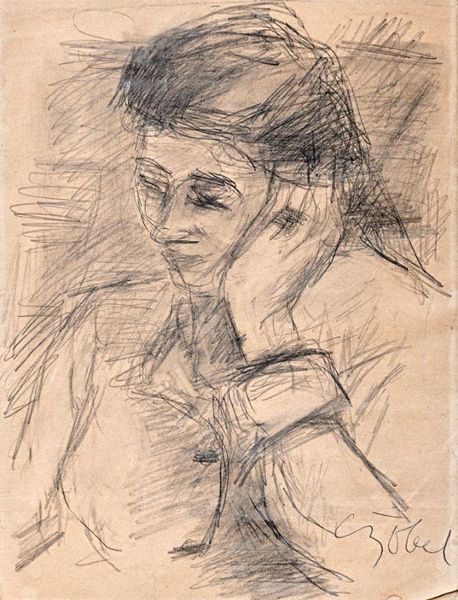
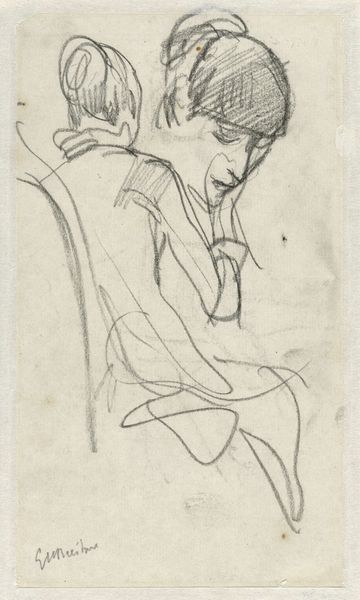
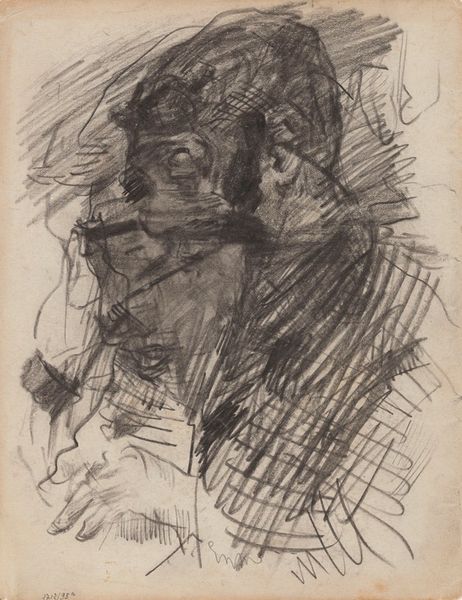
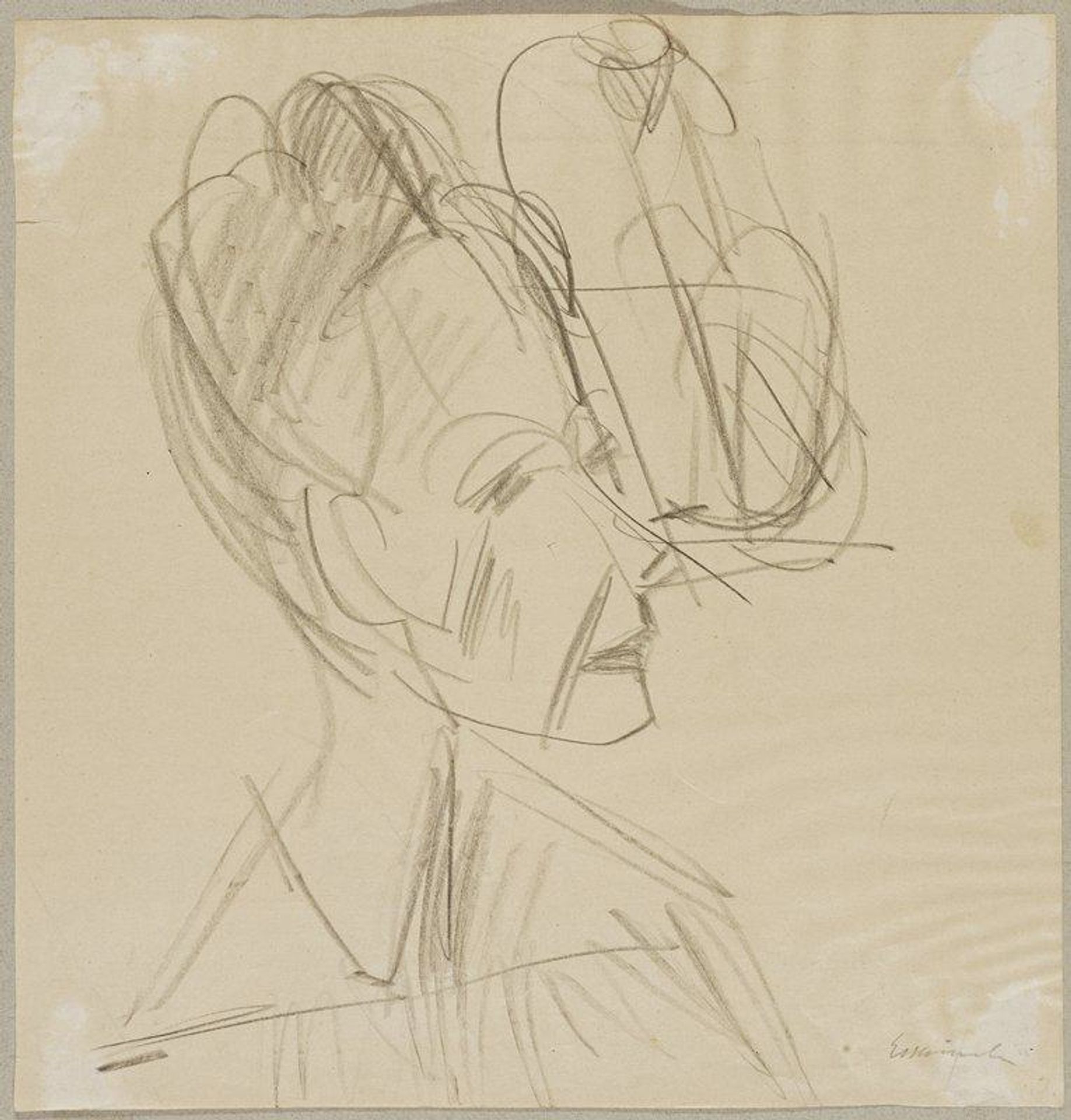
Editor: Here we have Ernst Ludwig Kirchner's "Head Study," made sometime between 1915 and 1920, a delicate pencil drawing. I'm struck by its raw, almost unfinished quality, and the way it conveys a sense of interiority despite the minimal detail. What do you see in this piece? Curator: The first thing that draws my attention is the use of line. Note how Kirchner employs short, sharp, and broken lines to define the subject's form. This isn’t about verisimilitude; rather, the lines create a sense of energy and tension. Consider the relationship between the density of the marks in the head versus the relative openness of the collar; how might that formal distinction inform our interpretation? Editor: It seems the more complex lines give more volume and definition to the figure’s head. The collar looks simpler, more static... almost an afterthought? Curator: Precisely. Furthermore, examine the spatial relationships created. The layering of lines suggests depth, but the lack of shading flattens the image. This push and pull between flatness and depth is a crucial aspect of its visual interest. One may even analyze the semiotic effect the sharp, angled lines produce within this drawing. Editor: So, it's not just about what the head looks like, but about how Kirchner uses line and space to create an effect, a feeling... almost to communicate a psychological state through form itself. Curator: Precisely. Form becomes content. Notice too how the subject looks away, evading our gaze; this draws focus onto the visual composition as such and invites more profound interpretive investigation of line and structure within the drawing. Editor: It's fascinating how a seemingly simple drawing can be so rich in formal complexities. Thanks, that's given me a whole new perspective on it. Curator: Indeed. By attending to the formal elements, we begin to unravel the intricate web of meaning embedded within. It speaks to the artist's deliberate choices.
Head Study
1915 - 1920


Artwork details
- Medium
- drawing, pencil
- Dimensions
- 12 1/2 × 12 1/8 in. (31.75 × 30.8 cm) (sheet)16 3/4 × 15 3/4 × 1 in. (42.55 × 40.01 × 2.54 cm) (outer frame)
- Location
- Minneapolis Institute of Art
- Copyright
- No Copyright - United States
Tags
Comments
Share your thoughts
About this artwork
Editor: Here we have Ernst Ludwig Kirchner's "Head Study," made sometime between 1915 and 1920, a delicate pencil drawing. I'm struck by its raw, almost unfinished quality, and the way it conveys a sense of interiority despite the minimal detail. What do you see in this piece? Curator: The first thing that draws my attention is the use of line. Note how Kirchner employs short, sharp, and broken lines to define the subject's form. This isn’t about verisimilitude; rather, the lines create a sense of energy and tension. Consider the relationship between the density of the marks in the head versus the relative openness of the collar; how might that formal distinction inform our interpretation? Editor: It seems the more complex lines give more volume and definition to the figure’s head. The collar looks simpler, more static... almost an afterthought? Curator: Precisely. Furthermore, examine the spatial relationships created. The layering of lines suggests depth, but the lack of shading flattens the image. This push and pull between flatness and depth is a crucial aspect of its visual interest. One may even analyze the semiotic effect the sharp, angled lines produce within this drawing. Editor: So, it's not just about what the head looks like, but about how Kirchner uses line and space to create an effect, a feeling... almost to communicate a psychological state through form itself. Curator: Precisely. Form becomes content. Notice too how the subject looks away, evading our gaze; this draws focus onto the visual composition as such and invites more profound interpretive investigation of line and structure within the drawing. Editor: It's fascinating how a seemingly simple drawing can be so rich in formal complexities. Thanks, that's given me a whole new perspective on it. Curator: Indeed. By attending to the formal elements, we begin to unravel the intricate web of meaning embedded within. It speaks to the artist's deliberate choices.
Comments
Share your thoughts