About this artwork
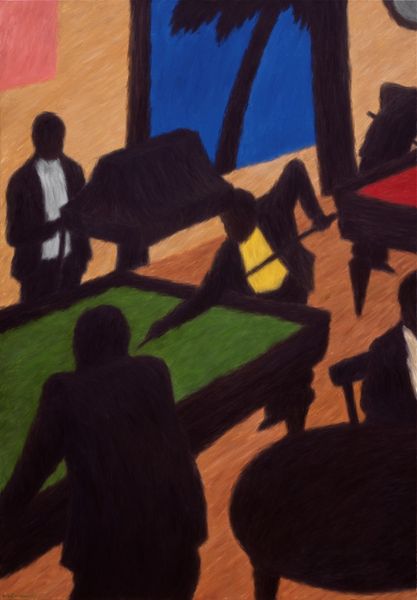
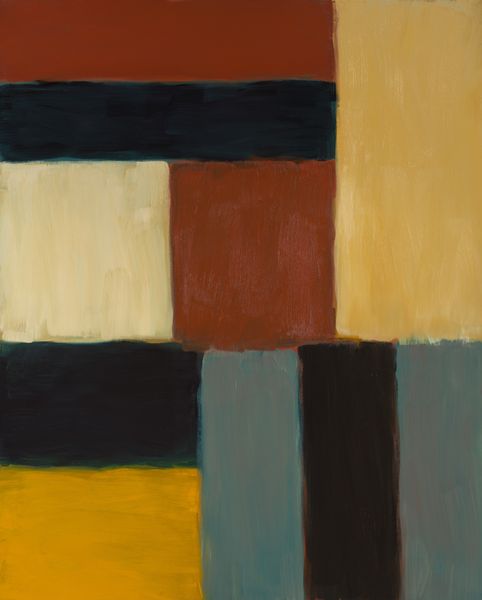
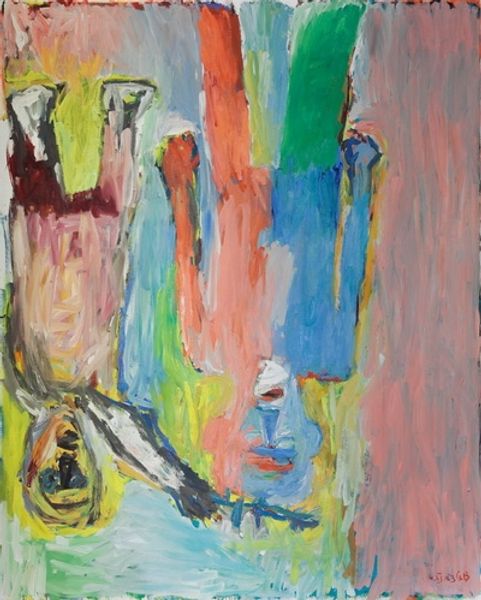
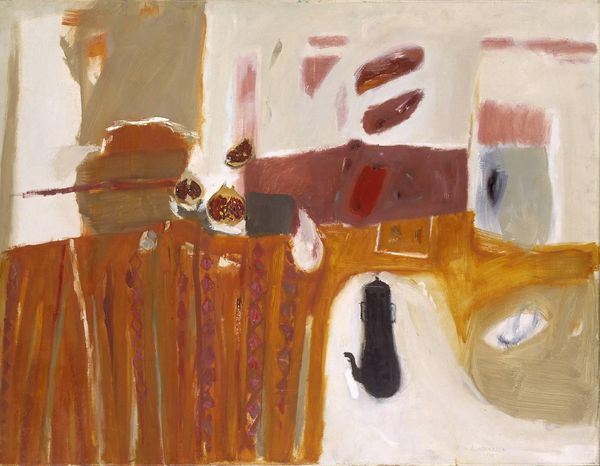
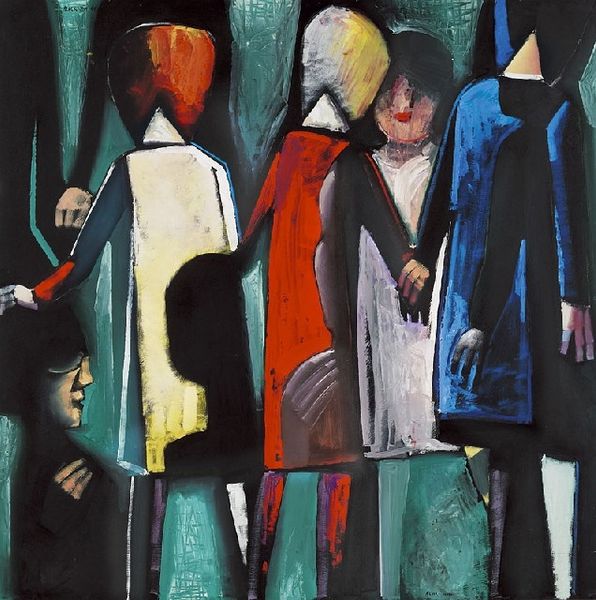
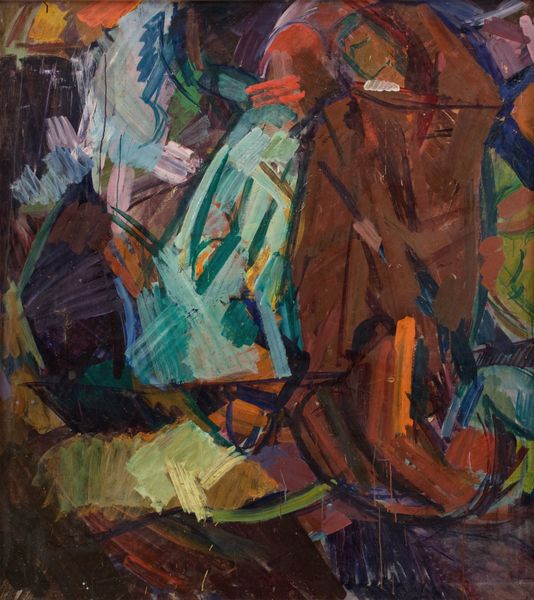
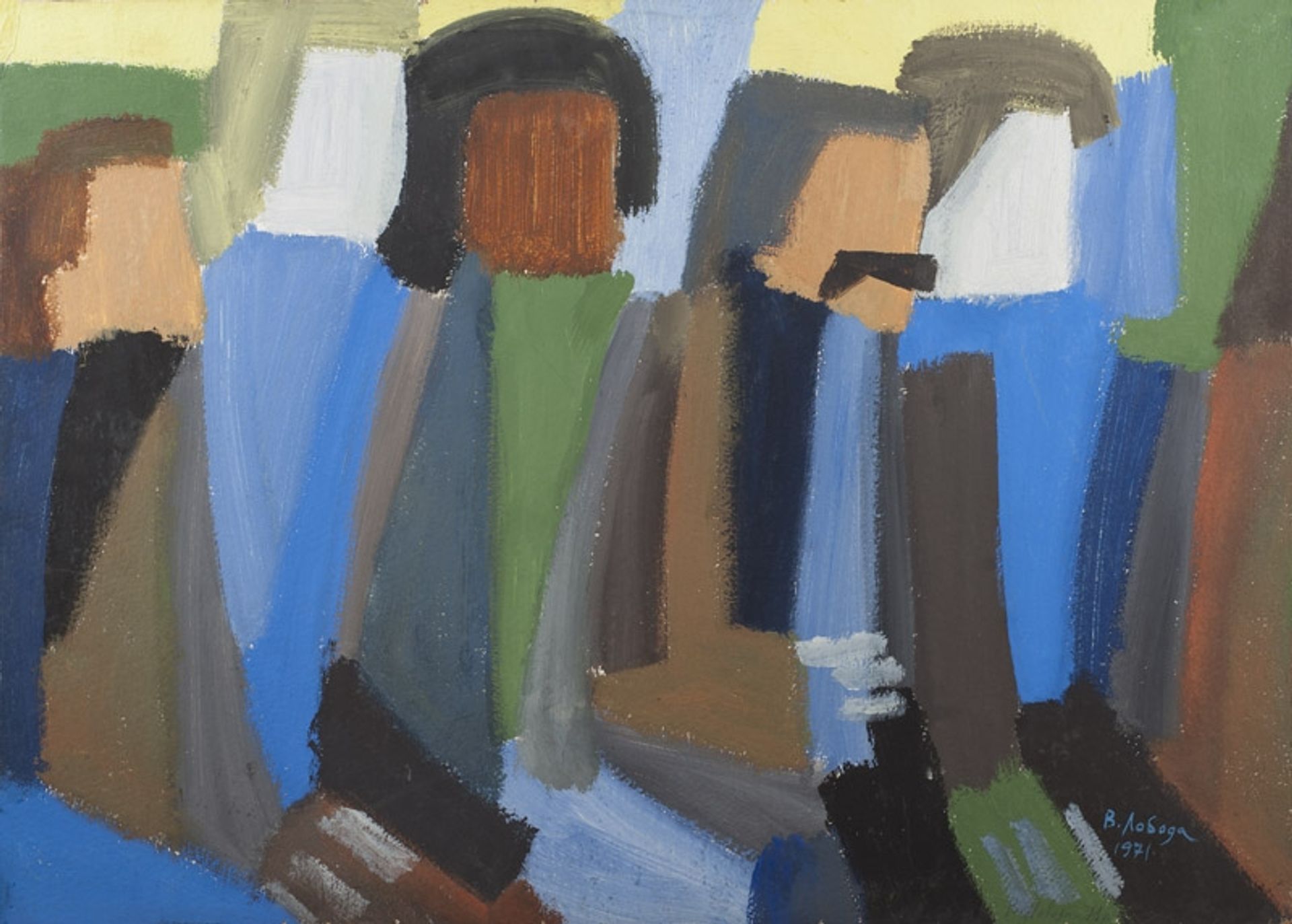
Volodymyr Loboda made this painting, Fellows Marching, with oil on canvas. What I really love about this painting is the way Loboda simplifies everything into blocky shapes. Look at how the figures are suggested with just a few strokes of color. It’s almost like he's creating a puzzle, figuring out how little he can do to make us see a crowd of people. The paint itself seems applied directly, with visible brushstrokes that add to the raw, immediate feel of the work. It's not about perfection; it's about capturing a moment. I am drawn to the area with the white mark. It's like a little burst of light, maybe a cloud or a puff of smoke, and it breaks up the rhythm of the march, adding a touch of something unexpected. I'm reminded a little of Alexej von Jawlensky's portraits, where faces become abstract fields of color, but with a distinctly folk-art sensibility. Loboda is really interesting because he is using these painting strategies to explore the representation of the human form.

Artwork details
- Dimensions
- 50 x 70 cm
- Copyright
- Volodymyr Loboda,Fair Use
Comments
Share your thoughts
About this artwork
Volodymyr Loboda made this painting, Fellows Marching, with oil on canvas. What I really love about this painting is the way Loboda simplifies everything into blocky shapes. Look at how the figures are suggested with just a few strokes of color. It’s almost like he's creating a puzzle, figuring out how little he can do to make us see a crowd of people. The paint itself seems applied directly, with visible brushstrokes that add to the raw, immediate feel of the work. It's not about perfection; it's about capturing a moment. I am drawn to the area with the white mark. It's like a little burst of light, maybe a cloud or a puff of smoke, and it breaks up the rhythm of the march, adding a touch of something unexpected. I'm reminded a little of Alexej von Jawlensky's portraits, where faces become abstract fields of color, but with a distinctly folk-art sensibility. Loboda is really interesting because he is using these painting strategies to explore the representation of the human form.
Comments
Share your thoughts