About this artwork
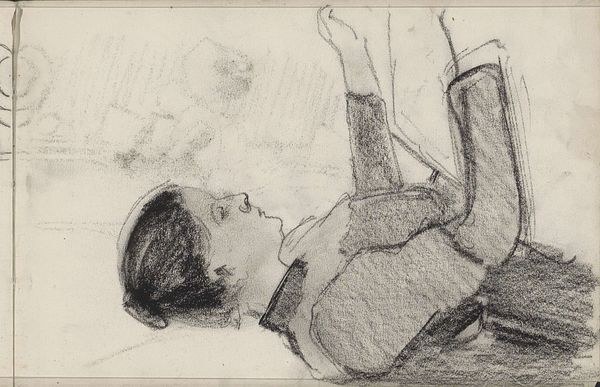
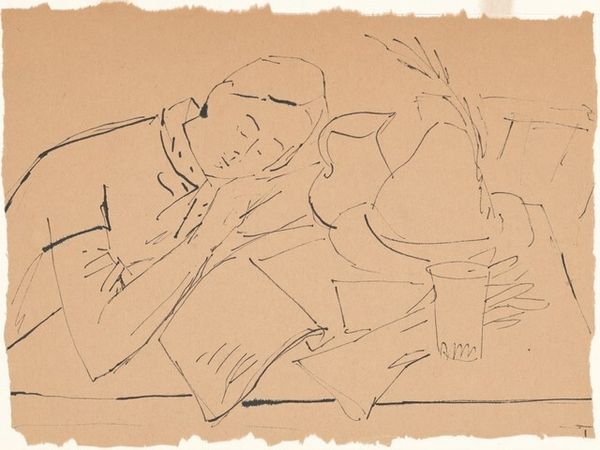
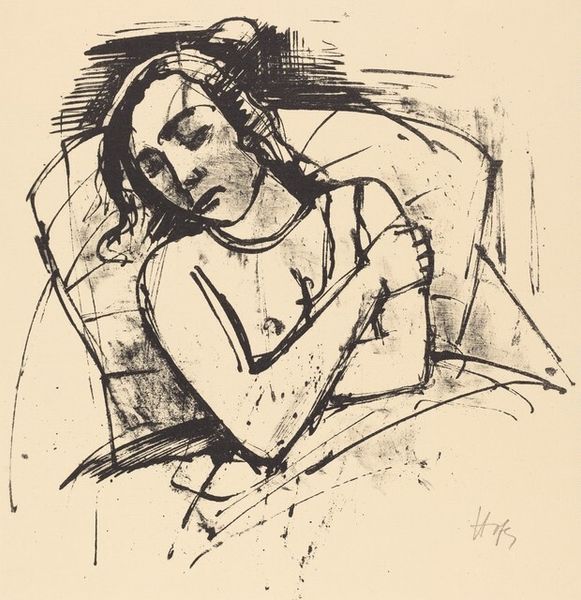
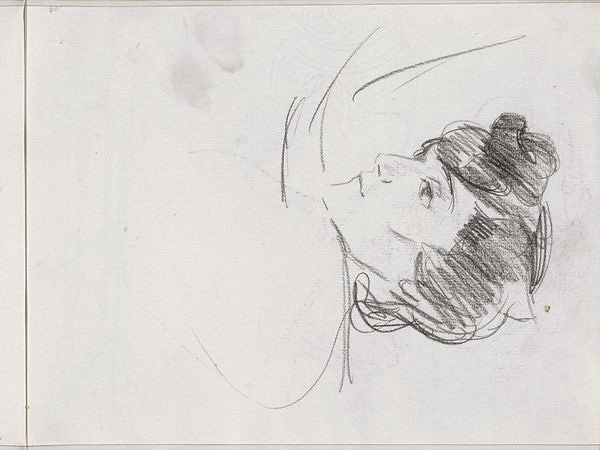
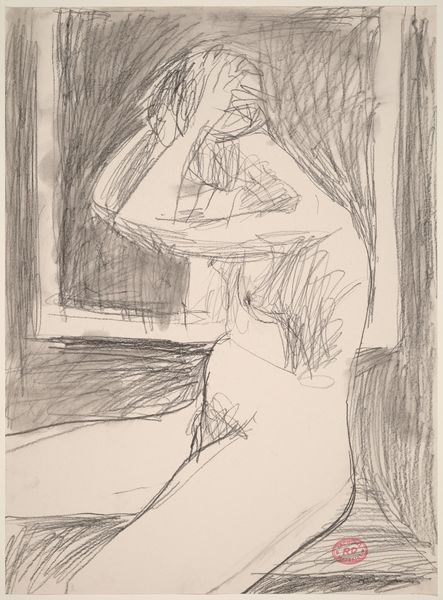
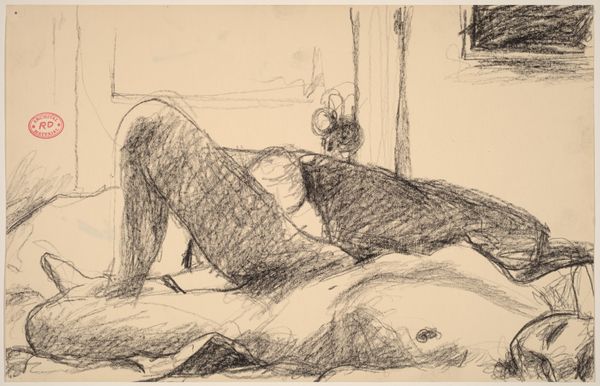
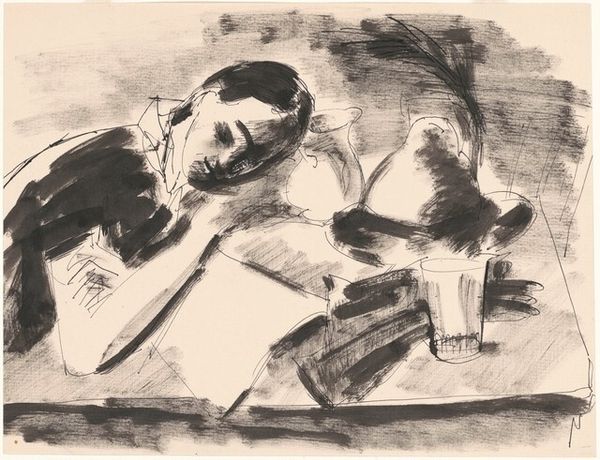
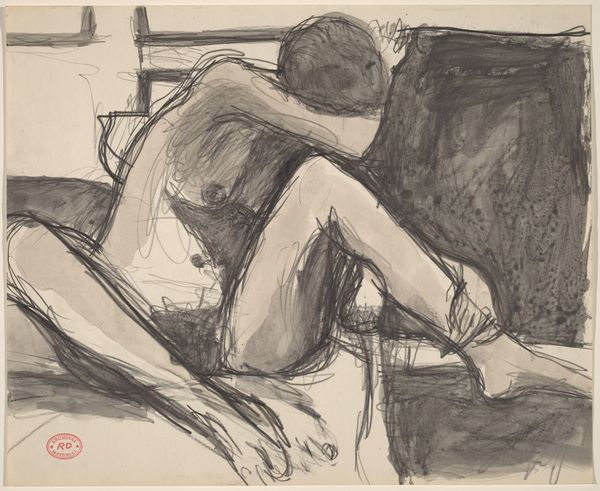
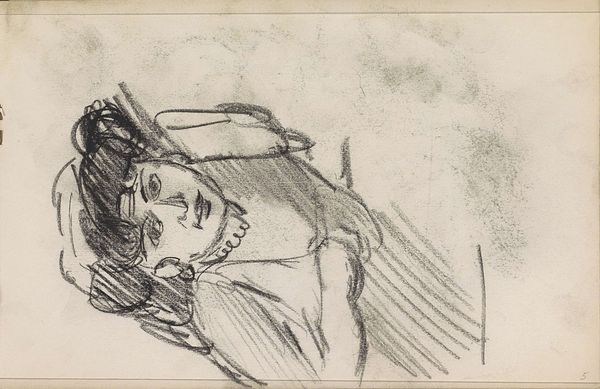
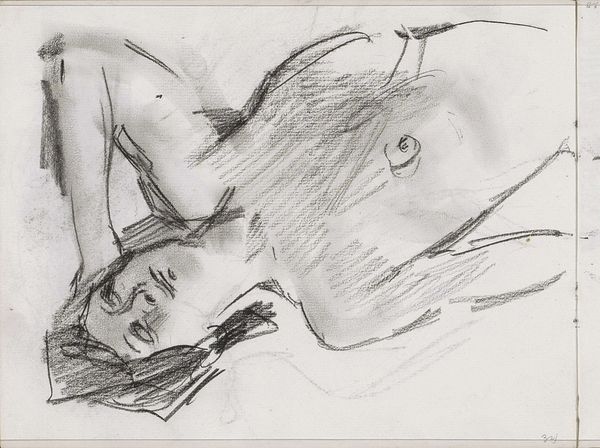
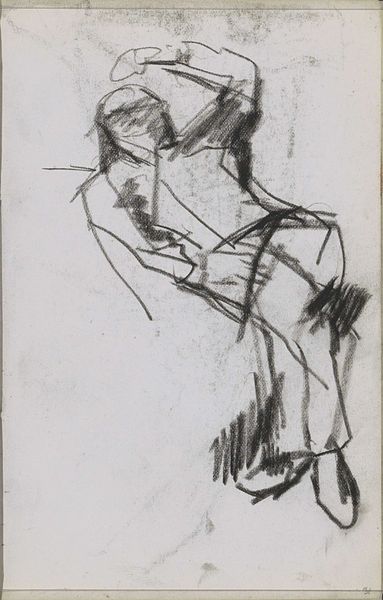
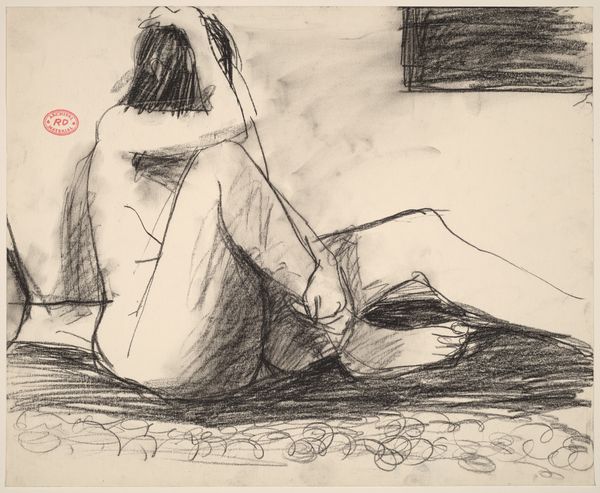
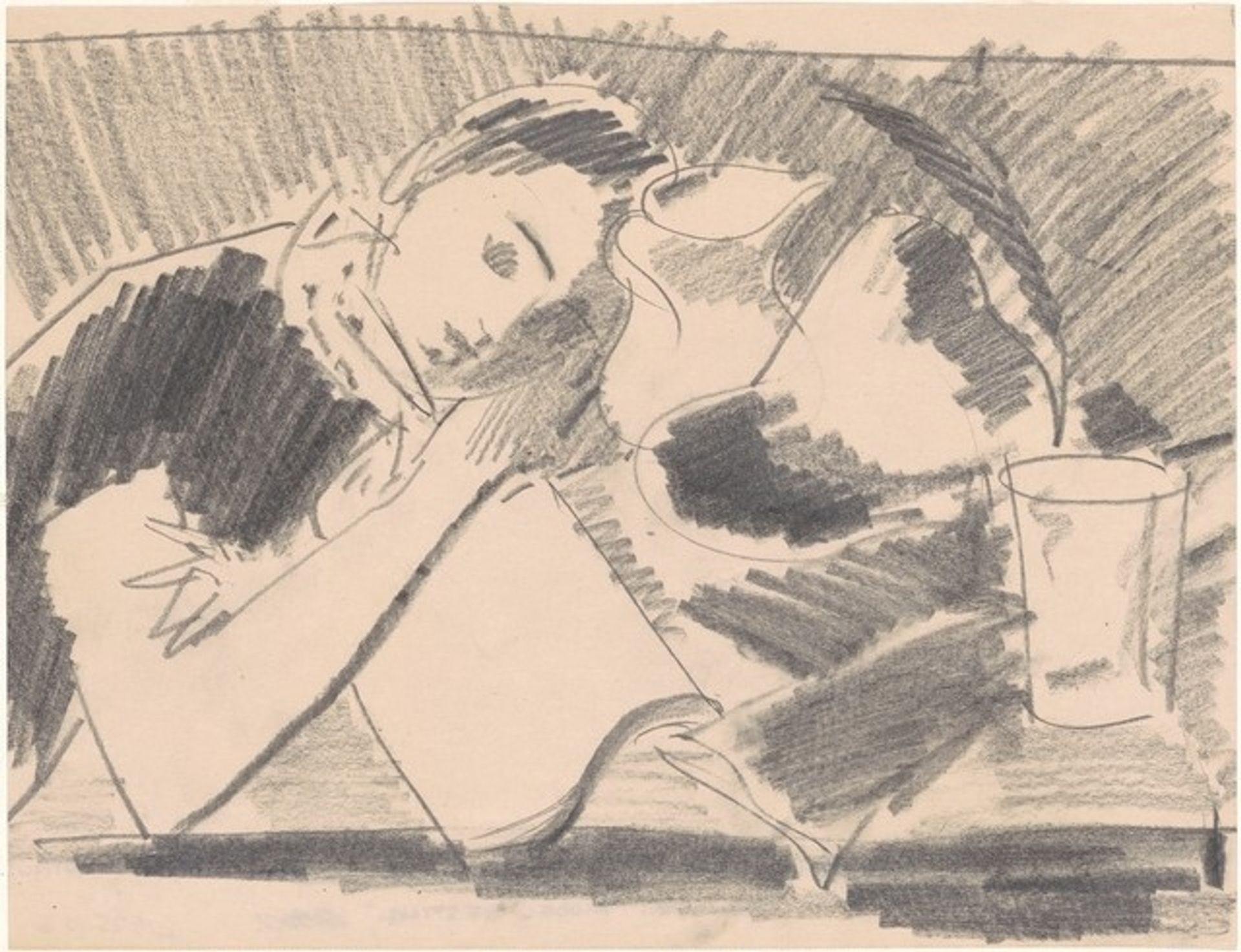
Albert Serwazi made this graphite on paper drawing called "Study for 'Model Resting'" and you can see it’s all about the layering. The diagonal hatching creates form and shadow, all built up with these simple marks. It’s like Serwazi is thinking through his process, making a kind of map of the model, or even a map of his own looking. You know, when I look at this, I'm drawn to the way he’s described the figure's right arm, resting in her lap. It's so economical, just a few lines suggesting the shape, and the hand is so delicately rendered, but it’s not overworked. It's like he's saying, "Here's enough, just enough, to give you the feeling of the thing." The drawing contains a kind of vulnerability. And the way he lets some lines fade out, leaving areas open, it’s like he's inviting us to complete the picture. It reminds me a little of some of Matisse's drawings – that same sense of capturing a feeling with minimal means. It’s this ongoing conversation in art, this process of learning from each other, across time.
Study for "Model Resting"
1938


Artwork details
- Medium
- drawing, pencil
- Dimensions
- sheet: 22.07 × 28.58 cm (8 11/16 × 11 1/4 in.)
- Copyright
- National Gallery of Art: CC0 1.0
Tags
Comments
Share your thoughts
About this artwork
Albert Serwazi made this graphite on paper drawing called "Study for 'Model Resting'" and you can see it’s all about the layering. The diagonal hatching creates form and shadow, all built up with these simple marks. It’s like Serwazi is thinking through his process, making a kind of map of the model, or even a map of his own looking. You know, when I look at this, I'm drawn to the way he’s described the figure's right arm, resting in her lap. It's so economical, just a few lines suggesting the shape, and the hand is so delicately rendered, but it’s not overworked. It's like he's saying, "Here's enough, just enough, to give you the feeling of the thing." The drawing contains a kind of vulnerability. And the way he lets some lines fade out, leaving areas open, it’s like he's inviting us to complete the picture. It reminds me a little of some of Matisse's drawings – that same sense of capturing a feeling with minimal means. It’s this ongoing conversation in art, this process of learning from each other, across time.
Comments
Share your thoughts