About this artwork
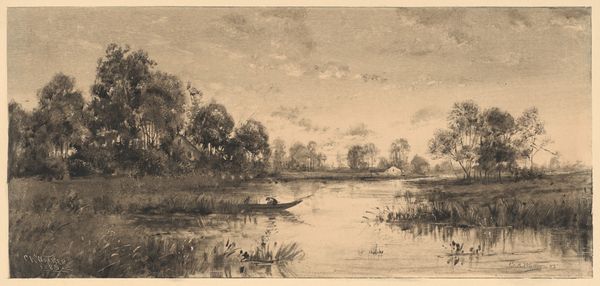
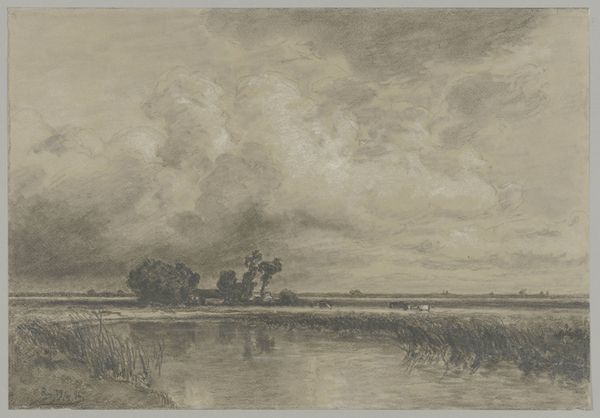
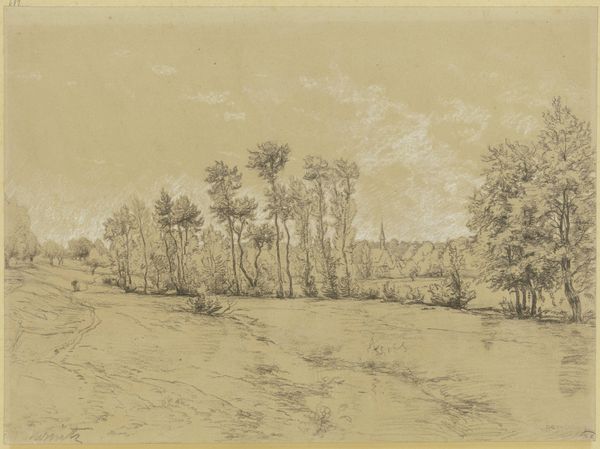
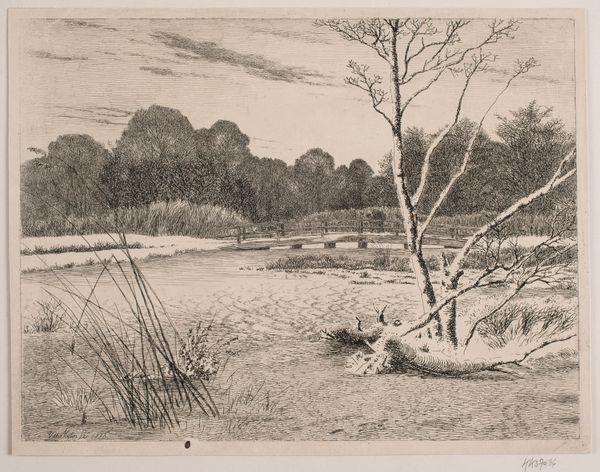
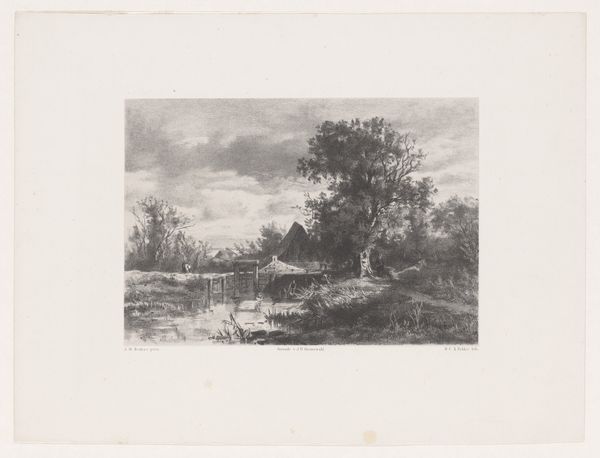
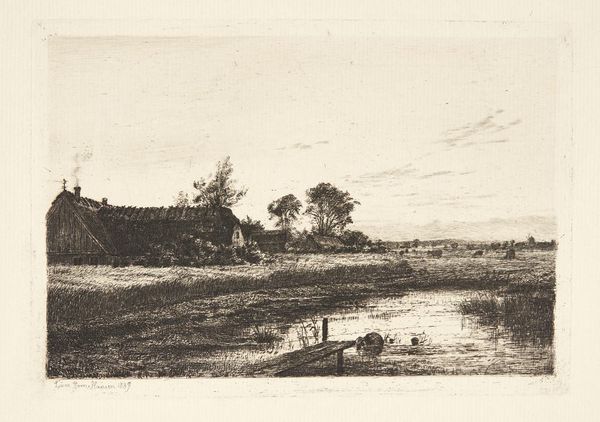
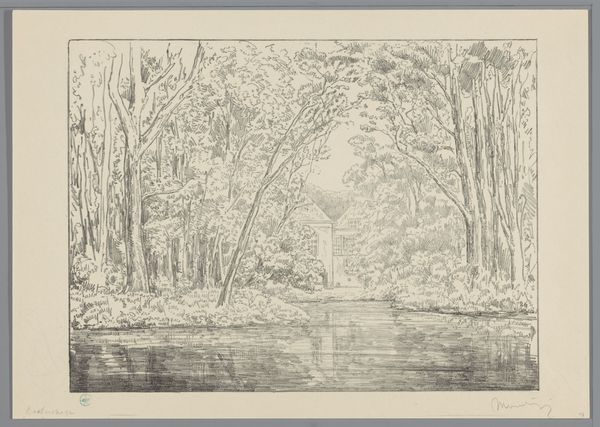
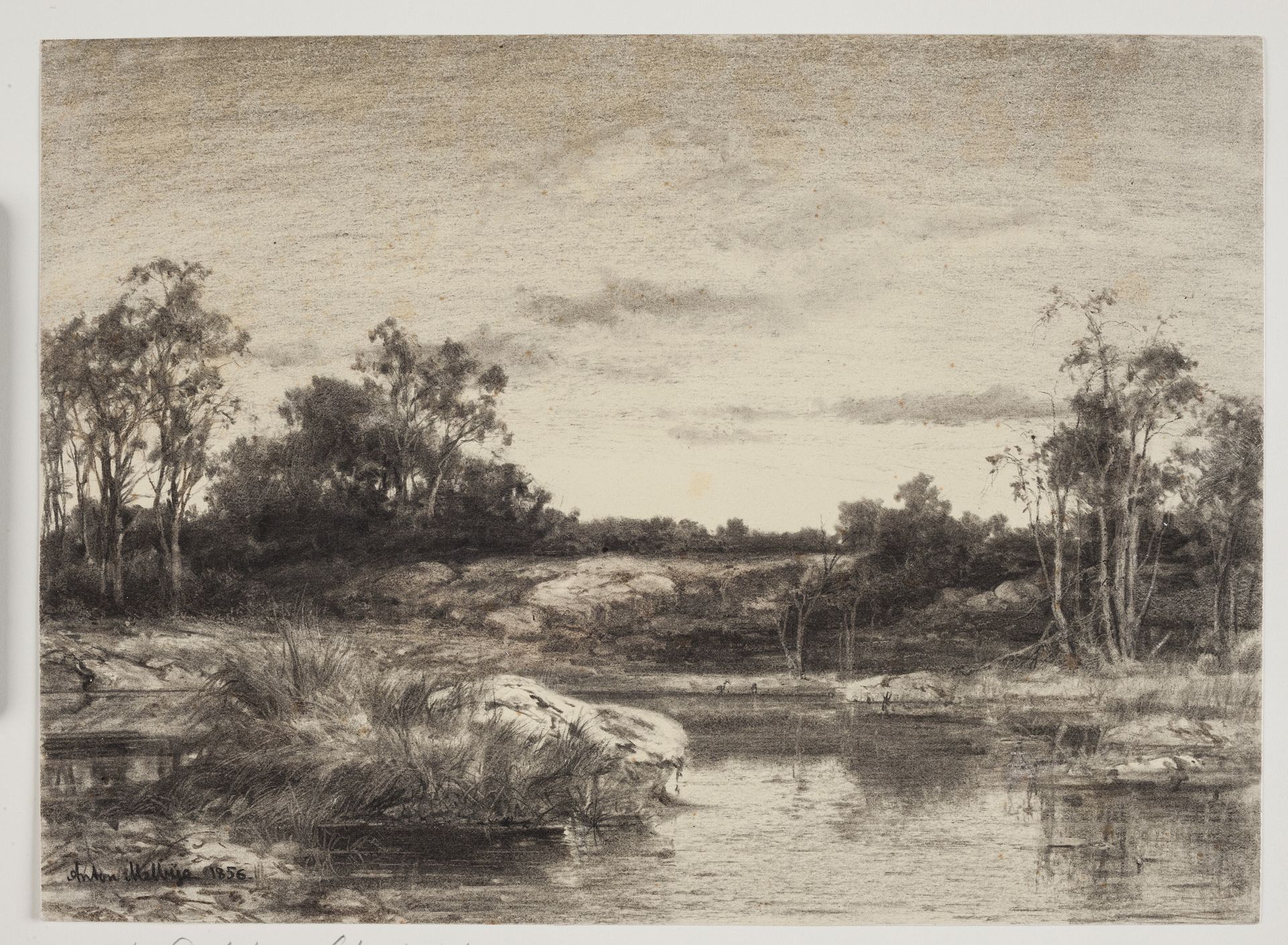
Anton Melbye made this landscape drawing with graphite on paper in 1856. Graphite, in its raw form, is a mineral, but for drawing it's usually mixed with clay and formed into a pencil. The amount of clay determines the hardness and darkness of the pencil. Looking closely, you can see the variety of marks Melbye achieved, from the soft, smudged sky to the sharp, detailed reflections in the water. The grainy texture of the paper also plays a role, catching the graphite and adding depth to the image. The choice of graphite is significant. It's a readily available, relatively inexpensive material. Unlike painting, drawing lends itself to quick studies and preliminary sketches. Melbye may have used this drawing to capture a fleeting moment of light and atmosphere. Considering the social context, graphite became more widely available in the 19th century due to industrial production. This made drawing accessible to a broader range of artists. So, while the subject of the artwork is nature, the means of creating it is tied to wider social issues of labor and consumption. Appreciating the material and process helps us understand the artwork's full meaning, moving beyond traditional distinctions between fine art and craft.
Landscape with a river or lake in the foreground
1856


Artwork details
- Dimensions
- 207 mm (height) x 287 mm (width) (bladmaal)
- Location
- SMK - Statens Museum for Kunst
Comments
Be the first to share your thoughts about this work.
About this artwork
Anton Melbye made this landscape drawing with graphite on paper in 1856. Graphite, in its raw form, is a mineral, but for drawing it's usually mixed with clay and formed into a pencil. The amount of clay determines the hardness and darkness of the pencil. Looking closely, you can see the variety of marks Melbye achieved, from the soft, smudged sky to the sharp, detailed reflections in the water. The grainy texture of the paper also plays a role, catching the graphite and adding depth to the image. The choice of graphite is significant. It's a readily available, relatively inexpensive material. Unlike painting, drawing lends itself to quick studies and preliminary sketches. Melbye may have used this drawing to capture a fleeting moment of light and atmosphere. Considering the social context, graphite became more widely available in the 19th century due to industrial production. This made drawing accessible to a broader range of artists. So, while the subject of the artwork is nature, the means of creating it is tied to wider social issues of labor and consumption. Appreciating the material and process helps us understand the artwork's full meaning, moving beyond traditional distinctions between fine art and craft.
Comments
Be the first to share your thoughts about this work.