About this artwork
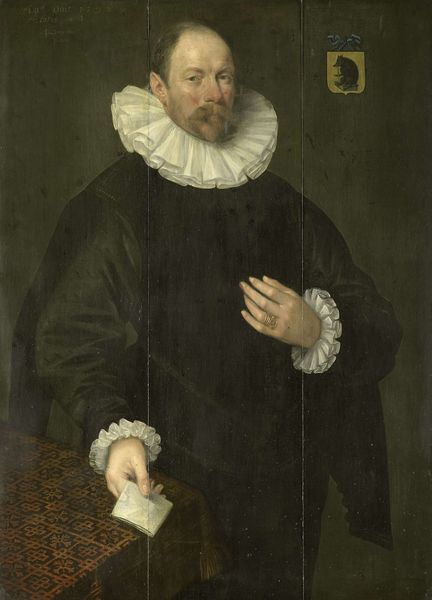
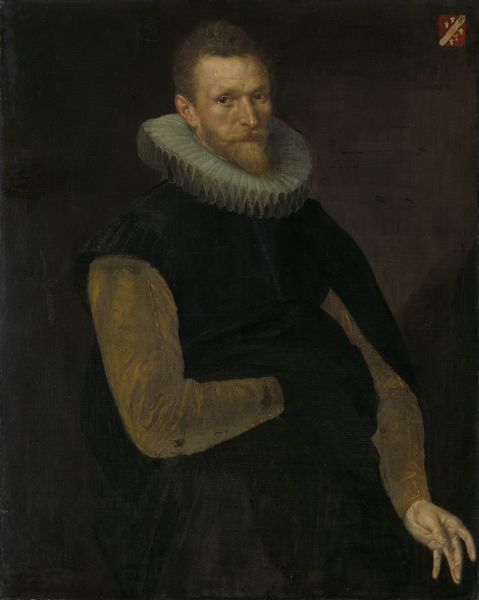
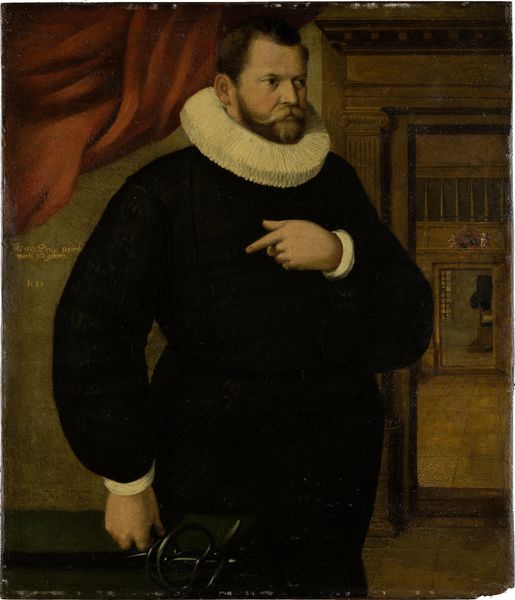
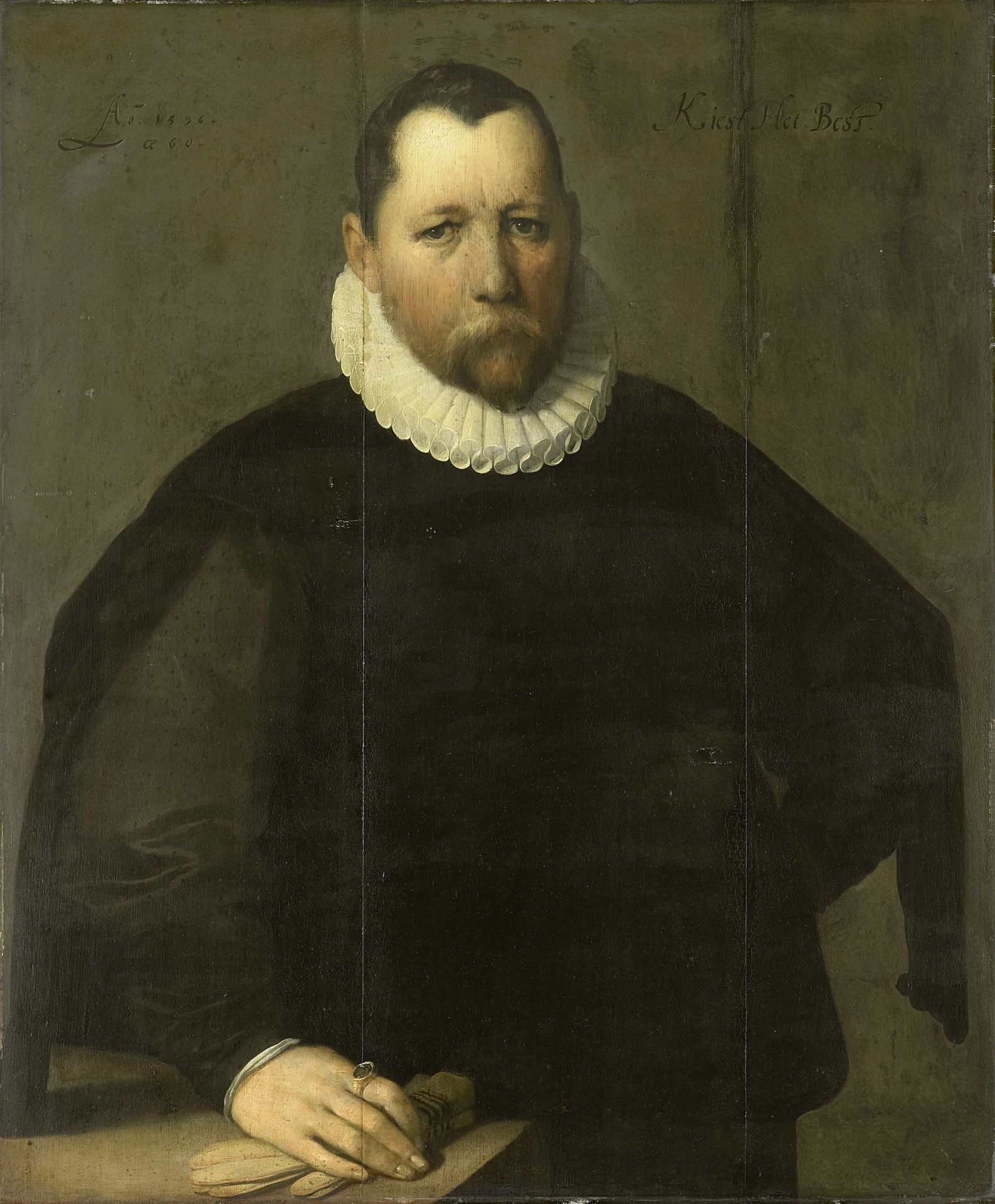
Cornelis Cornelisz van Haarlem painted this portrait of Pieter Jansz Kies, the Burgomaster of Haarlem, in oil on wood panel. Consider the materials: oil paint, made from pigment suspended in linseed oil, was a relatively new medium at the time, allowing for rich colors and smooth gradations. The wood panel, carefully prepared, provided a stable support for the paint. Look at how the artist has used these materials to convey a sense of substance and weight, from the sitter's solid form to the texture of his ruff. The very act of painting a portrait was tied to social status and wealth. Kies, as Burgomaster, held a position of power, and this painting served to reinforce his standing in the community. The labor involved in its production – from grinding pigments to applying delicate glazes – reflects the value placed on representation and the sitter’s position. So, next time you see a portrait, remember that it is an intersection of material, technique, and social context, blurring any simple distinction between art and craft.
Pieter Jansz Kies (c 1536-97). Burgomaster of Haarlem 1596

Cornelis Cornelisz van Haarlem
1562 - 1638Location
RijksmuseumArtwork details
- Medium
- painting, oil-paint
- Dimensions
- height 97 cm, width 81 cm, depth 8 cm
- Location
- Rijksmuseum
- Copyright
- Rijks Museum: Open Domain
Tags
portrait
painting
oil-paint
mannerism
northern-renaissance
Comments
No comments
About this artwork
Cornelis Cornelisz van Haarlem painted this portrait of Pieter Jansz Kies, the Burgomaster of Haarlem, in oil on wood panel. Consider the materials: oil paint, made from pigment suspended in linseed oil, was a relatively new medium at the time, allowing for rich colors and smooth gradations. The wood panel, carefully prepared, provided a stable support for the paint. Look at how the artist has used these materials to convey a sense of substance and weight, from the sitter's solid form to the texture of his ruff. The very act of painting a portrait was tied to social status and wealth. Kies, as Burgomaster, held a position of power, and this painting served to reinforce his standing in the community. The labor involved in its production – from grinding pigments to applying delicate glazes – reflects the value placed on representation and the sitter’s position. So, next time you see a portrait, remember that it is an intersection of material, technique, and social context, blurring any simple distinction between art and craft.
Comments
No comments