About this artwork
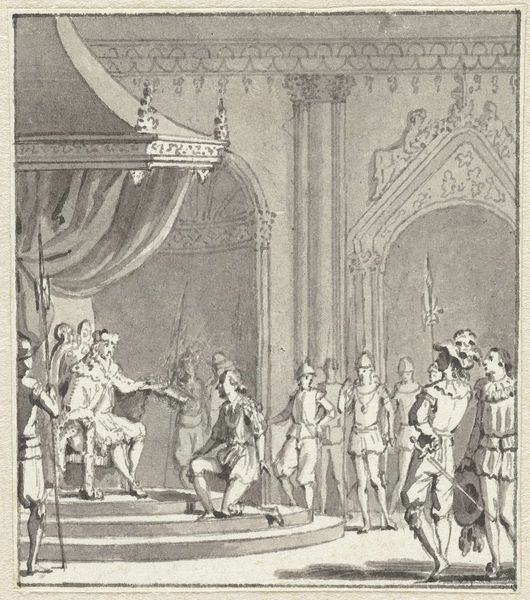
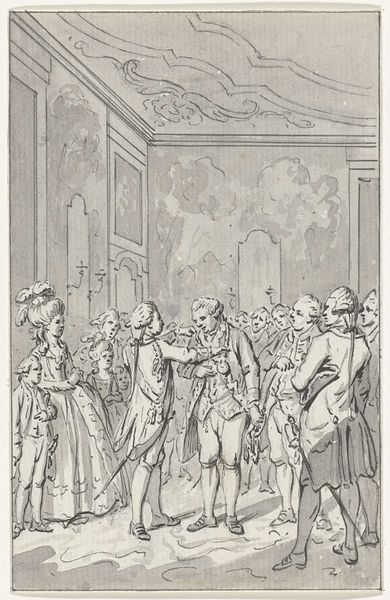
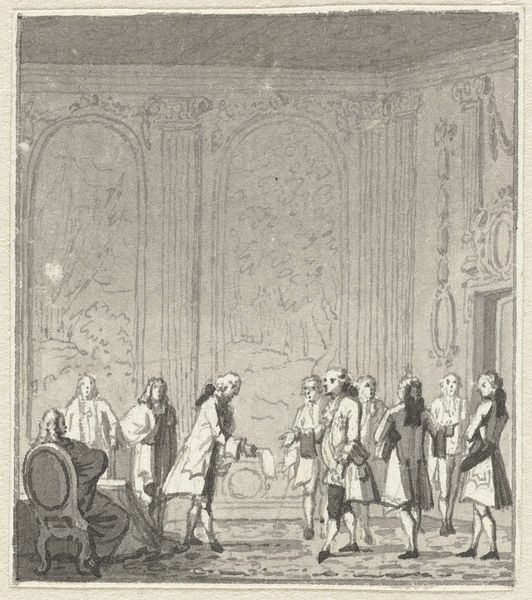
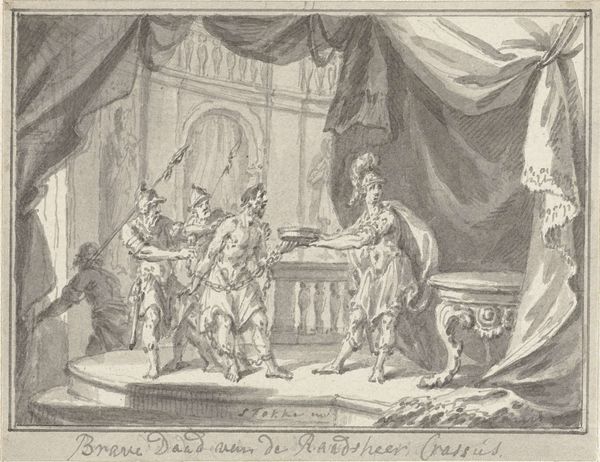
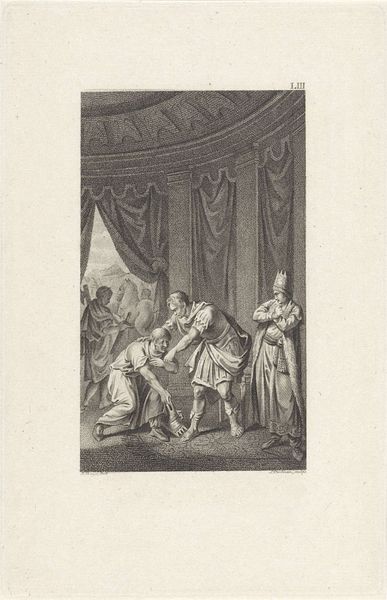
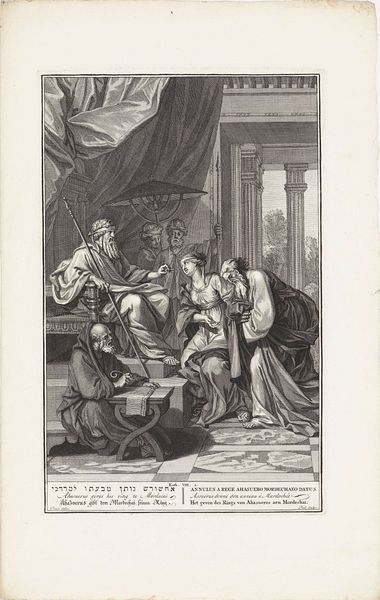
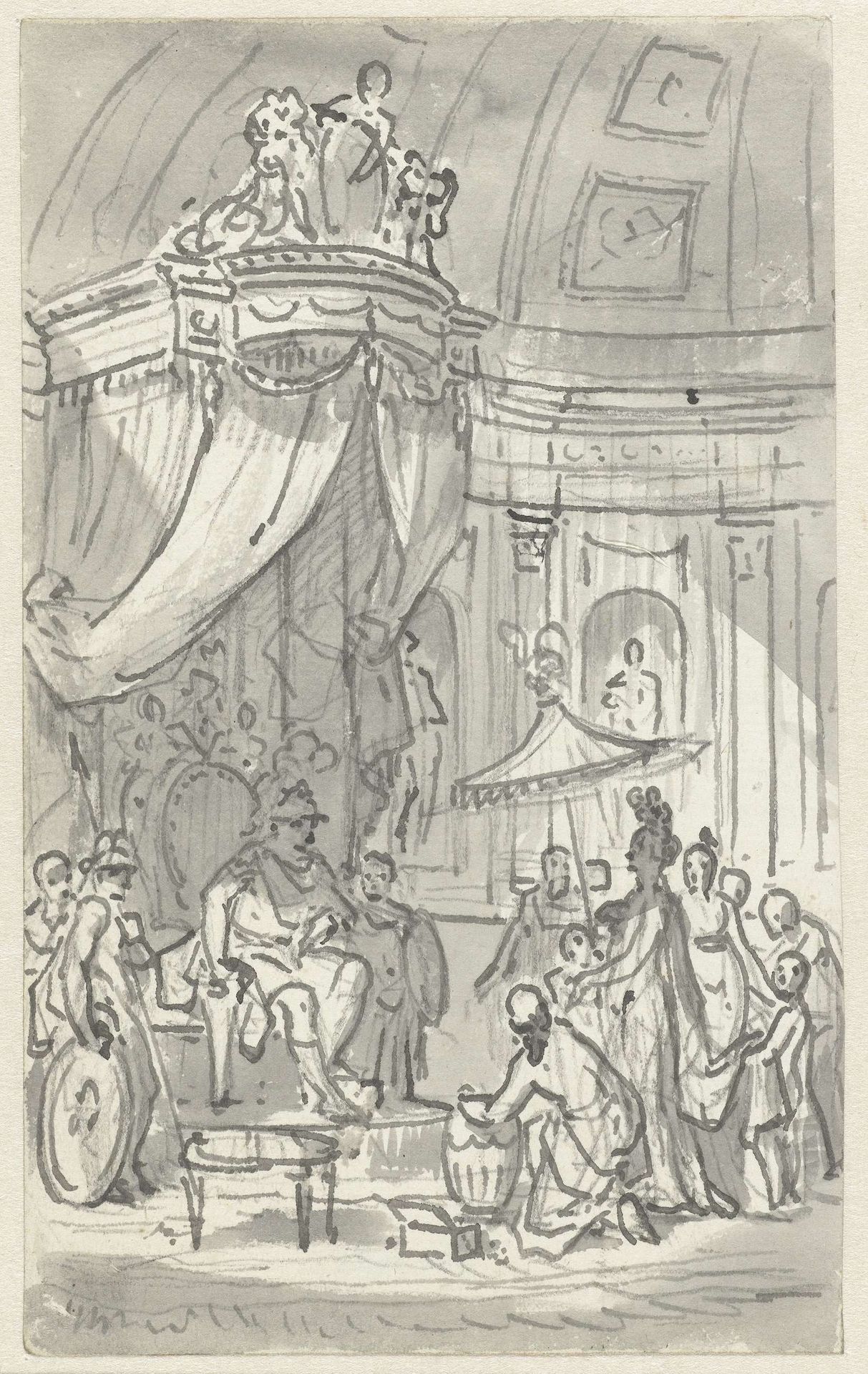
Jurriaan Andriessen created this pen and gray ink drawing, titled 'A prince on his throne receives a woman and her entourage' sometime between 1742 and 1819. It shows us a scene likely inspired by classical literature, filtered through an 18th century lens. Andriessen situates us within a grand interior, where a ruler sits in judgment. Power and gender dynamics come into sharp focus here. A woman approaches the throne, leading her children, possibly seeking an audience, or perhaps pleading for mercy. The prince seems detached, his gaze fixed and unreadable. Those surrounding the throne betray no emotion, so it is up to us to decide what exactly is at stake here. Andriessen was deeply entrenched in the artistic and social conventions of his time, yet his ability to capture these moments allows us to question the nature of power and empathy, and to reflect on the complex interplay of gender, authority, and human vulnerability across historical divides.
Een vorst op zijn troon ontvangt een vrouw en haar gevolg
1752 - 1819

Jurriaan Andriessen
1742 - 1819Location
RijksmuseumArtwork details
- Medium
- drawing, paper, ink
- Dimensions
- height 185 mm, width 144 mm
- Location
- Rijksmuseum
- Copyright
- Rijks Museum: Open Domain
Tags
Comments
Share your thoughts
About this artwork
Jurriaan Andriessen created this pen and gray ink drawing, titled 'A prince on his throne receives a woman and her entourage' sometime between 1742 and 1819. It shows us a scene likely inspired by classical literature, filtered through an 18th century lens. Andriessen situates us within a grand interior, where a ruler sits in judgment. Power and gender dynamics come into sharp focus here. A woman approaches the throne, leading her children, possibly seeking an audience, or perhaps pleading for mercy. The prince seems detached, his gaze fixed and unreadable. Those surrounding the throne betray no emotion, so it is up to us to decide what exactly is at stake here. Andriessen was deeply entrenched in the artistic and social conventions of his time, yet his ability to capture these moments allows us to question the nature of power and empathy, and to reflect on the complex interplay of gender, authority, and human vulnerability across historical divides.
Comments
Share your thoughts