About this artwork
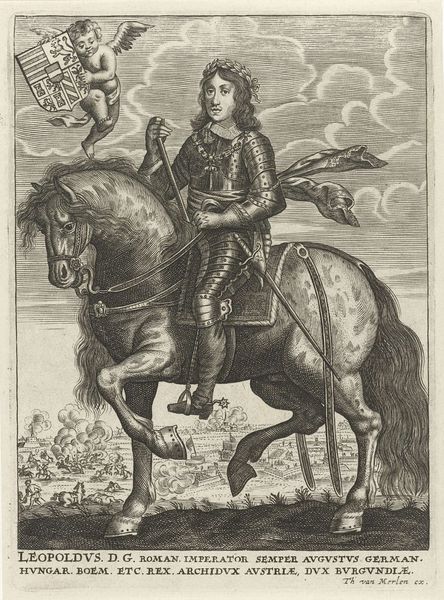
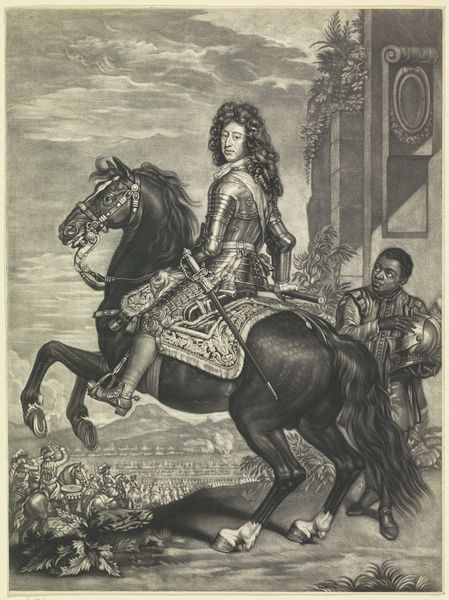
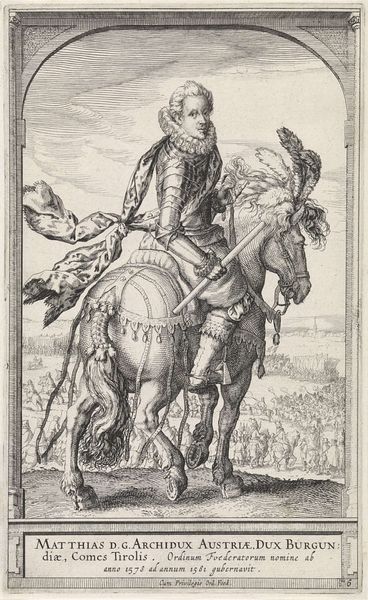
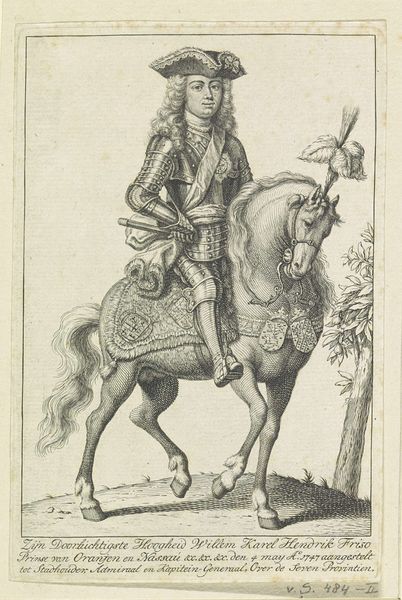
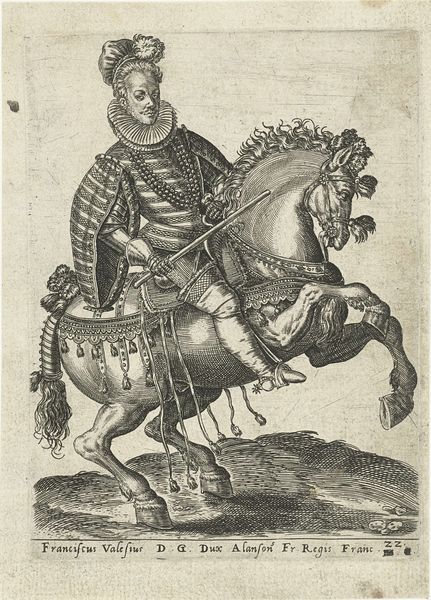
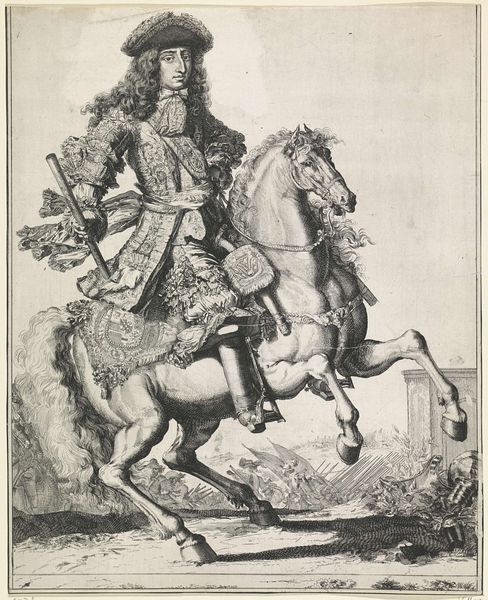
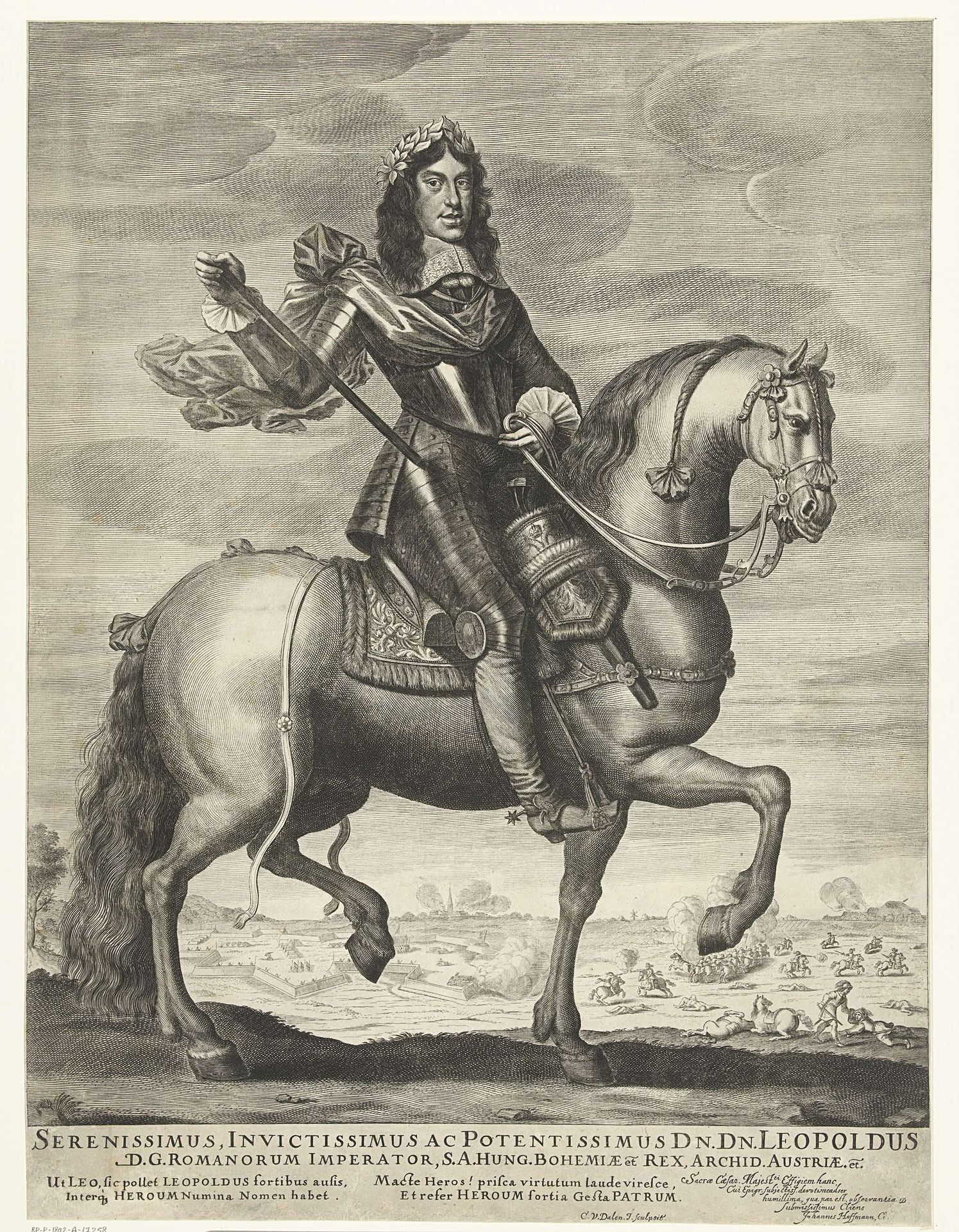
This engraving of Leopold I, Holy Roman Emperor, on horseback was made by Cornelis van Dalen II in the mid-17th century. It is a representation of power, designed to broadcast Leopold's authority across the Habsburg empire. The image creates meaning through well-established visual codes. The equestrian portrait has a long tradition in Western art. It's a formula for idealizing rulers by associating them with the power of the horse. His armor marks him as a military leader, while the laurel wreath evokes ancient Roman emperors. He's also elevated above the landscape with a battle raging below, symbolizing his dominion over war. The Latin text further reinforces his titles and virtues. To understand this image better, we might turn to histories of the Habsburg dynasty, studies of political iconography, and catalogs of prints produced in the Dutch Republic. What we learn from these resources is how art served to bolster political legitimacy and project power in the 17th century.
Portret van Leopold I, keizer van Duitsland, te paard 1648 - 1664

Cornelis van (II) Dalen
1638 - 1664Location
RijksmuseumArtwork details
- Medium
- engraving
- Dimensions
- height 572 mm, width 531 mm
- Location
- Rijksmuseum
- Copyright
- Rijks Museum: Open Domain
Tags
portrait
baroque
caricature
history-painting
engraving
Comments
No comments
About this artwork
This engraving of Leopold I, Holy Roman Emperor, on horseback was made by Cornelis van Dalen II in the mid-17th century. It is a representation of power, designed to broadcast Leopold's authority across the Habsburg empire. The image creates meaning through well-established visual codes. The equestrian portrait has a long tradition in Western art. It's a formula for idealizing rulers by associating them with the power of the horse. His armor marks him as a military leader, while the laurel wreath evokes ancient Roman emperors. He's also elevated above the landscape with a battle raging below, symbolizing his dominion over war. The Latin text further reinforces his titles and virtues. To understand this image better, we might turn to histories of the Habsburg dynasty, studies of political iconography, and catalogs of prints produced in the Dutch Republic. What we learn from these resources is how art served to bolster political legitimacy and project power in the 17th century.
Comments
No comments