About this artwork
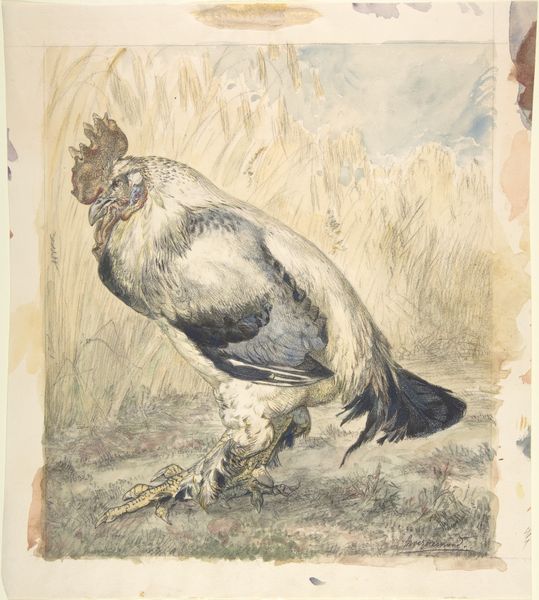
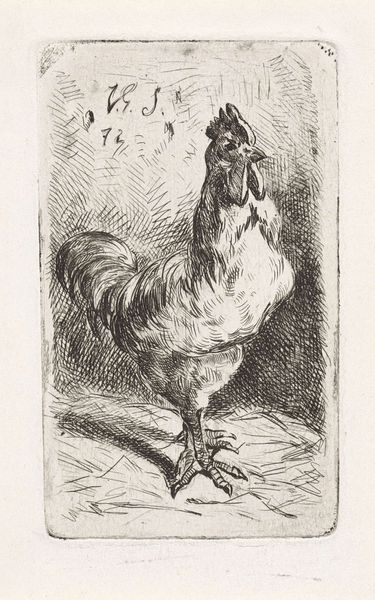
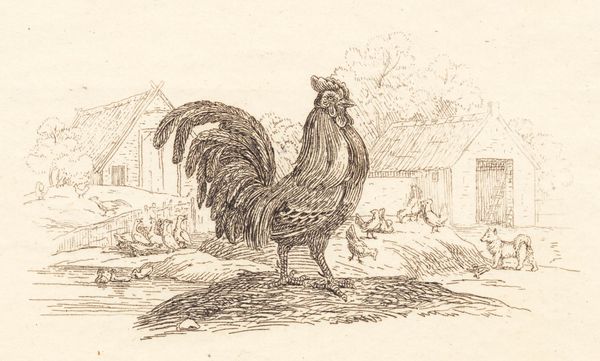
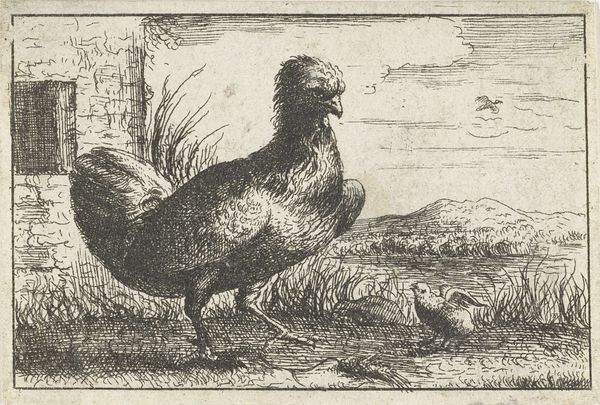
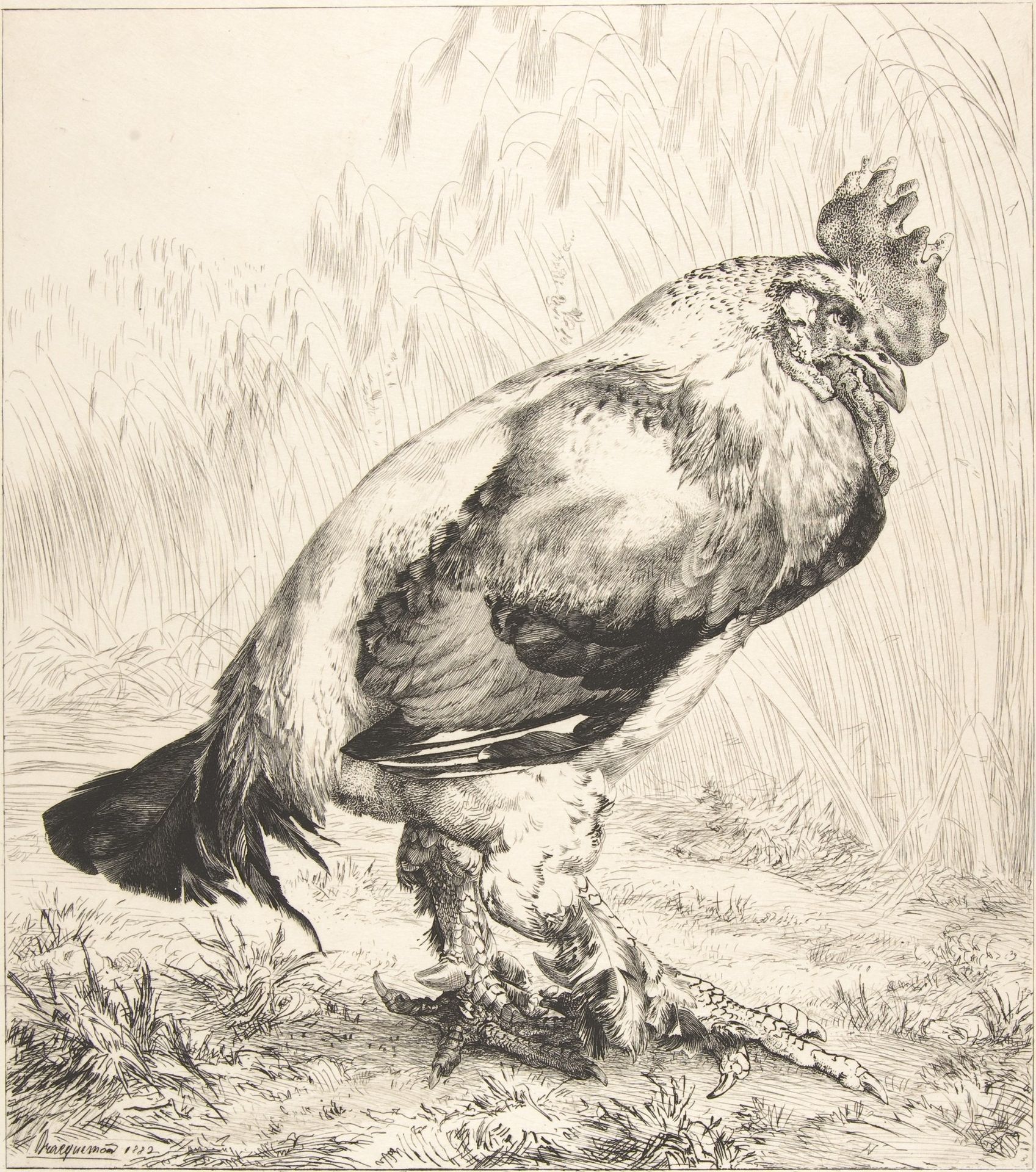
Félix Bracquemond created this etching called 'The Old Cock' in France at a time when there was a growing interest in rural life and naturalism. The choice of a rooster as the subject is intriguing. Roosters often symbolize virility and pride. Yet, here, Bracquemond presents an aging rooster, perhaps past its prime, standing in a field. What does it mean to depict a male symbol this way? Is it a comment on aging masculinity or a reflection on changing social roles? Consider Bracquemond's personal life; he struggled to gain recognition in the art world despite his talent. Was he, in some way, projecting his own feelings onto the animal? The rooster's weary stance might evoke a sense of empathy, a shared understanding of life's challenges. It invites us to reflect on our own encounters with aging and the inevitable passage of time.
The Old Cock 1882


Artwork details
- Medium
- drawing, print, etching
- Dimensions
- Overall: 11 x 9 13/16 in. (28 x 24.9 cm)
- Location
- Metropolitan Museum of Art, New York, NY
- Copyright
- Public Domain
Tags
drawing
etching
realism
Comments
No comments
About this artwork
Félix Bracquemond created this etching called 'The Old Cock' in France at a time when there was a growing interest in rural life and naturalism. The choice of a rooster as the subject is intriguing. Roosters often symbolize virility and pride. Yet, here, Bracquemond presents an aging rooster, perhaps past its prime, standing in a field. What does it mean to depict a male symbol this way? Is it a comment on aging masculinity or a reflection on changing social roles? Consider Bracquemond's personal life; he struggled to gain recognition in the art world despite his talent. Was he, in some way, projecting his own feelings onto the animal? The rooster's weary stance might evoke a sense of empathy, a shared understanding of life's challenges. It invites us to reflect on our own encounters with aging and the inevitable passage of time.
Comments
No comments