About this artwork
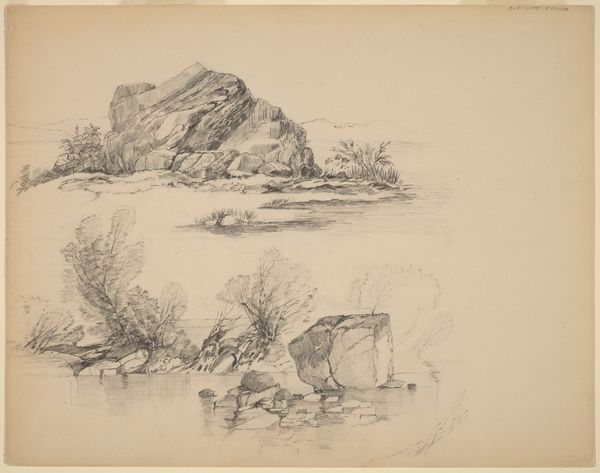
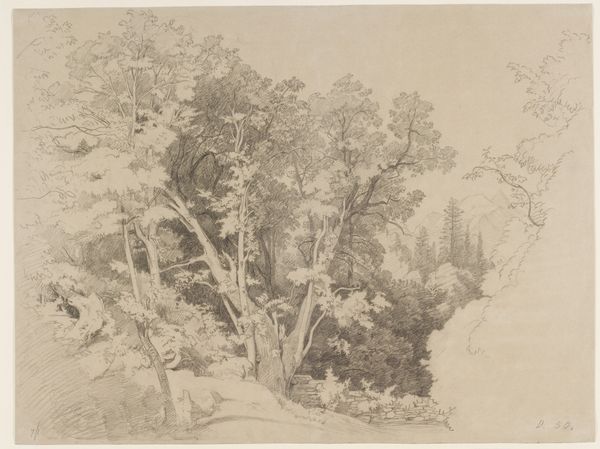
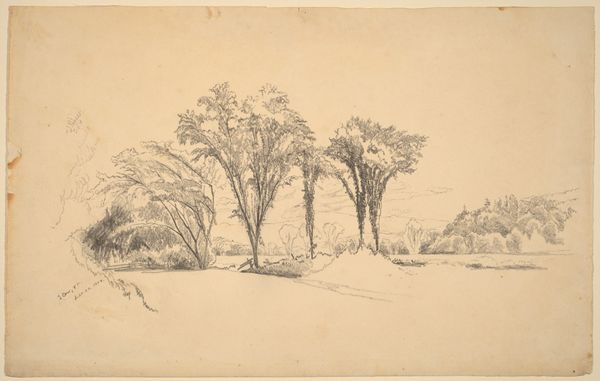
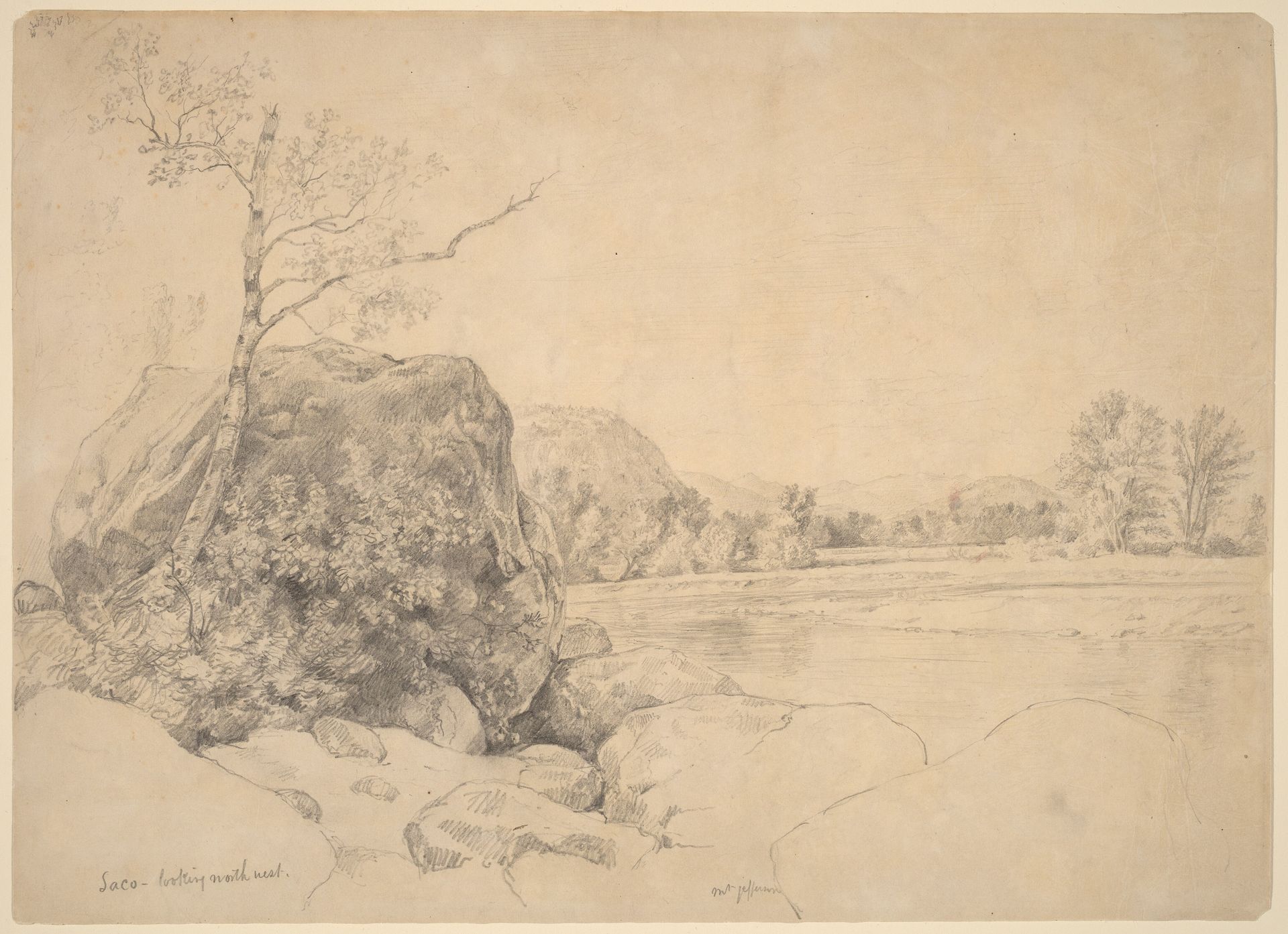
Daniel Huntington created this drawing, "Saco, Looking Northwest," using graphite on paper. The composition centers on a large, imposing boulder, balanced by the gentle recession of the Saco River into the distance. Huntington's use of line is remarkably delicate, creating a sense of depth and atmospheric perspective. Notice how the textures shift from the rough, immediate presence of the rocks and foliage in the foreground to the soft, hazy outlines of the distant hills. This invites a reading of nature as both immediate and boundless. The drawing engages with philosophical ideas about the sublime, where nature is seen as both beautiful and awe-inspiring. Huntington uses the formal elements of the drawing to investigate perception, and our place within the landscape. Consider how Huntington uses simple lines to explore complex relationships between form and space. This work is an invitation to contemplate our ever-changing understanding of the natural world.
Saco, Looking Northwest
c. mid 1860s


Artwork details
- Dimensions
- sheet: 25.6 × 35.2 cm (10 1/16 × 13 7/8 in.)
- Copyright
- National Gallery of Art: CC0 1.0
Comments
Share your thoughts
About this artwork
Daniel Huntington created this drawing, "Saco, Looking Northwest," using graphite on paper. The composition centers on a large, imposing boulder, balanced by the gentle recession of the Saco River into the distance. Huntington's use of line is remarkably delicate, creating a sense of depth and atmospheric perspective. Notice how the textures shift from the rough, immediate presence of the rocks and foliage in the foreground to the soft, hazy outlines of the distant hills. This invites a reading of nature as both immediate and boundless. The drawing engages with philosophical ideas about the sublime, where nature is seen as both beautiful and awe-inspiring. Huntington uses the formal elements of the drawing to investigate perception, and our place within the landscape. Consider how Huntington uses simple lines to explore complex relationships between form and space. This work is an invitation to contemplate our ever-changing understanding of the natural world.
Comments
Share your thoughts