About this artwork
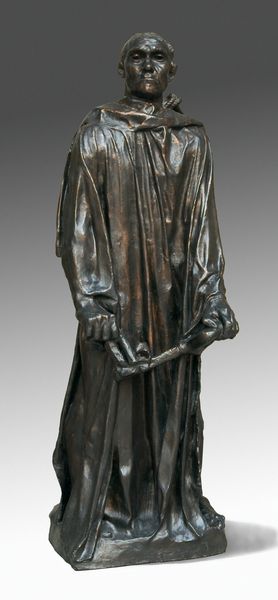
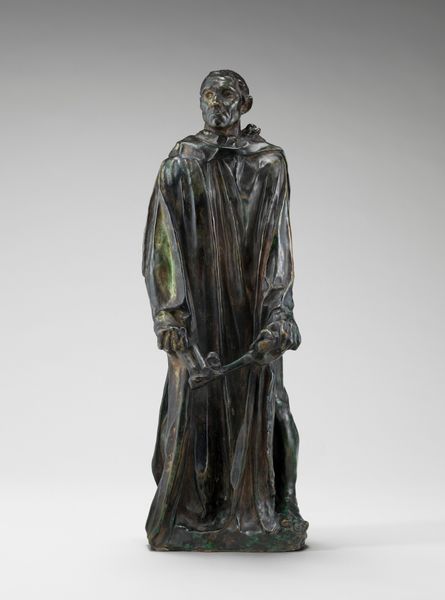
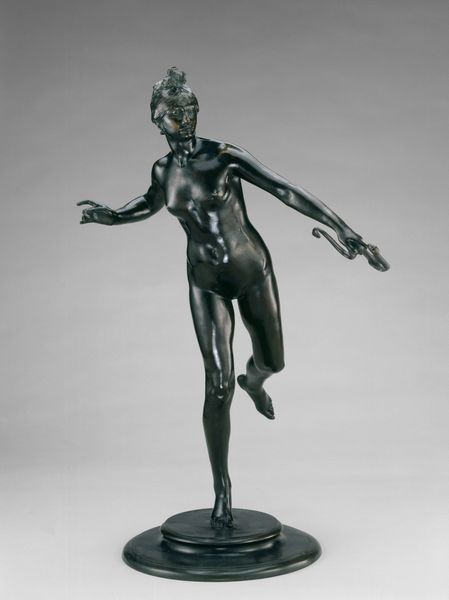
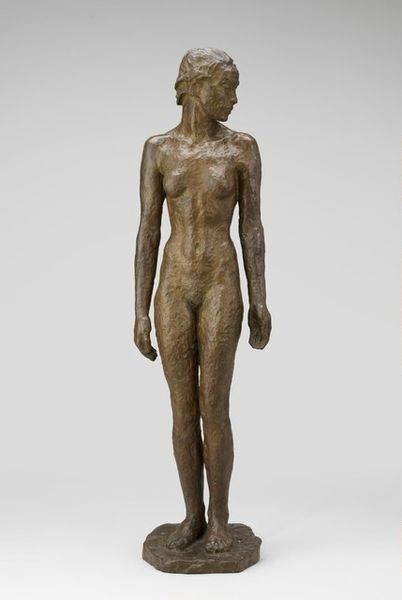
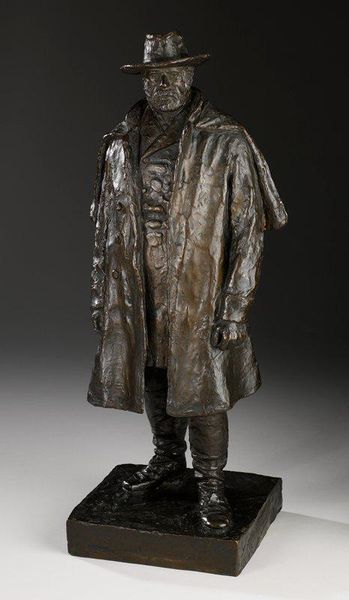
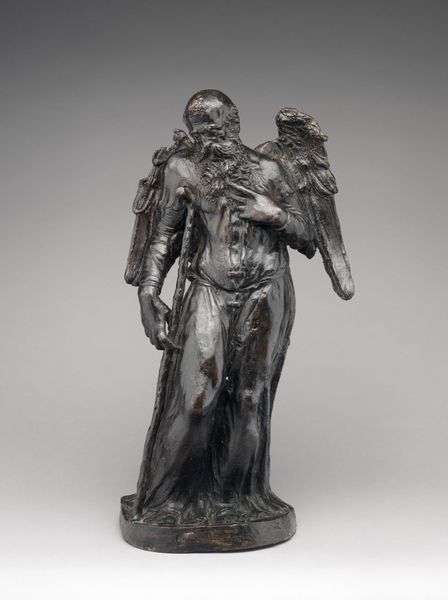
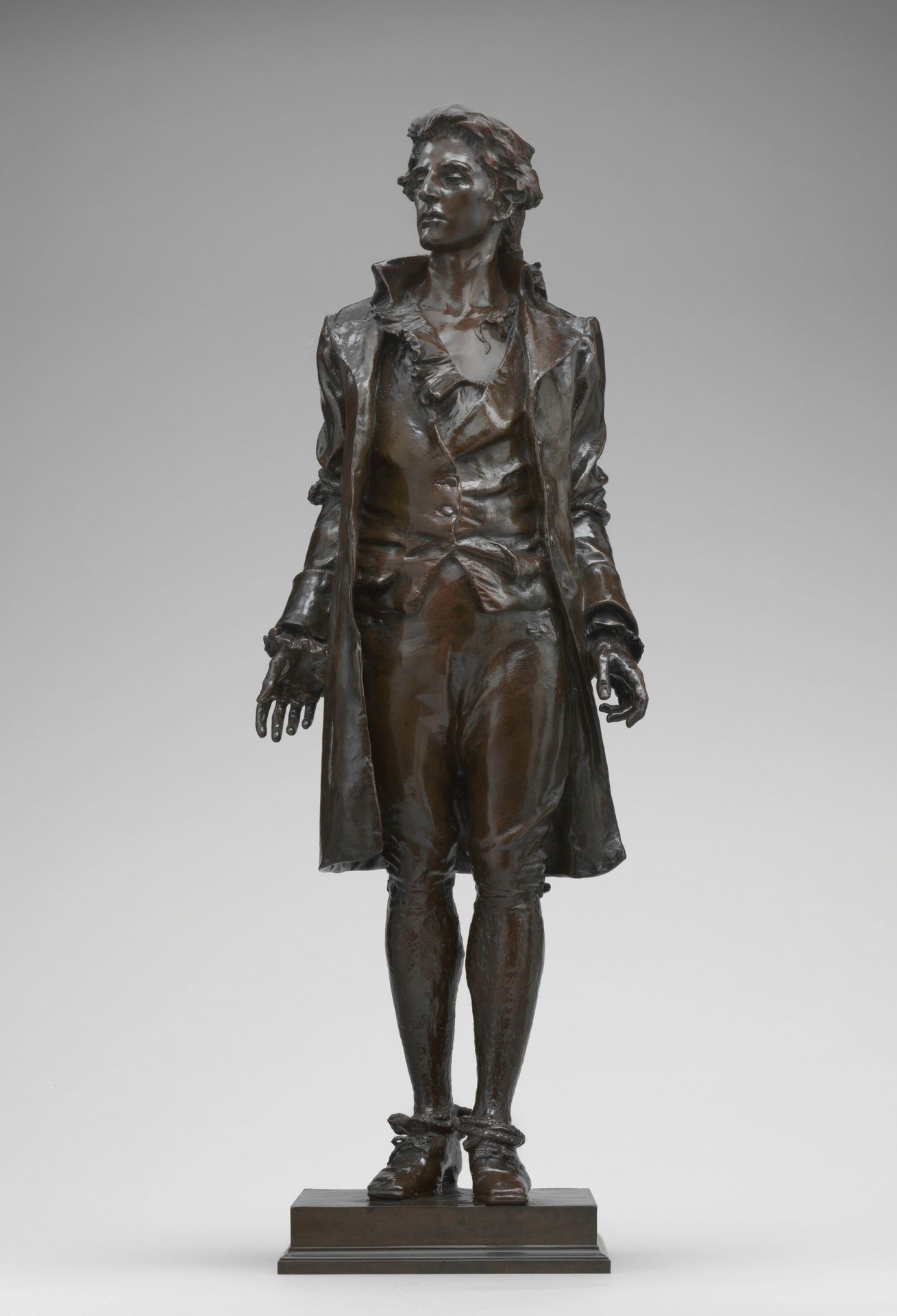
This bronze sculpture by Frederick William MacMonnies captures Nathan Hale in a moment laden with symbolic weight. We see Hale with his hands bound, a figure rendered just before his execution, embodying sacrifice. The motif of bound hands is potent; historically it's a symbol of helplessness, yet here it conveys Hale's willing martyrdom for his cause. Consider the repeated image of the bound Christ - a symbol of ultimate self-sacrifice, an archetype that seems to echo through this work. This mirrors depictions in Renaissance art where saints display acceptance of their fate through calm, forward gazes. It is a powerful image that taps into our collective memory, engaging viewers on a deep, subconscious level, highlighting a lineage that threads through history and across cultures, each reiteration subtly shifting in meaning. It's an image of ultimate emotional and political conviction.
Nathan Hale c. 1889 - 1890


Artwork details
- Medium
- bronze, sculpture
- Dimensions
- height: 71.1 cm (28 in.)
- Copyright
- National Gallery of Art: CC0 1.0
Tags
portrait
sculpture
bronze
figuration
sculpture
history-painting
Comments
No comments
About this artwork
This bronze sculpture by Frederick William MacMonnies captures Nathan Hale in a moment laden with symbolic weight. We see Hale with his hands bound, a figure rendered just before his execution, embodying sacrifice. The motif of bound hands is potent; historically it's a symbol of helplessness, yet here it conveys Hale's willing martyrdom for his cause. Consider the repeated image of the bound Christ - a symbol of ultimate self-sacrifice, an archetype that seems to echo through this work. This mirrors depictions in Renaissance art where saints display acceptance of their fate through calm, forward gazes. It is a powerful image that taps into our collective memory, engaging viewers on a deep, subconscious level, highlighting a lineage that threads through history and across cultures, each reiteration subtly shifting in meaning. It's an image of ultimate emotional and political conviction.
Comments
No comments