About this artwork
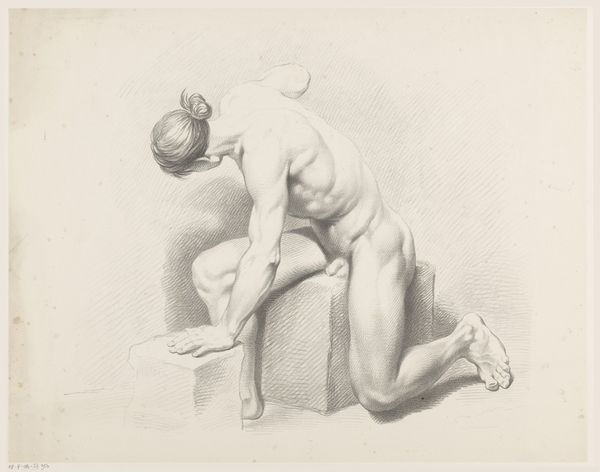
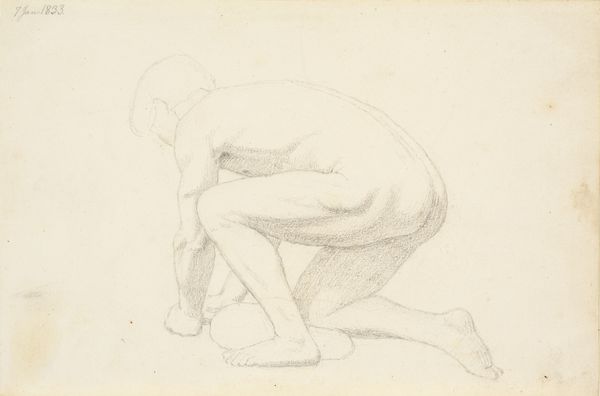
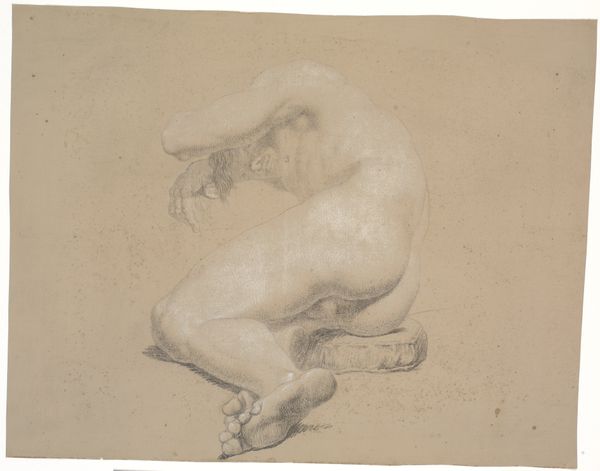
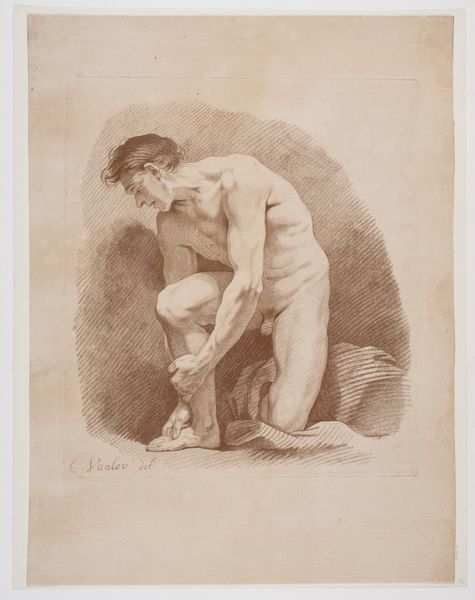
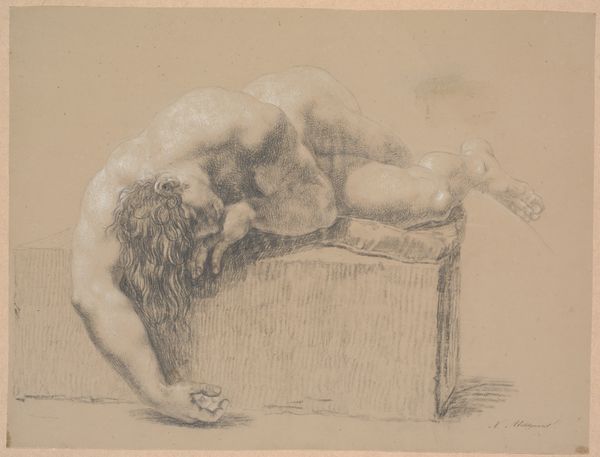
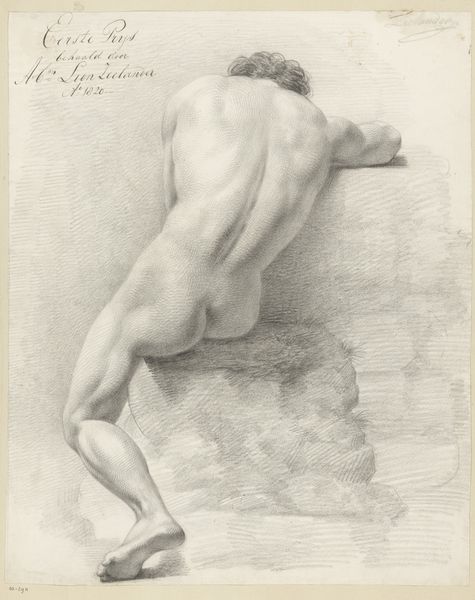
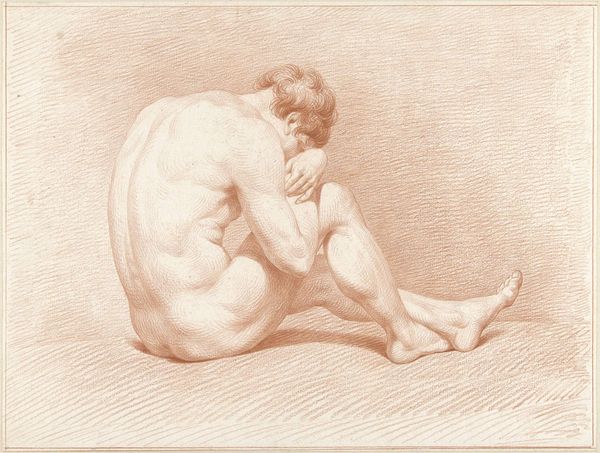
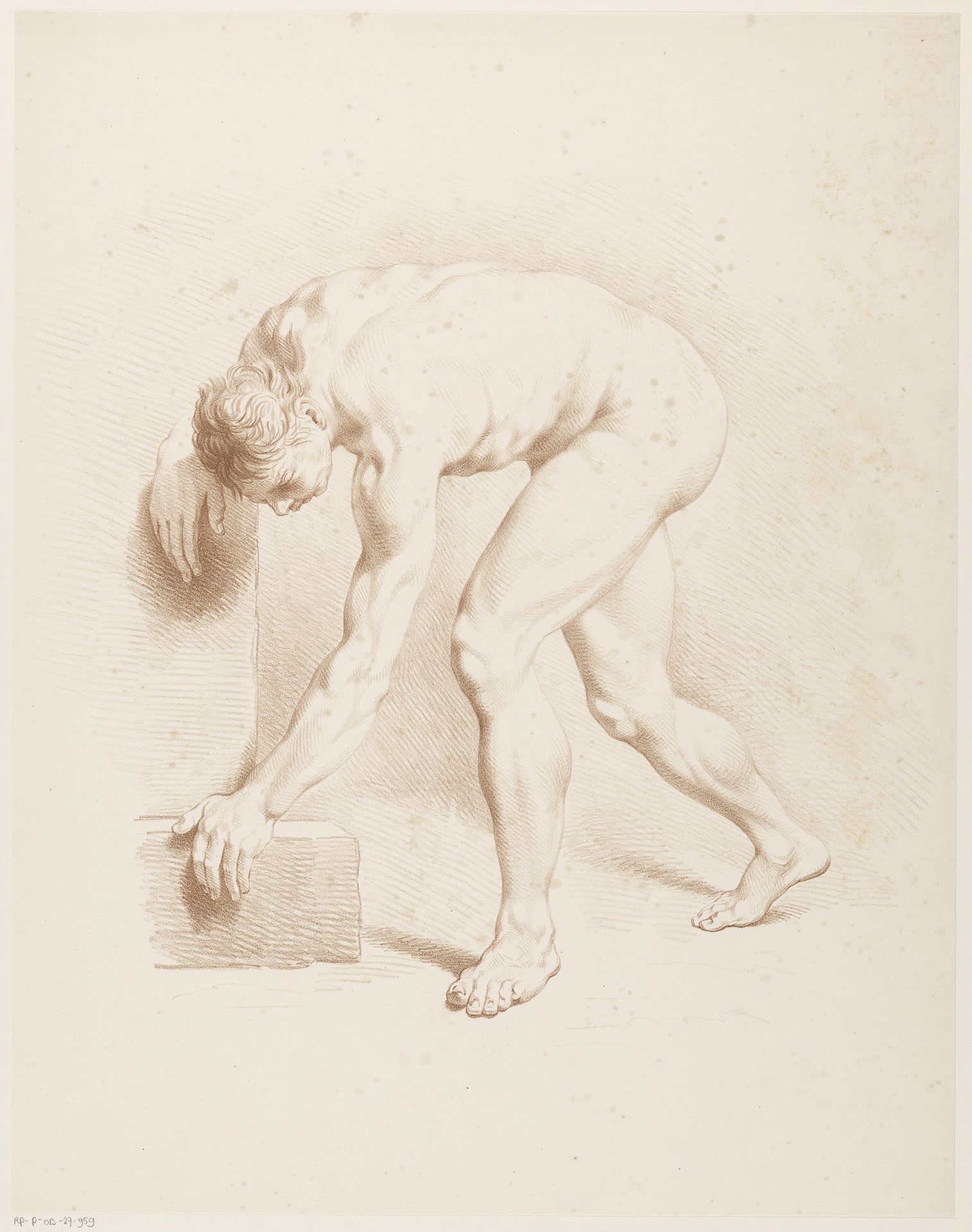
Jean Augustin Daiwaille made this drawing, ‘Bent Naked Man,’ using pen in brown, sometime in the early 19th century. Daiwaille was working in a period where the male nude was a cornerstone of academic art, often idealized and linked to notions of heroism and classical beauty. However, there is something quite different happening here. This is not a celebration of an idealized form, but rather an image of human vulnerability, a moment of introspection, or perhaps even defeat. The man’s posture, bent over and leaning against a block, suggests a weight, both physical and emotional. His gaze is directed downward, and his body seems to be giving way to gravity. It invites us to consider the psychological dimensions of the male figure, a departure from traditional representations that typically focus on strength. What does it mean to show a man in a moment of weakness, and what does this tell us about the changing attitudes toward masculinity?

Artwork details
- Medium
- drawing, pen
- Dimensions
- height 545 mm, width 425 mm
- Location
- Rijksmuseum
- Copyright
- Rijks Museum: Open Domain
Tags
Comments
Share your thoughts
About this artwork
Jean Augustin Daiwaille made this drawing, ‘Bent Naked Man,’ using pen in brown, sometime in the early 19th century. Daiwaille was working in a period where the male nude was a cornerstone of academic art, often idealized and linked to notions of heroism and classical beauty. However, there is something quite different happening here. This is not a celebration of an idealized form, but rather an image of human vulnerability, a moment of introspection, or perhaps even defeat. The man’s posture, bent over and leaning against a block, suggests a weight, both physical and emotional. His gaze is directed downward, and his body seems to be giving way to gravity. It invites us to consider the psychological dimensions of the male figure, a departure from traditional representations that typically focus on strength. What does it mean to show a man in a moment of weakness, and what does this tell us about the changing attitudes toward masculinity?
Comments
Share your thoughts