About this artwork
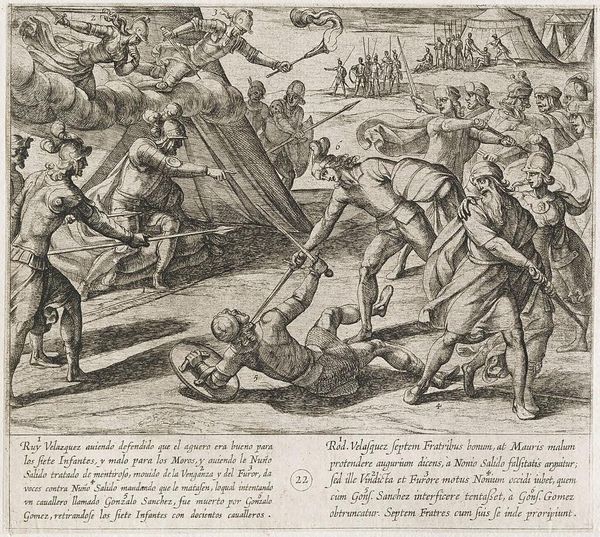
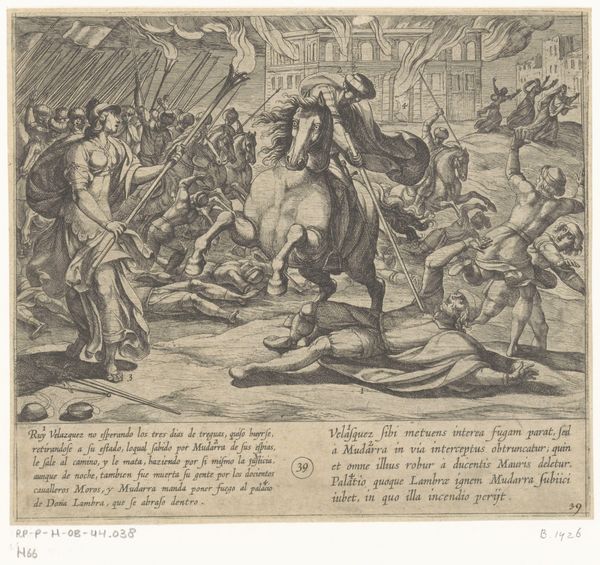
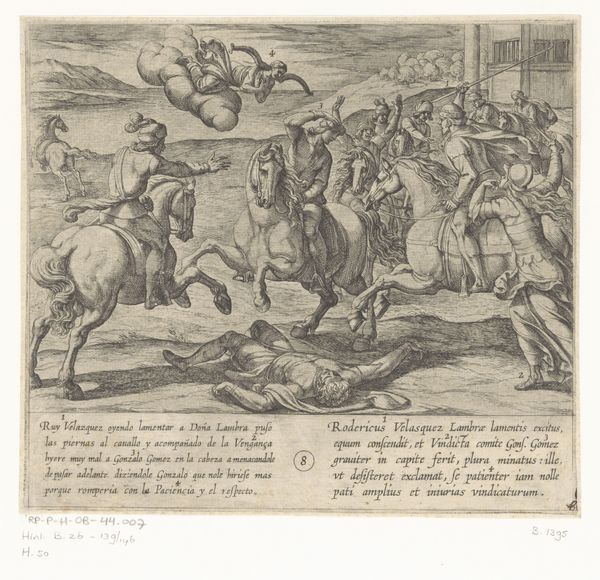
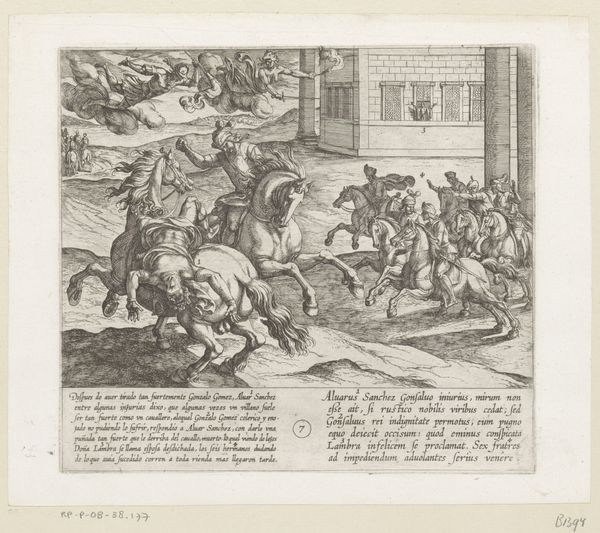
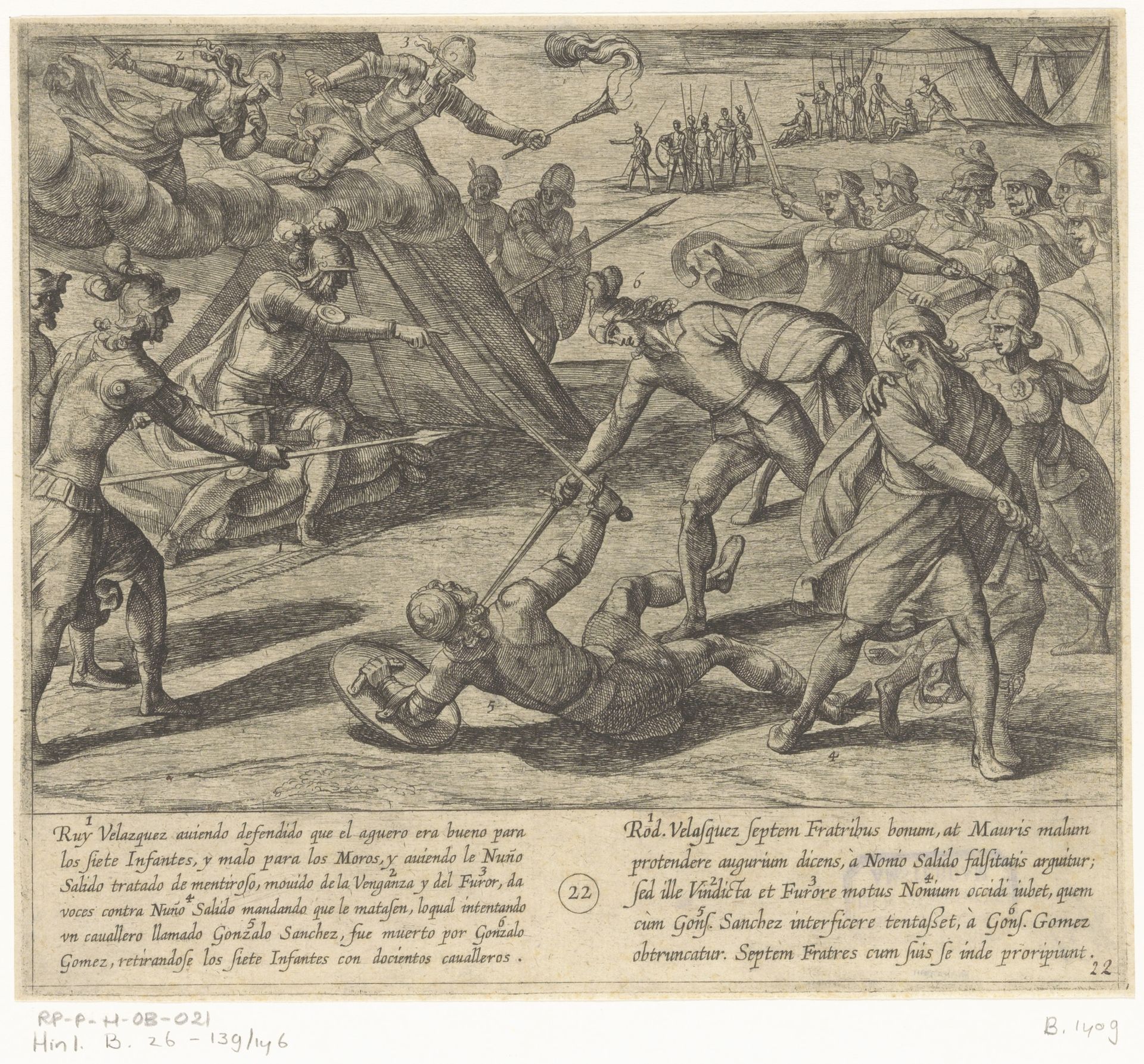
Antonio Tempesta created this engraving, "Ruy Velazquez beveelt de dood van Nuño Salido, Gonzalo Gomez komt hem te hulp en doodt Gonzalo Sanchez," sometime between 1555 and 1630. It’s currently held at the Rijksmuseum. This print plunges us into a tumultuous scene rife with conflict, reflecting the social tensions of Tempesta’s era. What unfolds before us isn’t just a battle, but a clash of identities and loyalties. The figures, caught in dynamic poses, embody the violence and drama of their time. Gender dynamics are subtly present, the narrative centering on male figures embroiled in conflict, hinting at a society structured around male honor and vengeance. Look closely. Do you see how this artwork captures the complex interplay between individual actions and broader societal forces, echoing the power struggles and cultural norms of the time? The emotional intensity of the scene leaves us contemplating the human cost of conflict, and the echoes of identity, honor, and power.
Ruy Velazquez beveelt de dood van Nuño Salido, Gonzalo Gomez komt hem te hulp en doodt Gonzalo Sanchez 1612

Antonio Tempesta
1555 - 1630Location
RijksmuseumArtwork details
- Medium
- print, intaglio, engraving
- Dimensions
- height 185 mm, width 206 mm
- Location
- Rijksmuseum
- Copyright
- Rijks Museum: Open Domain
Tags
narrative-art
baroque
intaglio
old engraving style
figuration
line
history-painting
engraving
Comments
No comments
About this artwork
Antonio Tempesta created this engraving, "Ruy Velazquez beveelt de dood van Nuño Salido, Gonzalo Gomez komt hem te hulp en doodt Gonzalo Sanchez," sometime between 1555 and 1630. It’s currently held at the Rijksmuseum. This print plunges us into a tumultuous scene rife with conflict, reflecting the social tensions of Tempesta’s era. What unfolds before us isn’t just a battle, but a clash of identities and loyalties. The figures, caught in dynamic poses, embody the violence and drama of their time. Gender dynamics are subtly present, the narrative centering on male figures embroiled in conflict, hinting at a society structured around male honor and vengeance. Look closely. Do you see how this artwork captures the complex interplay between individual actions and broader societal forces, echoing the power struggles and cultural norms of the time? The emotional intensity of the scene leaves us contemplating the human cost of conflict, and the echoes of identity, honor, and power.
Comments
No comments