About this artwork
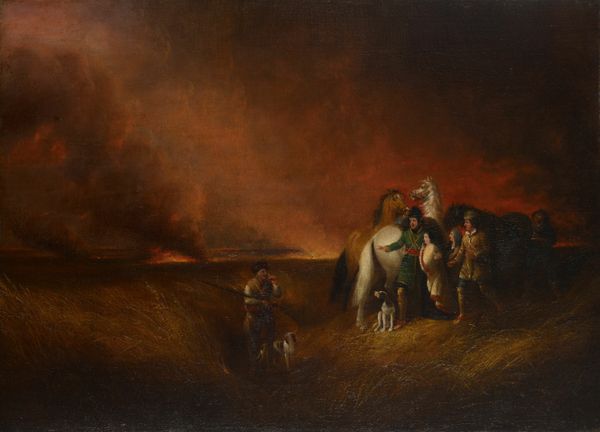
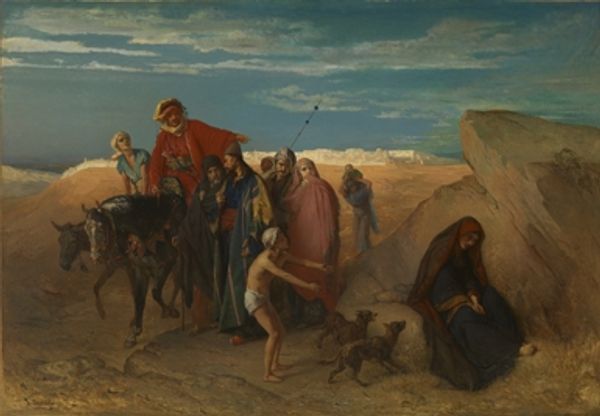
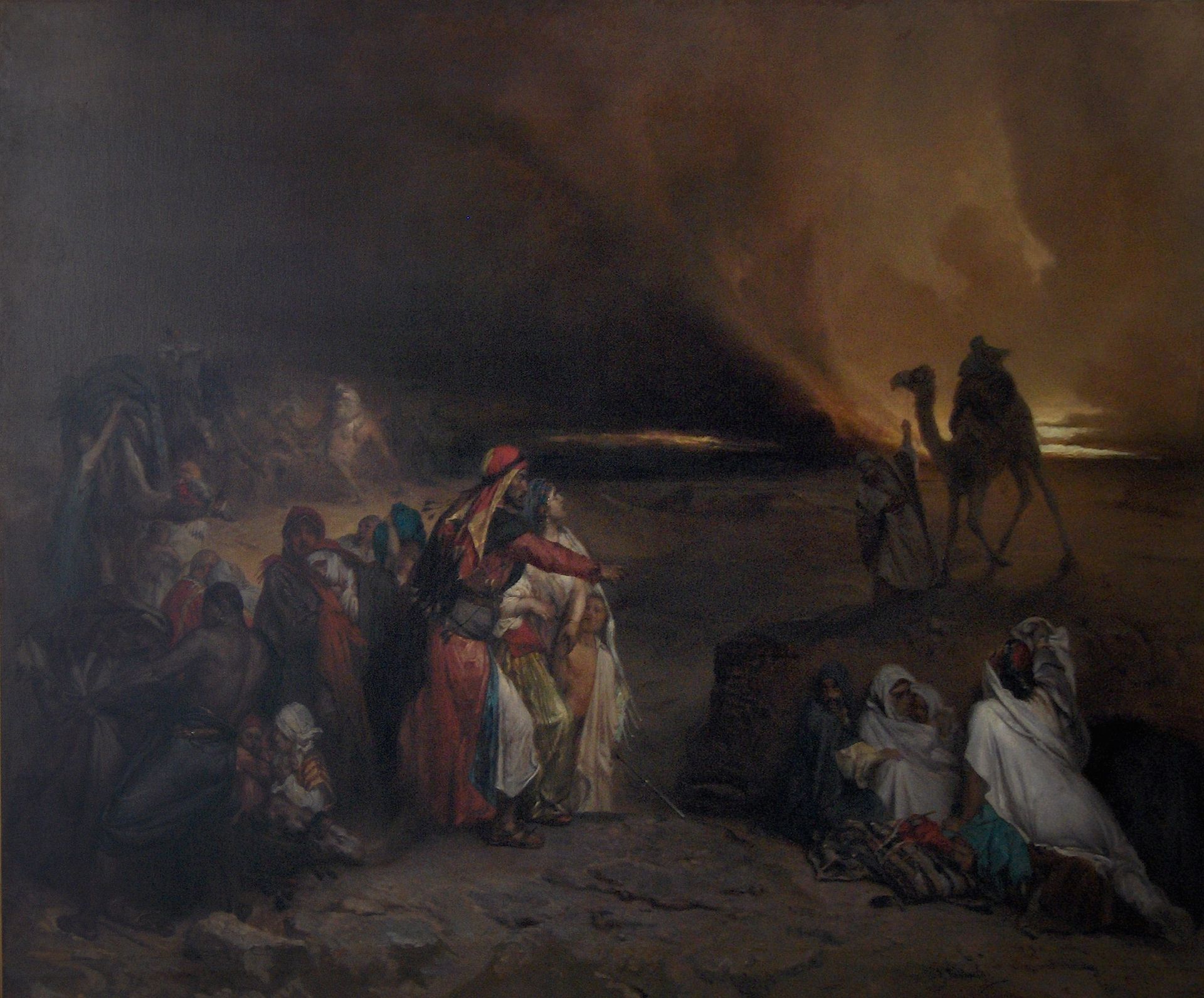
Jean-François Portaels created this painting, "The Simoon, souvenir of Syria," to capture a scene from his travels. It reflects the Orientalist movement of the 19th century. During this time, European artists often depicted the Middle East and North Africa through a lens that emphasized the exotic, the mysterious, and sometimes the savage. This painting illustrates how European artists like Portaels constructed their understanding of other cultures. The dramatic storm, the clothing of the figures, and the desert landscape all feed into a romanticized view of the region. It presents Syria as a place of danger and adventure, seen through the eyes of a European artist. To fully understand this work, we can delve into travelogues, historical accounts, and studies of Orientalism. These resources help reveal the complex social and institutional forces that shaped Portaels' vision and the broader European fascination with the "Orient."
The Simoon, souvenir of Syria 1847

Jean-François Portaels
1818 - 1895Location
Royal Museums of Fine Arts of Belgium, Brussels, BelgiumArtwork details
- Medium
- painting, oil-paint
- Location
- Royal Museums of Fine Arts of Belgium, Brussels, Belgium
- Copyright
- Public domain
Tags
painting
oil-paint
landscape
oil painting
romanticism
orientalism
genre-painting
Comments
No comments
About this artwork
Jean-François Portaels created this painting, "The Simoon, souvenir of Syria," to capture a scene from his travels. It reflects the Orientalist movement of the 19th century. During this time, European artists often depicted the Middle East and North Africa through a lens that emphasized the exotic, the mysterious, and sometimes the savage. This painting illustrates how European artists like Portaels constructed their understanding of other cultures. The dramatic storm, the clothing of the figures, and the desert landscape all feed into a romanticized view of the region. It presents Syria as a place of danger and adventure, seen through the eyes of a European artist. To fully understand this work, we can delve into travelogues, historical accounts, and studies of Orientalism. These resources help reveal the complex social and institutional forces that shaped Portaels' vision and the broader European fascination with the "Orient."
Comments
No comments