About this artwork
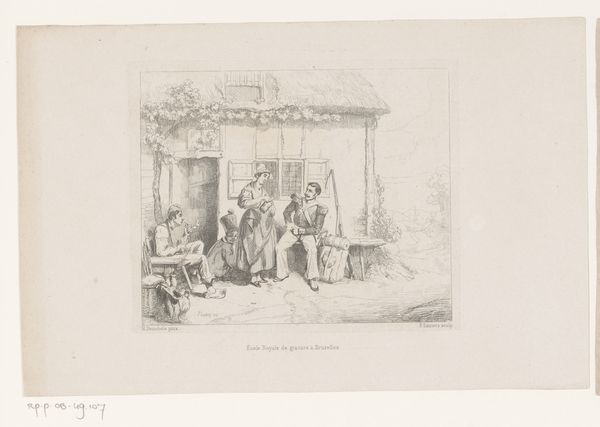
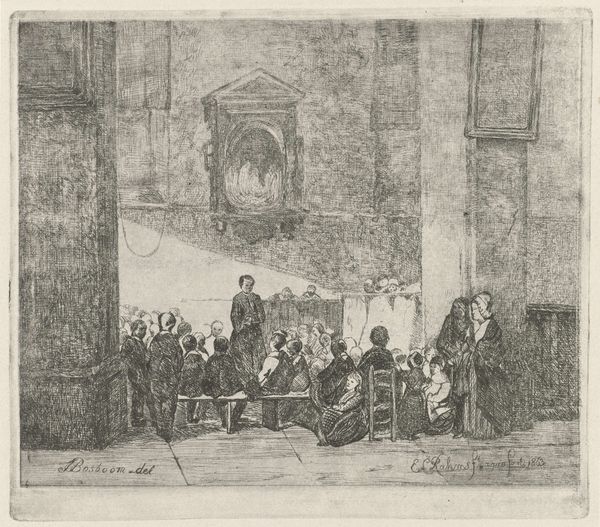
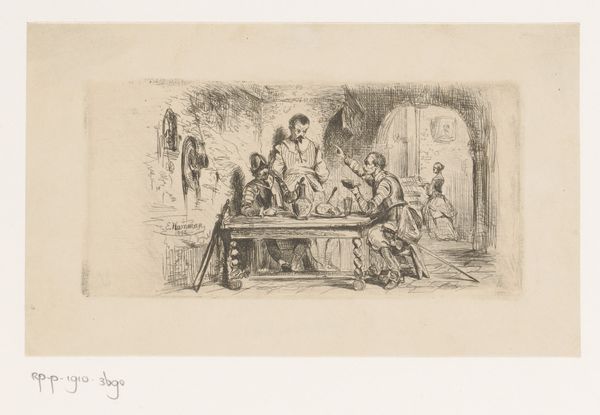
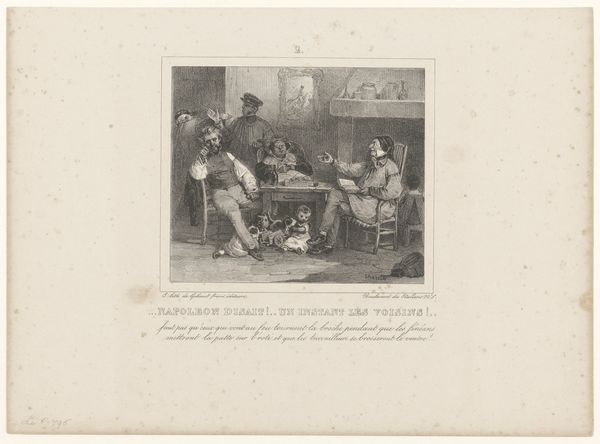
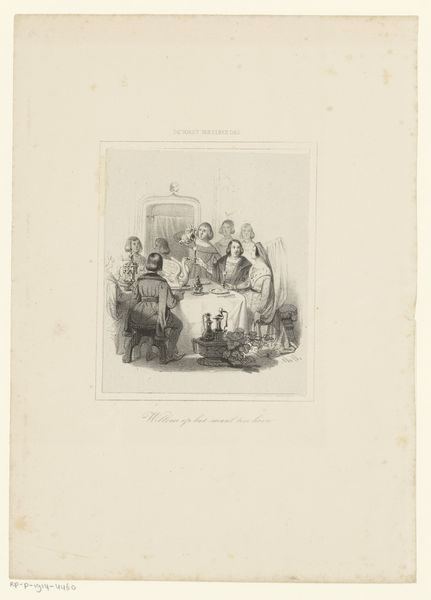
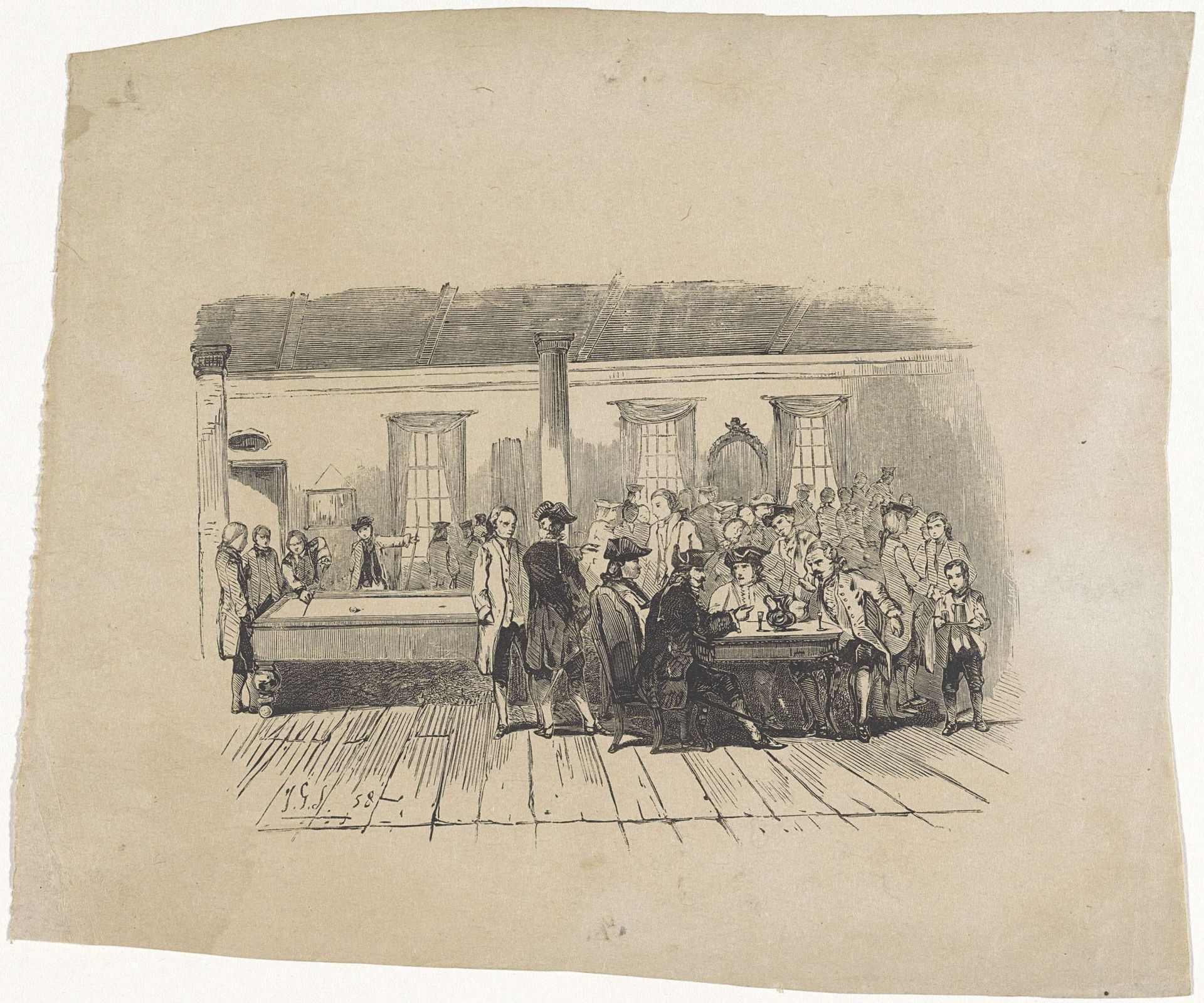
This lithograph, by Jan Gerard Smits, captures an interior scene filled with men gathered around a billiard table. Smits, who lived from 1823 to 1910, created this intimate portrayal during a time of significant social change. The work, with its detailed rendering of figures and setting, invites reflection on masculinity and social spaces in the 19th century. Notice the distinct lack of women in the scene, emphasizing the exclusivity of these male-dominated environments, where social and economic transactions often occurred. The billiard table becomes a stage for social interaction, highlighting the dynamics of power and privilege. The artwork also evokes a sense of nostalgia, prompting us to consider how societal norms and leisure activities have evolved. It serves as a reminder of the emotional connections we form with places and objects, and how these connections shape our understanding of identity.

Artwork details
- Medium
- drawing, ink
- Dimensions
- height 172 mm, width 209 mm
- Copyright
- Rijks Museum: Open Domain
Tags
drawing
narrative-art
perspective
ink
pen-ink sketch
line
genre-painting
Comments
Be the first to share your thoughts about this work.
About this artwork
This lithograph, by Jan Gerard Smits, captures an interior scene filled with men gathered around a billiard table. Smits, who lived from 1823 to 1910, created this intimate portrayal during a time of significant social change. The work, with its detailed rendering of figures and setting, invites reflection on masculinity and social spaces in the 19th century. Notice the distinct lack of women in the scene, emphasizing the exclusivity of these male-dominated environments, where social and economic transactions often occurred. The billiard table becomes a stage for social interaction, highlighting the dynamics of power and privilege. The artwork also evokes a sense of nostalgia, prompting us to consider how societal norms and leisure activities have evolved. It serves as a reminder of the emotional connections we form with places and objects, and how these connections shape our understanding of identity.
Comments
Be the first to share your thoughts about this work.