About this artwork
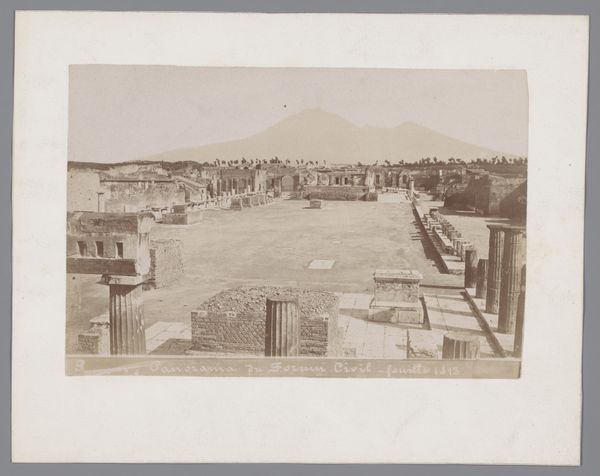
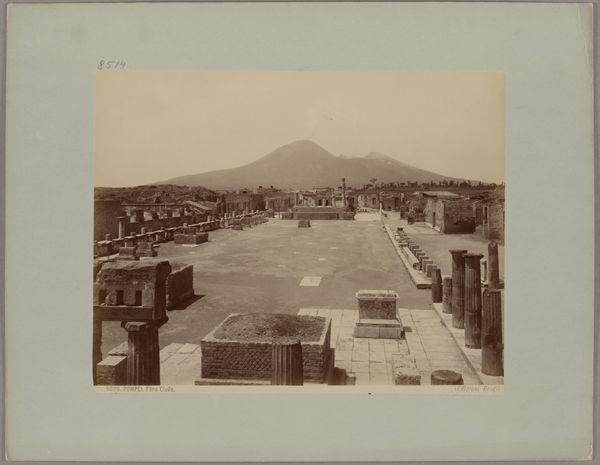
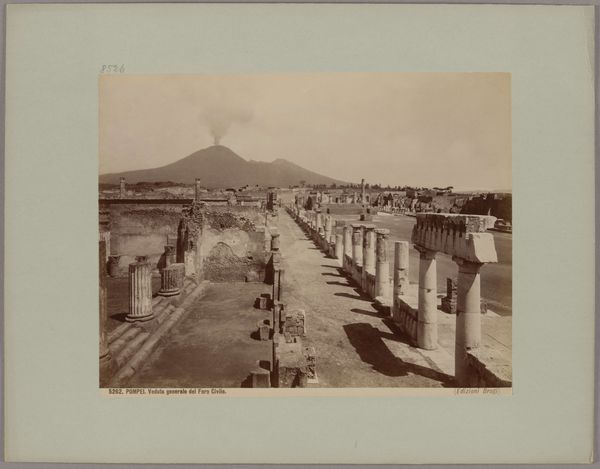
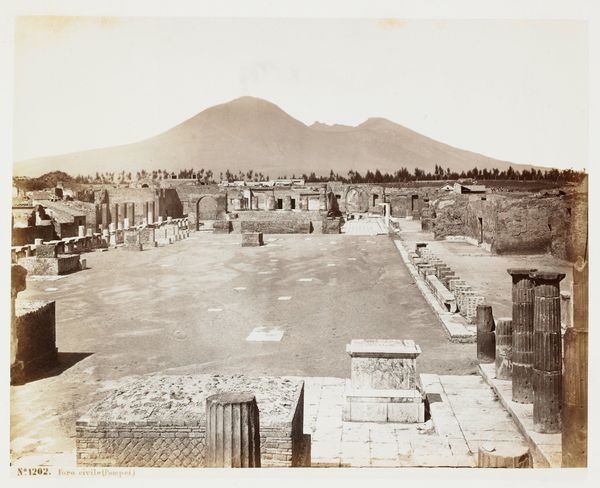
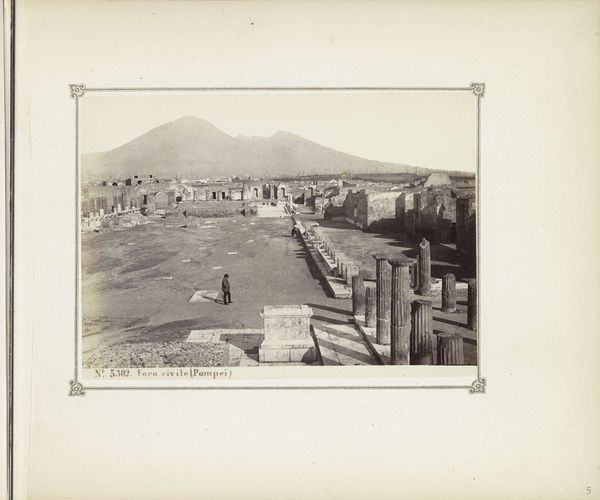
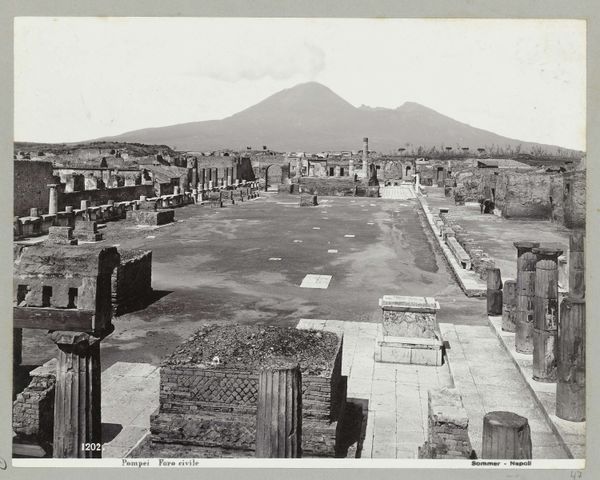
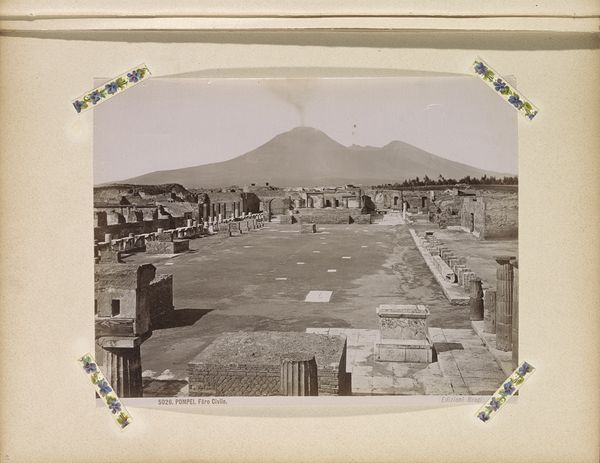
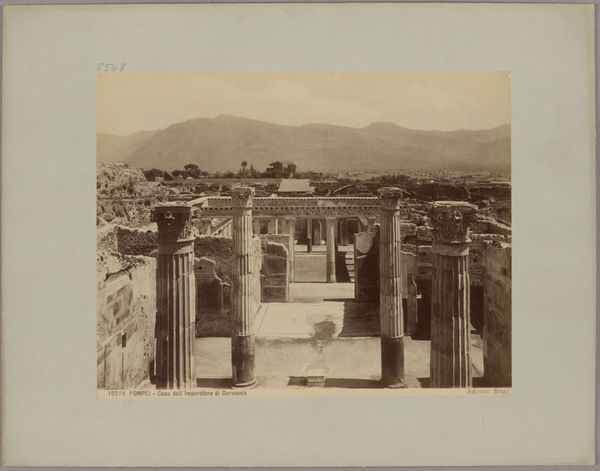
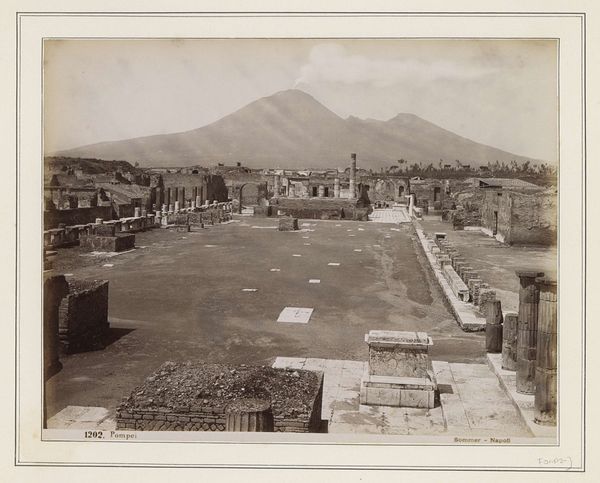
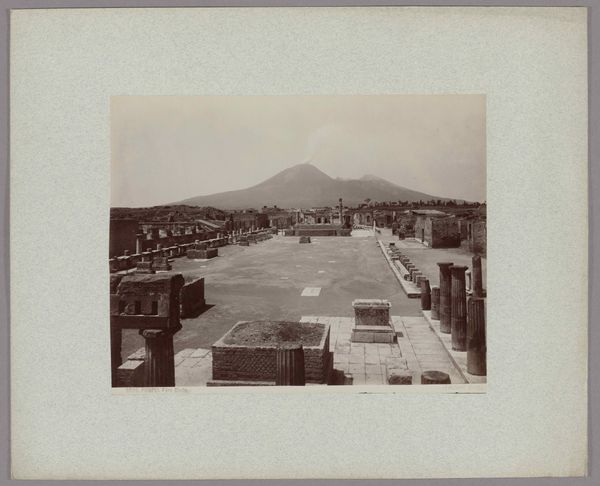
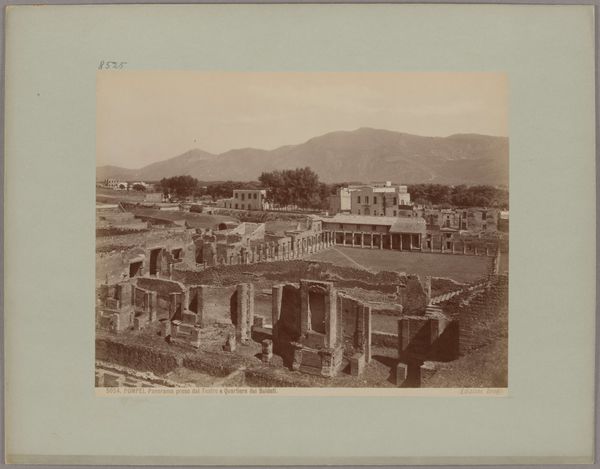
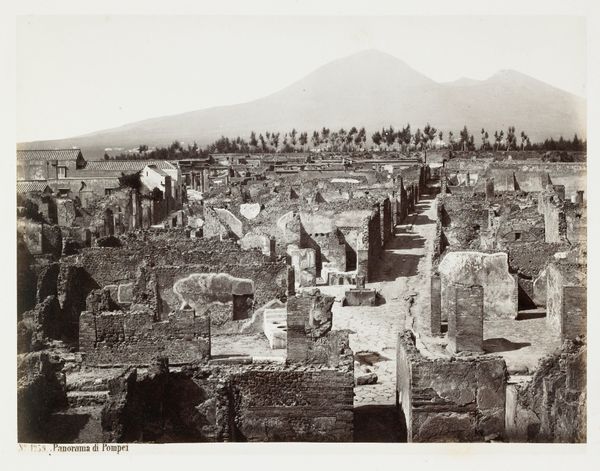
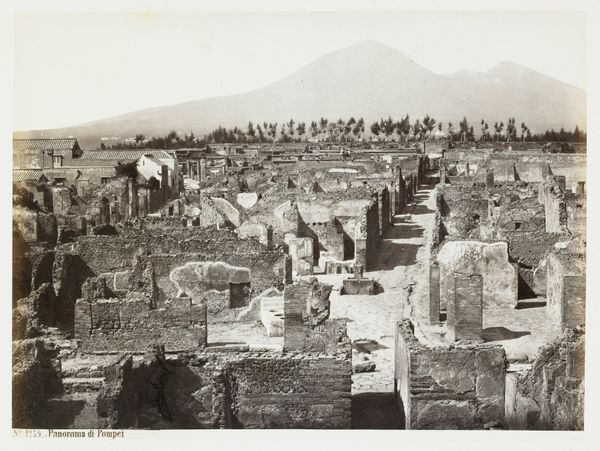
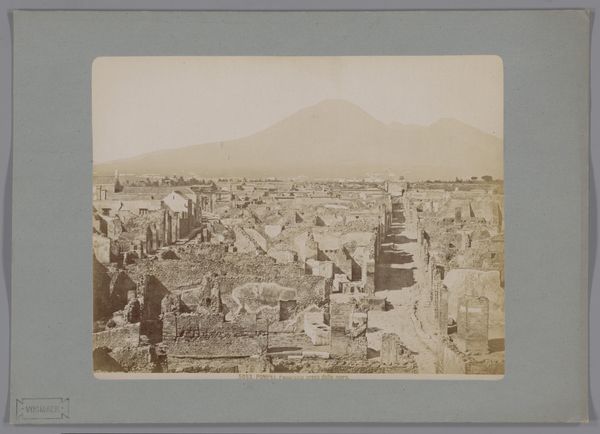
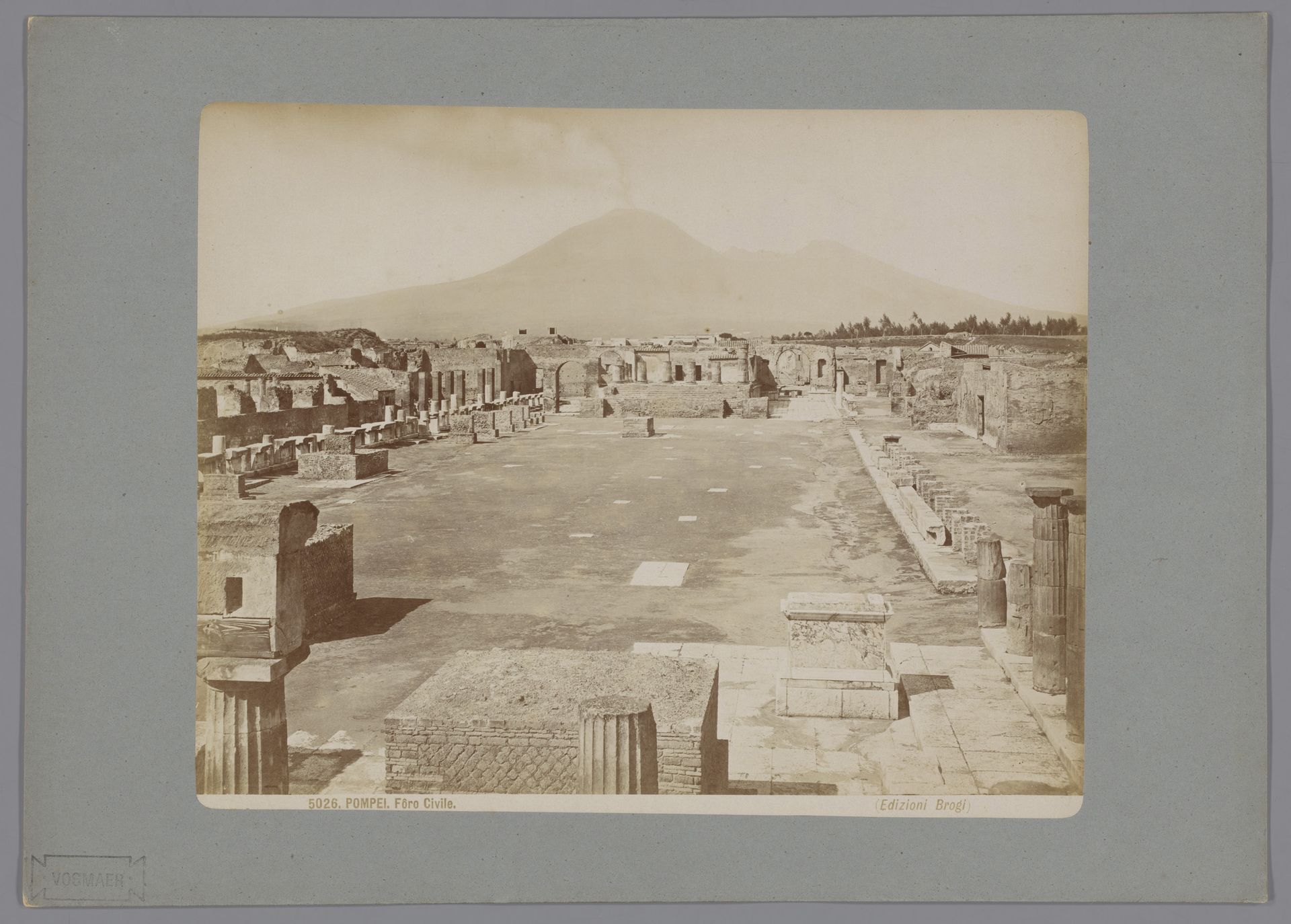
This photograph of the Forum in Pompei was taken by Giacomo Brogi. The sepia tones cast a somber mood over the scene, evoking a sense of timelessness and desolation. Notice how Brogi uses the forum's layout to create a structured composition. The linear perspective draws our eyes from the foreground ruins toward the imposing Mount Vesuvius in the background. This juxtaposition of man-made structures with the natural landscape creates a visual tension. The architectural ruins are meticulously arranged, with the repetition of columns and archways forming a rhythmic pattern. Here, Brogi challenges fixed meanings of time and history. The photograph serves not just as a record but also as a meditation on the transience of human achievement against the backdrop of nature's enduring power. Through Brogi's lens, the ruins function as a semiotic system, inviting us to decode the layers of history embedded within this visual representation.

Artwork details
- Medium
- photography, gelatin-silver-print
- Dimensions
- height 202 mm, width 254 mm, height 254 mm, width 355 mm
- Copyright
- Rijks Museum: Open Domain
Tags
Comments
Share your thoughts
About this artwork
This photograph of the Forum in Pompei was taken by Giacomo Brogi. The sepia tones cast a somber mood over the scene, evoking a sense of timelessness and desolation. Notice how Brogi uses the forum's layout to create a structured composition. The linear perspective draws our eyes from the foreground ruins toward the imposing Mount Vesuvius in the background. This juxtaposition of man-made structures with the natural landscape creates a visual tension. The architectural ruins are meticulously arranged, with the repetition of columns and archways forming a rhythmic pattern. Here, Brogi challenges fixed meanings of time and history. The photograph serves not just as a record but also as a meditation on the transience of human achievement against the backdrop of nature's enduring power. Through Brogi's lens, the ruins function as a semiotic system, inviting us to decode the layers of history embedded within this visual representation.
Comments
Share your thoughts