About this artwork
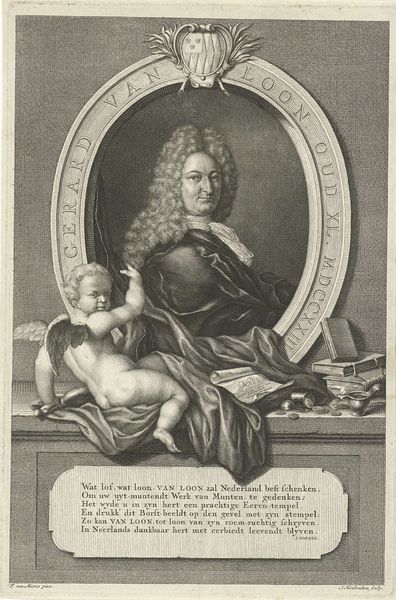
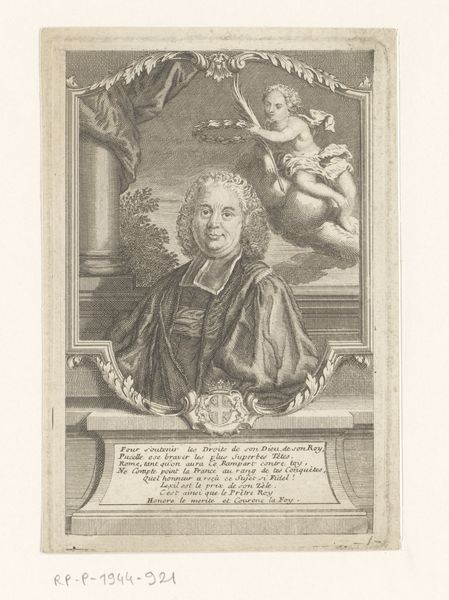
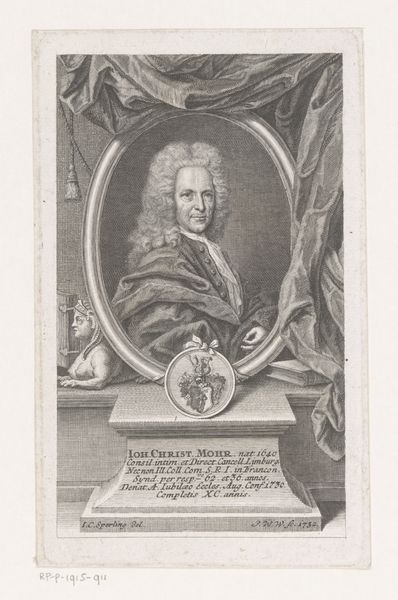
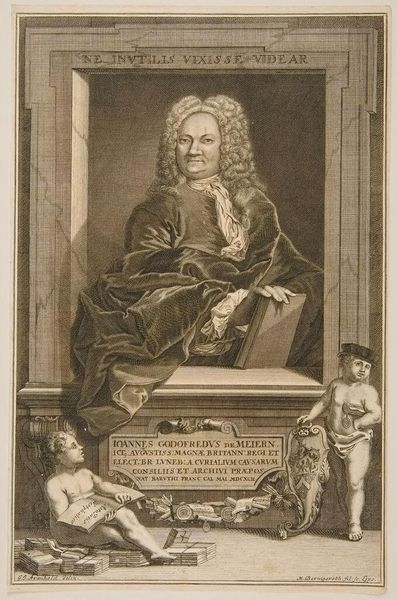
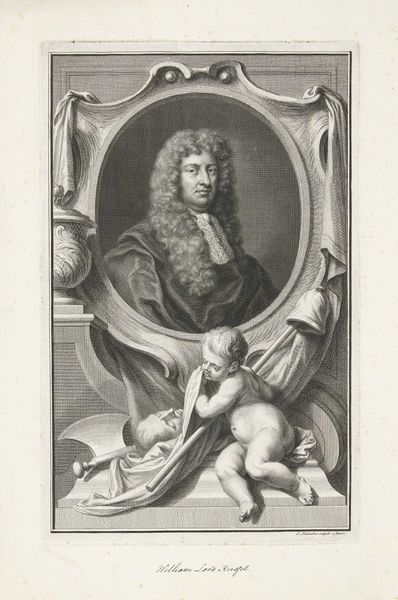
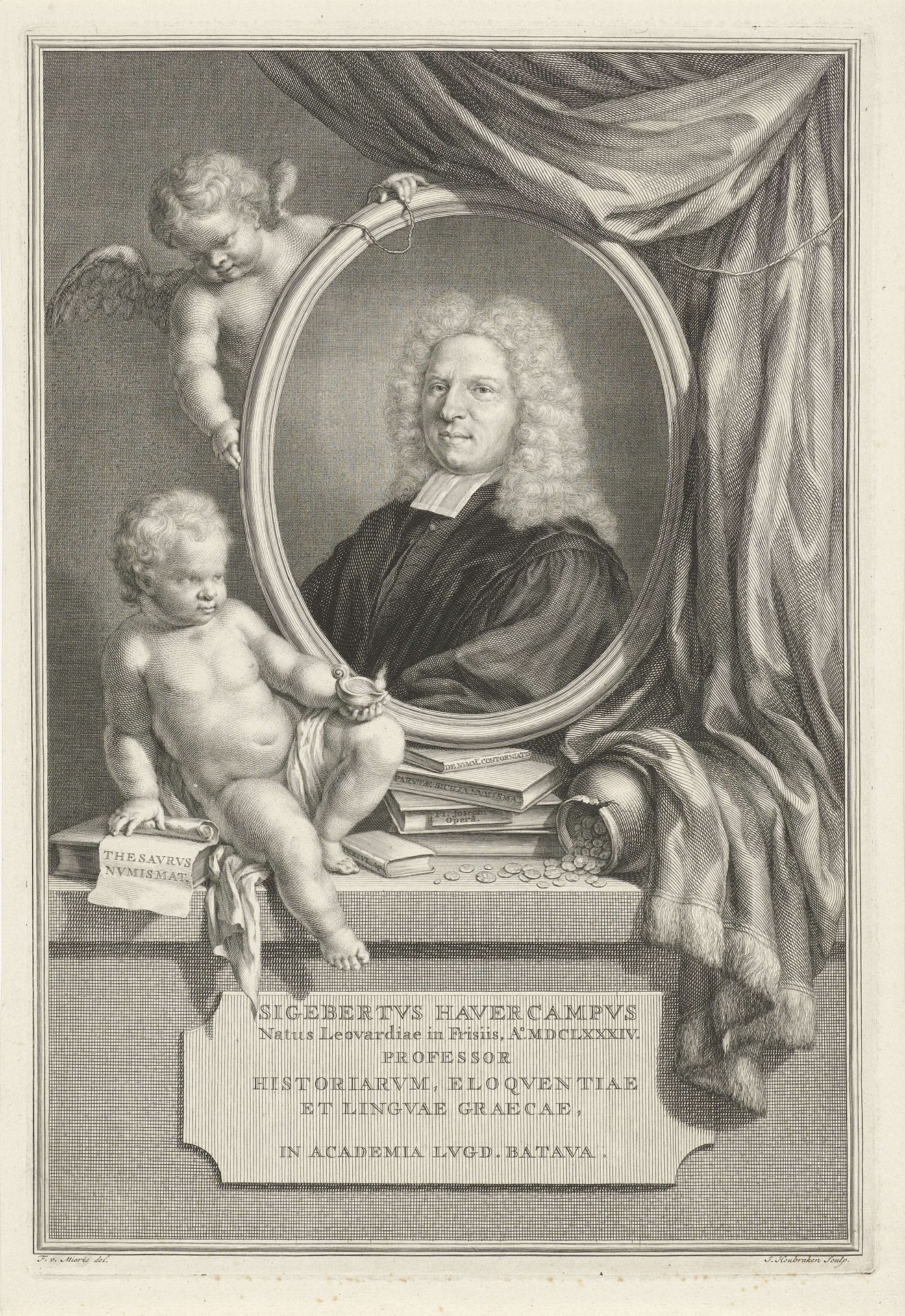
Jacob Houbraken created this portrait of Siwert Haverkamp as an engraving, a printmaking technique, sometime between 1698 and 1780. Haverkamp, born in 1684, was a professor of history, eloquence, and Greek language at the University of Leiden, as the inscription tells us. Portraits like this were commissioned to immortalize and celebrate men of Haverkamp’s stature. Note the cupid figures, the draped fabric, and the pile of books, traditional symbols of learning and prestige. The money spilling from the vase indicates Haverkamp's wealth, a not-so-subtle cue of class status. Yet these symbols seem to exist in tension with the man himself: Haverkamp's gaze is direct, but his shoulders are slumped slightly, as if he's uncomfortable with the trappings of power. We might consider this portrait as a negotiation between the individual and the institutions he represents. What does it mean to embody knowledge? What does it cost?

Artwork details
- Medium
- engraving
- Dimensions
- height 360 mm, width 245 mm
- Location
- Rijksmuseum
- Copyright
- Rijks Museum: Open Domain
Tags
portrait
baroque
figuration
line
history-painting
academic-art
engraving
Comments
No comments
About this artwork
Jacob Houbraken created this portrait of Siwert Haverkamp as an engraving, a printmaking technique, sometime between 1698 and 1780. Haverkamp, born in 1684, was a professor of history, eloquence, and Greek language at the University of Leiden, as the inscription tells us. Portraits like this were commissioned to immortalize and celebrate men of Haverkamp’s stature. Note the cupid figures, the draped fabric, and the pile of books, traditional symbols of learning and prestige. The money spilling from the vase indicates Haverkamp's wealth, a not-so-subtle cue of class status. Yet these symbols seem to exist in tension with the man himself: Haverkamp's gaze is direct, but his shoulders are slumped slightly, as if he's uncomfortable with the trappings of power. We might consider this portrait as a negotiation between the individual and the institutions he represents. What does it mean to embody knowledge? What does it cost?
Comments
No comments