About this artwork
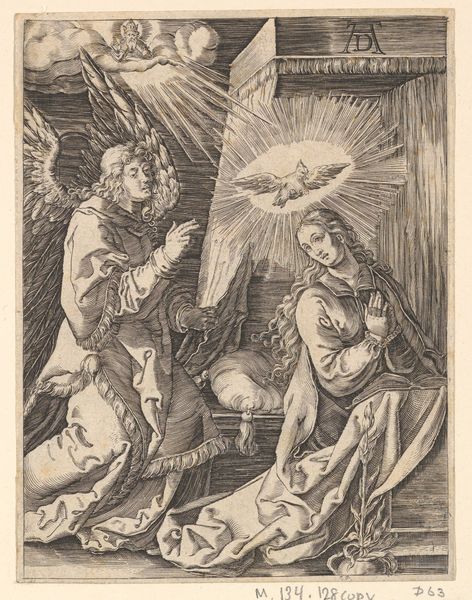
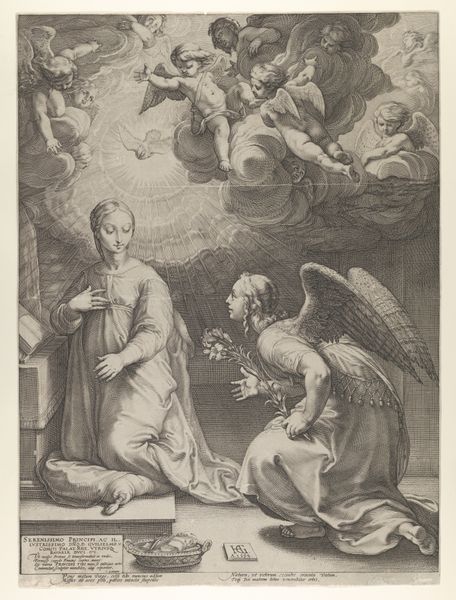
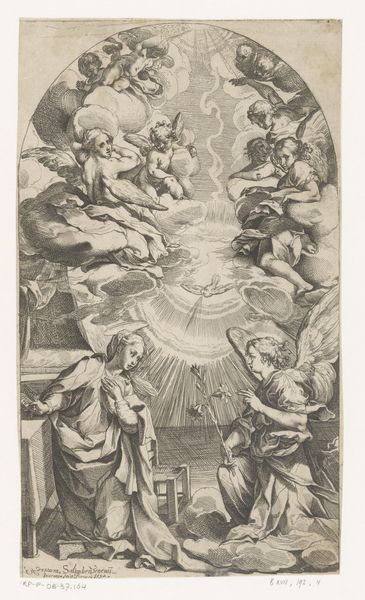
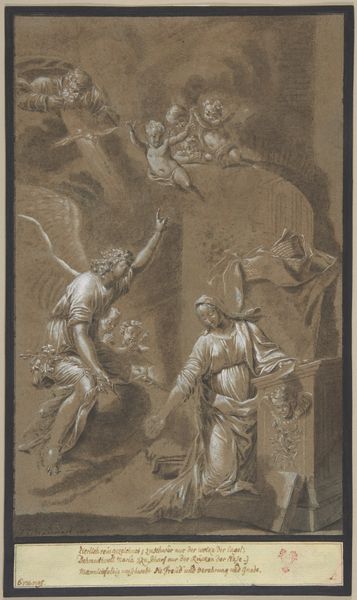
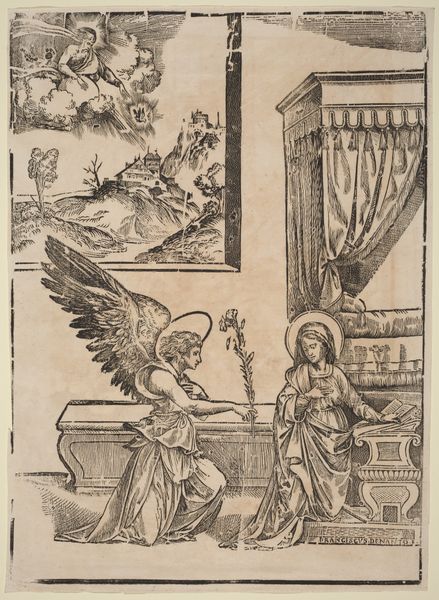
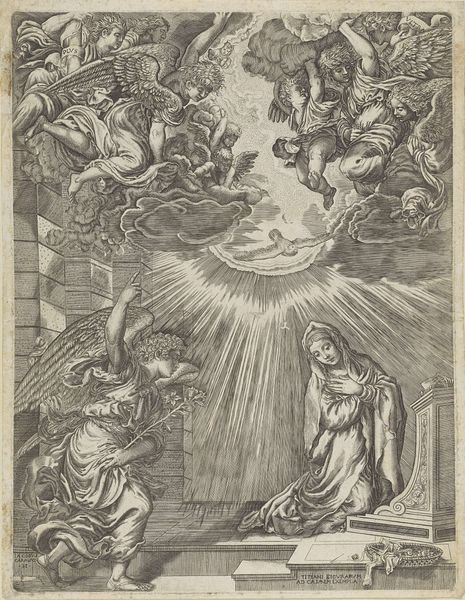
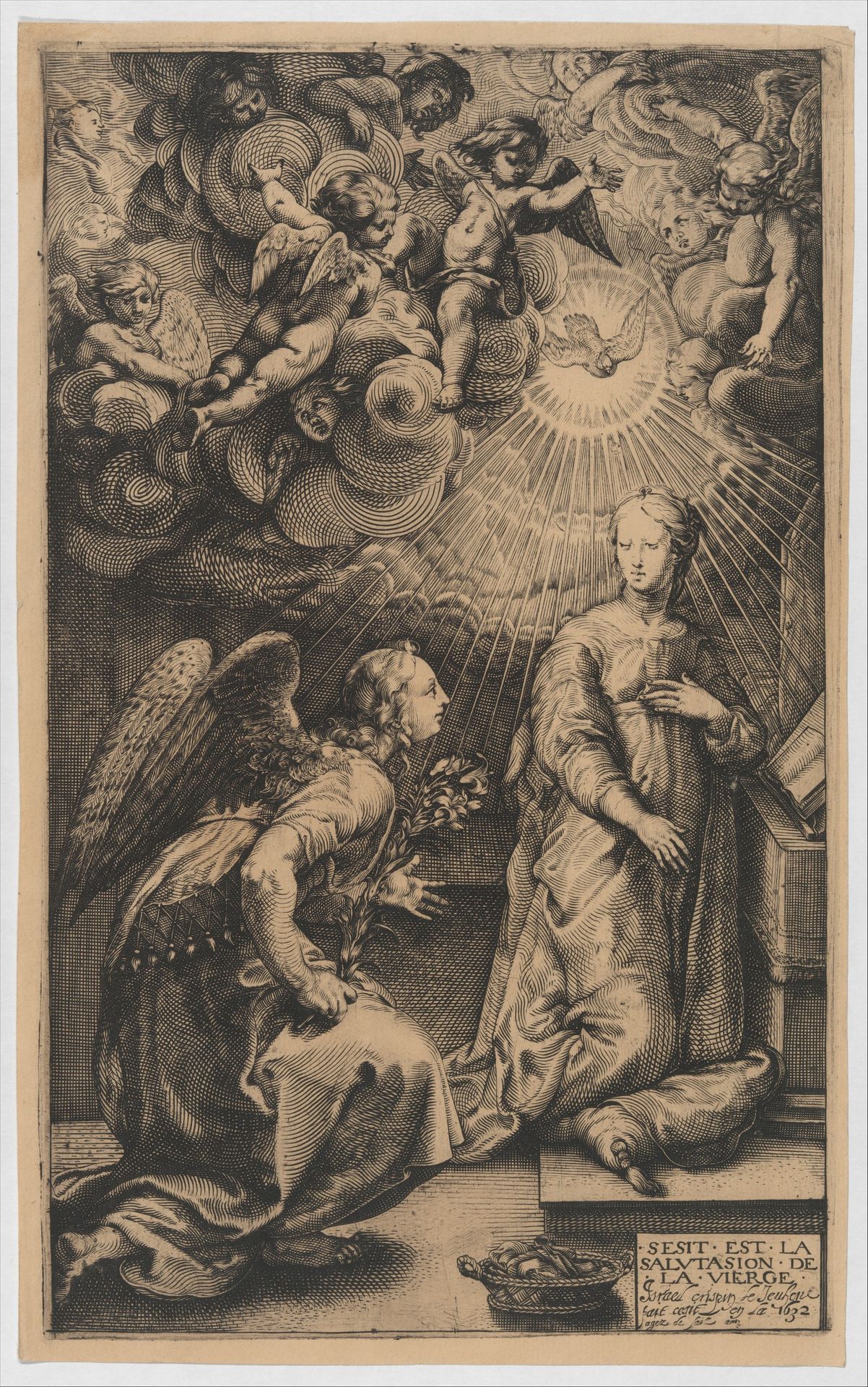
Israël Crispin le Jeune created this engraving, "The Annunciation," in the 17th century. During this time, religious art served as a powerful tool for cultural and moral instruction. Here, we see the angel Gabriel informing Mary that she will conceive and bear a son. But consider Mary's position: she embodies both divine grace and human vulnerability, caught at the intersection of heaven’s plan and her own destiny. What does it mean for a young woman to be chosen for such a monumental role? Le Jeune invites us to contemplate not just the religious narrative, but also the emotional and psychological dimensions of this encounter. How might Mary have felt about this? This engraving asks us to reflect on the complex interplay between faith, identity, and the negotiation of one's own path within larger, often unyielding, societal structures.
The Annunciation
1632

Israël Crispin le Jeune
1616 - 1700
The Metropolitan Museum of Art
Metropolitan Museum of Art, New York, NYArtwork details
- Medium
- drawing, print, engraving
- Dimensions
- Sheet: 11 5/8 × 7 1/4 in. (29.6 × 18.4 cm)
- Location
- Metropolitan Museum of Art, New York, NY
- Copyright
- Public Domain
Tags
Comments
Share your thoughts
About this artwork
Israël Crispin le Jeune created this engraving, "The Annunciation," in the 17th century. During this time, religious art served as a powerful tool for cultural and moral instruction. Here, we see the angel Gabriel informing Mary that she will conceive and bear a son. But consider Mary's position: she embodies both divine grace and human vulnerability, caught at the intersection of heaven’s plan and her own destiny. What does it mean for a young woman to be chosen for such a monumental role? Le Jeune invites us to contemplate not just the religious narrative, but also the emotional and psychological dimensions of this encounter. How might Mary have felt about this? This engraving asks us to reflect on the complex interplay between faith, identity, and the negotiation of one's own path within larger, often unyielding, societal structures.
Comments
Share your thoughts