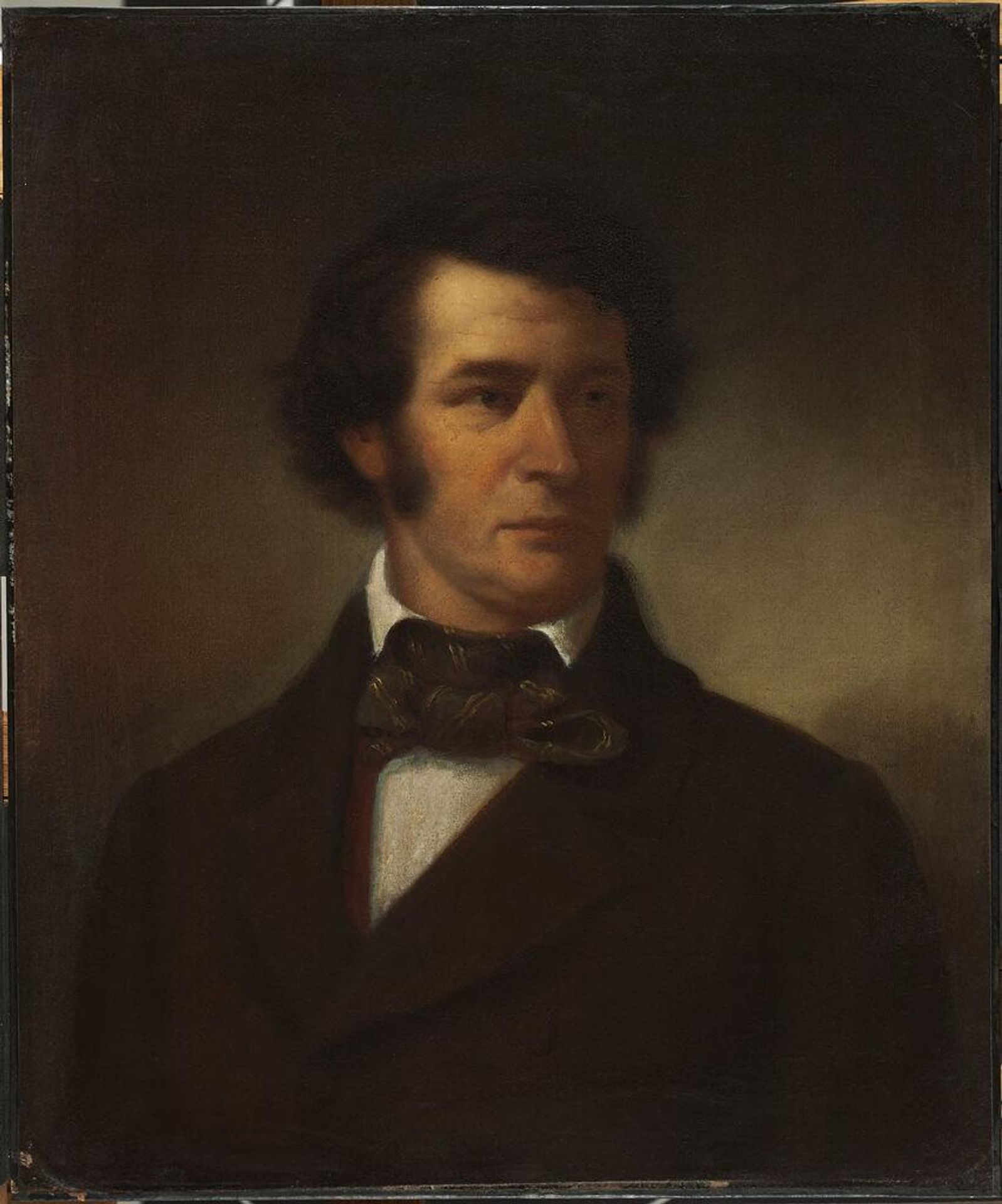
c. 1854
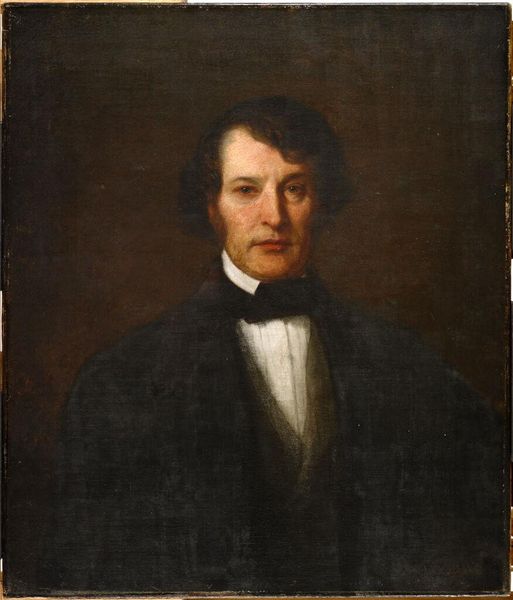
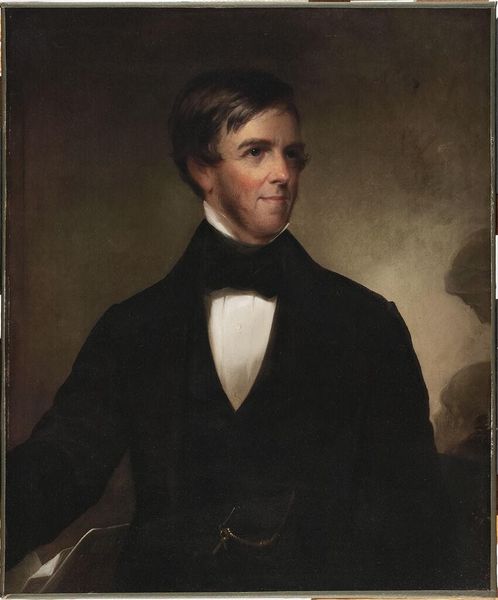
Charles Sumner (1811-1874)

Listen to curator's interpretation
Curatorial notes
Curator: Here we have Walter M. Brackett's portrait of Charles Sumner. The piece, an oil on canvas, measures about 76 by 63 centimeters. What strikes you first? Editor: Melancholy. It's a study in browns, almost sepia toned, giving him a weathered, serious air like he's seen some things. Curator: Sumner, a senator and staunch abolitionist, certainly did. Brackett's portrait captures, I think, the weight of political struggle during the antebellum period. The somber palette serves to highlight the subject. Editor: Absolutely. It’s like the materials themselves—the dark oils, the heavy canvas—are imbued with the gravity of the times. It makes you wonder about Brackett's own politics, reflected in his choices. I wonder if he used a limited palette to reflect somber times. Curator: A point well taken. It brings to mind the question of consumption and production during this period, doesn’t it? Editor: It does. I keep picturing Brackett mixing his paints, maybe a bit broodingly, trying to capture the essence of Sumner's fight, and maybe also trying to process the world around him. Curator: Precisely. In closing, it really is a potent reminder of how artistic choices can reflect and shape our understanding of history. Editor: An insightful capture that lingers, and leaves you wondering about those who shaped our nation and the artists who shaped our perceptions of them.