About this artwork
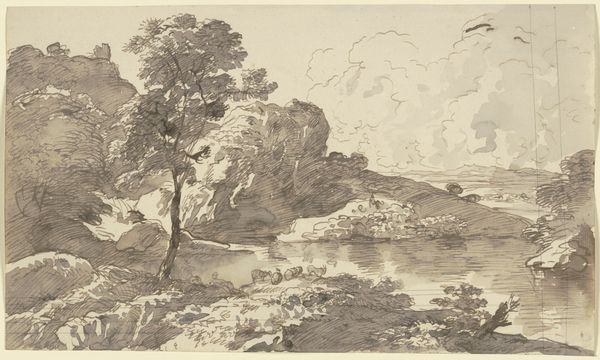
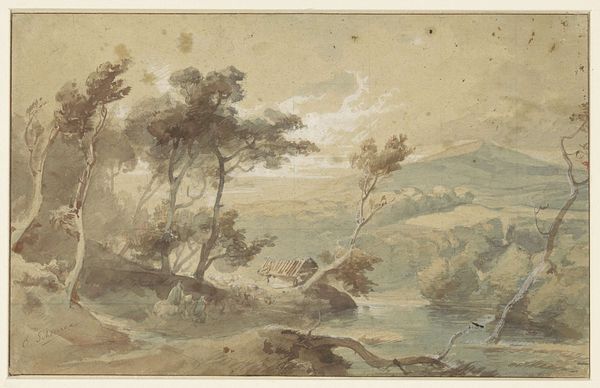
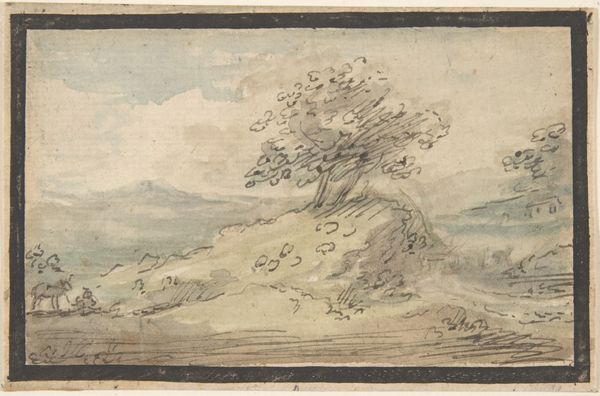
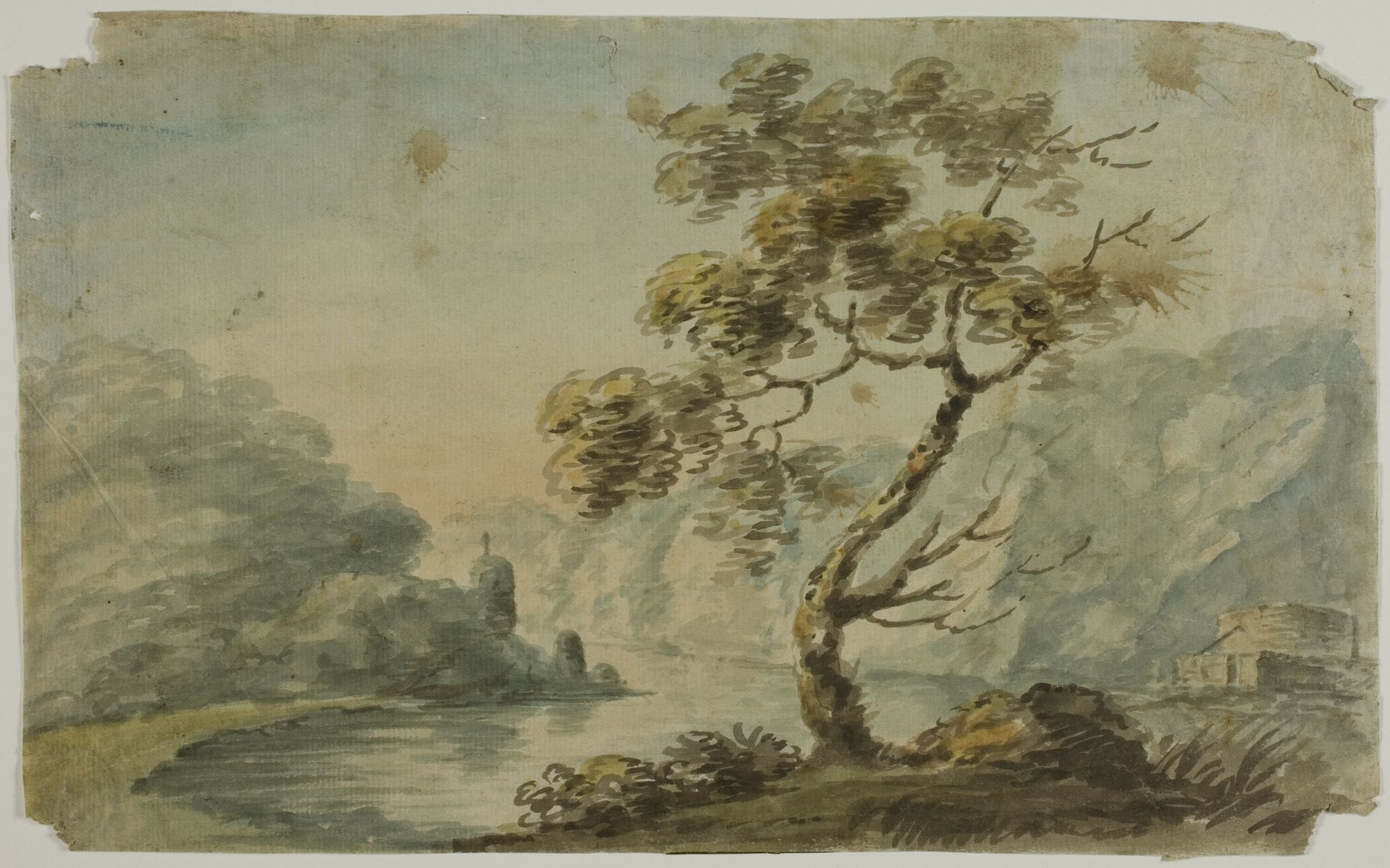
Nicholas Pocock rendered this windswept landscape with pen and watercolor, inviting us into the aesthetic and cultural values of late 18th-century Britain. As an artist and former maritime captain, Pocock was part of the era's burgeoning interest in nature, a romanticized vision tied to notions of national identity and expansion. This watercolor isn't just a serene vista; it reflects the complex relationship between humans and their environment. Pocock's landscapes often evoke a sense of sublime power, mirroring the period's colonial ambitions and the subjugation of nature, alongside its peoples. The solitary tree, bent by the wind, becomes a metaphor for resilience and adaptation. It is a quiet echo of the human spirit in an age defined by exploration and upheaval. Consider how the seemingly simple scene invites us to reflect on our place within the natural order, a question as pertinent today as it was in Pocock's time.
Windswept Landscape
n.d.


Artwork details
- Medium
- drawing, plein-air, paper, watercolor
- Dimensions
- 185 × 300 mm
- Location
- The Art Institute of Chicago
- Copyright
- Public Domain
Tags
Comments
Share your thoughts
About this artwork
Nicholas Pocock rendered this windswept landscape with pen and watercolor, inviting us into the aesthetic and cultural values of late 18th-century Britain. As an artist and former maritime captain, Pocock was part of the era's burgeoning interest in nature, a romanticized vision tied to notions of national identity and expansion. This watercolor isn't just a serene vista; it reflects the complex relationship between humans and their environment. Pocock's landscapes often evoke a sense of sublime power, mirroring the period's colonial ambitions and the subjugation of nature, alongside its peoples. The solitary tree, bent by the wind, becomes a metaphor for resilience and adaptation. It is a quiet echo of the human spirit in an age defined by exploration and upheaval. Consider how the seemingly simple scene invites us to reflect on our place within the natural order, a question as pertinent today as it was in Pocock's time.
Comments
Share your thoughts