1849
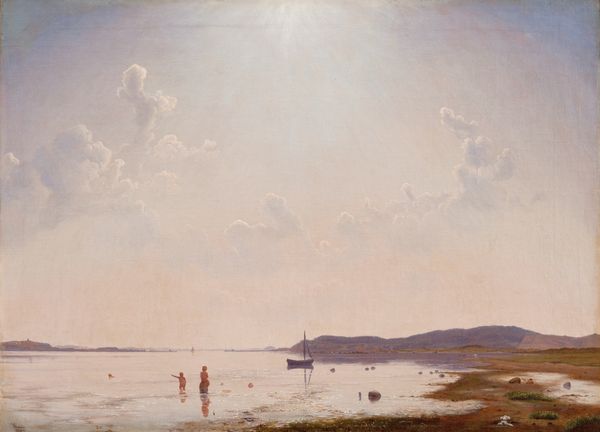
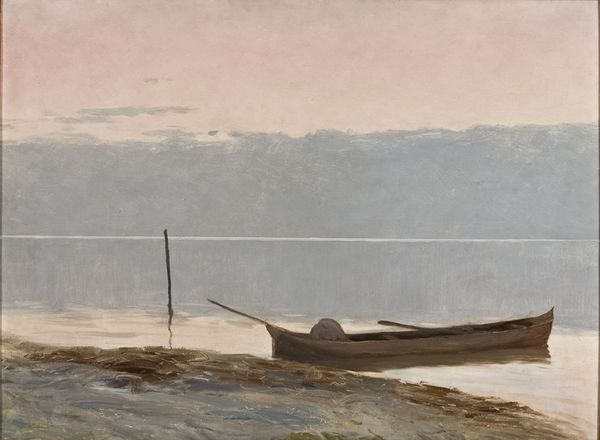
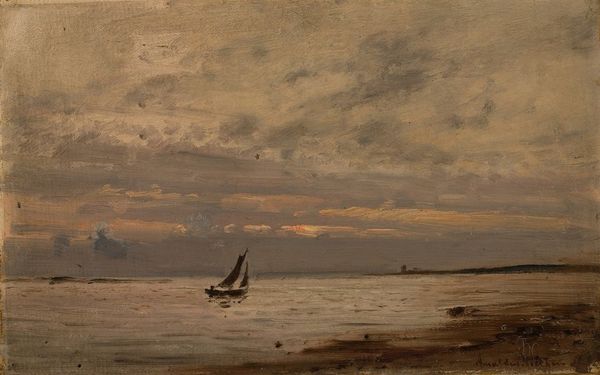
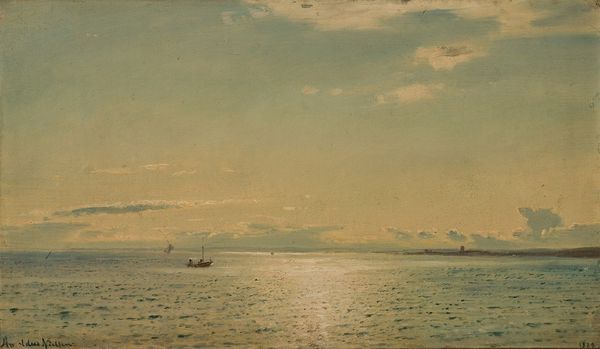
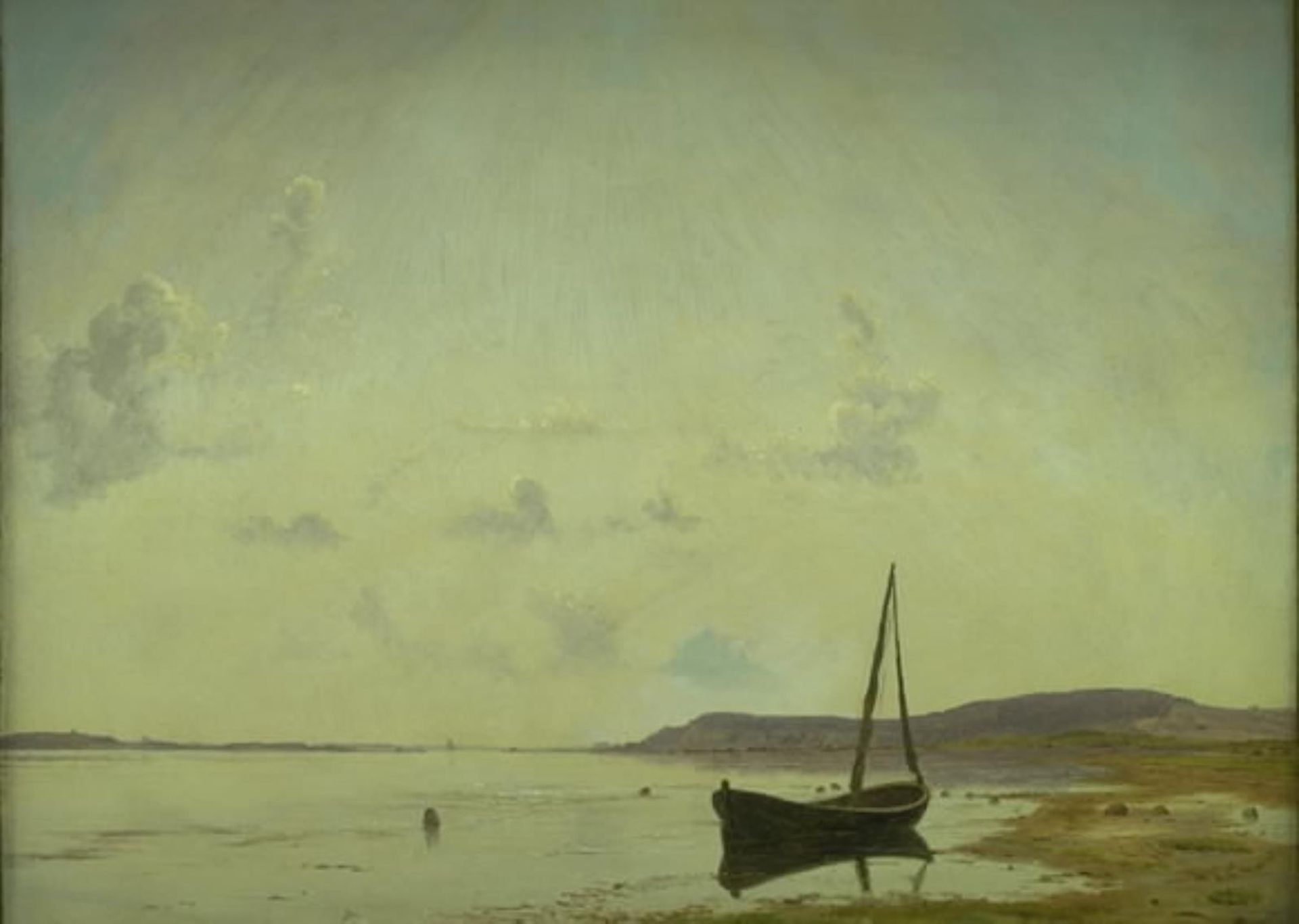
The Coast at Frederiksund. Sketch


Listen to curator's interpretation
Curatorial notes
Curator: Oh, isn’t that serene? A lone boat sits on the shore as the pale sun bleeds over the still water. Editor: Yes, a liminal atmosphere hangs about Vilhelm Kyhn's watercolor and paper sketch, "The Coast at Frederiksund." Painted in 1849, it captures the Danish coastline with delicate restraint. Curator: Restraint is the word. It feels… hesitant, almost melancholic. Is that the Romanticism coming through, do you think? The muted palette really adds to the somber mood. Editor: Without a doubt, the Romantic leanings are apparent, yes. Note the structural components though—how the artist uses a strong horizontal to divide the canvas into thirds. The boat creates a diagonal which your eye then uses as a conduit between the water and the heavy, vaporous sky. Semiotically, the color drain and dissolution of objects implies absence; what's present isn’t quite there, you could say. Curator: Absolutely, there’s an elusive quality to it, almost as if you could step right through it. Speaking of stepping, the location itself, Frederiksund—it has this light of a certain kind. Perhaps Kyhn tried to get at that. The very essence of the location. It feels like he wanted to capture a feeling, a memory. Editor: "Capture" is apt, I'd say. Kyhn uses broad washes of watercolor to capture the essence of light on the water. Observe how his technique contrasts, however; precise draftsmanship with soft brushwork. In doing so, this emphasizes the transition from the transient effects of light to the more solid form of the boat. It is a dichotomy of what disappears, of that which abides. Curator: Beautifully said. I think it’s precisely that contrast which gives the work its enduring quality. One can sense him seeking the solidity of an aesthetic he was clearly already moving beyond. Editor: Indeed. Through a language of spatial planes and veiled coloration, it opens out to us, if we open to it.