About this artwork
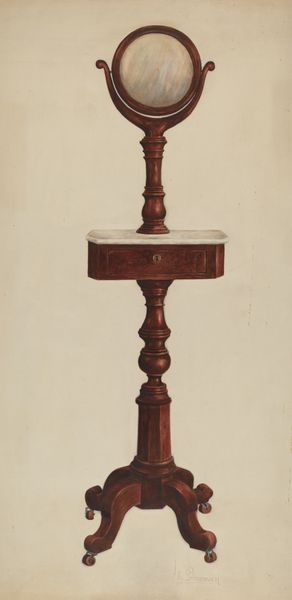
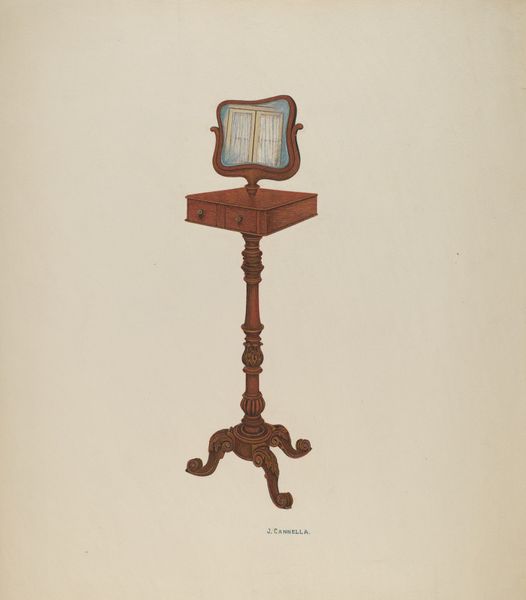
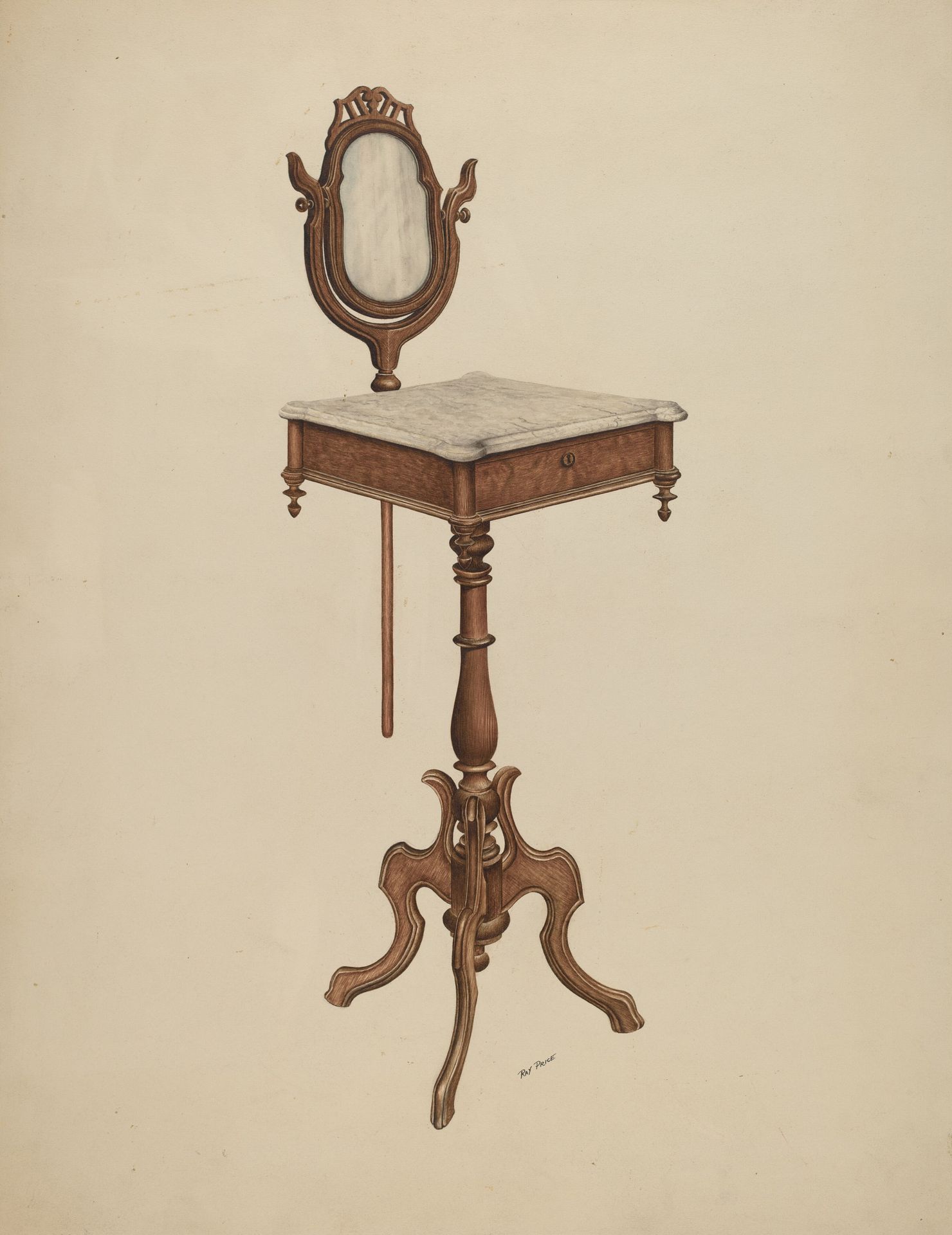
Ray Price created this Shaving Stand, of unknown date, reflecting the intimate rituals of grooming in the late 19th and early 20th centuries. At this time, traditional gender roles dictated separate spheres for men and women. The shaving stand becomes symbolic of masculine identity and domestic space. Notice the stand's elegant design, suggestive of the rituals of middle-class masculinity of the time. It features a mirror, a marble top, and a small drawer, alluding to the accoutrements associated with male grooming. The act of shaving itself becomes a performance of masculinity, a daily ritual through which men enact their gender identity. What does it mean to see oneself reflected in this mirror? What identity is being reflected? Price’s Shaving Stand offers a glimpse into the historical construction of gender and identity. Consider how our understanding of these objects shapes our perceptions of gender and selfhood today.


Artwork details
- Medium
- drawing, watercolor
- Dimensions
- overall: 44.6 x 35.8 cm (17 9/16 x 14 1/8 in.) Original IAD Object: none given
- Copyright
- National Gallery of Art: CC0 1.0
Tags
Comments
Share your thoughts
About this artwork
Ray Price created this Shaving Stand, of unknown date, reflecting the intimate rituals of grooming in the late 19th and early 20th centuries. At this time, traditional gender roles dictated separate spheres for men and women. The shaving stand becomes symbolic of masculine identity and domestic space. Notice the stand's elegant design, suggestive of the rituals of middle-class masculinity of the time. It features a mirror, a marble top, and a small drawer, alluding to the accoutrements associated with male grooming. The act of shaving itself becomes a performance of masculinity, a daily ritual through which men enact their gender identity. What does it mean to see oneself reflected in this mirror? What identity is being reflected? Price’s Shaving Stand offers a glimpse into the historical construction of gender and identity. Consider how our understanding of these objects shapes our perceptions of gender and selfhood today.
Comments
Share your thoughts