About this artwork
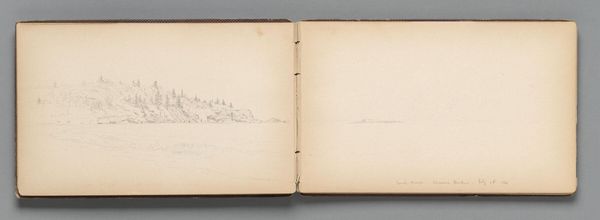
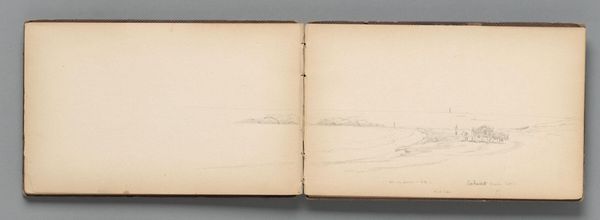
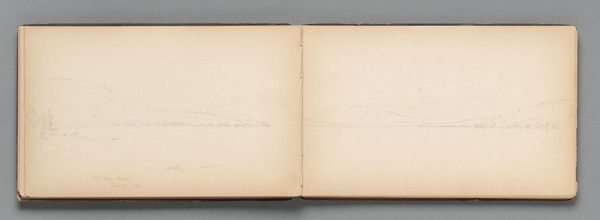
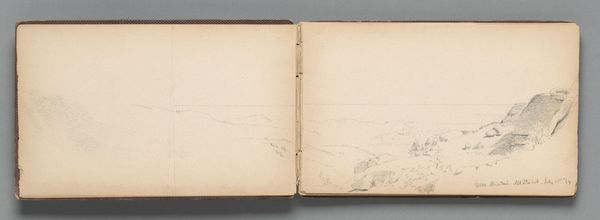
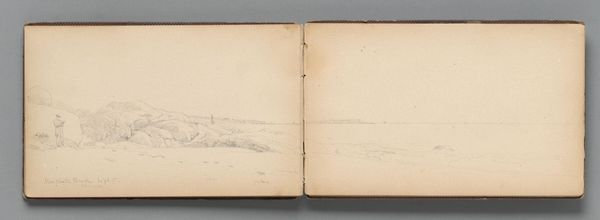
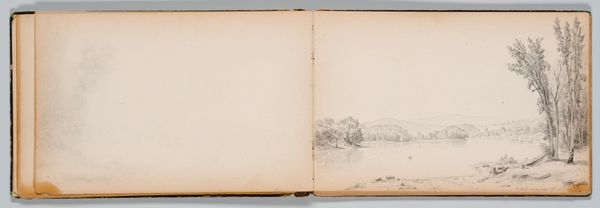
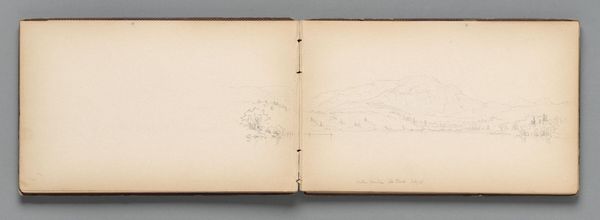
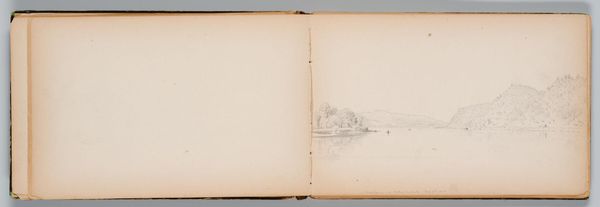
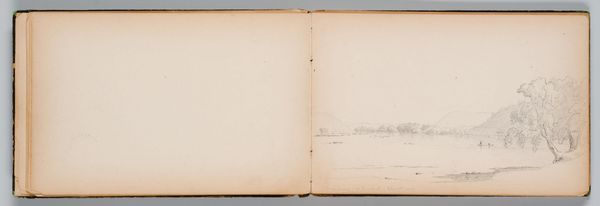
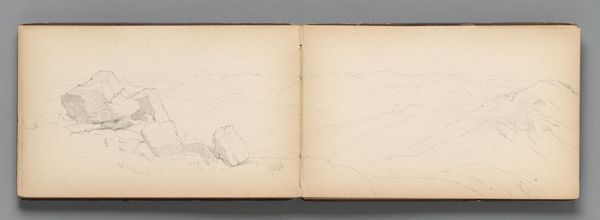
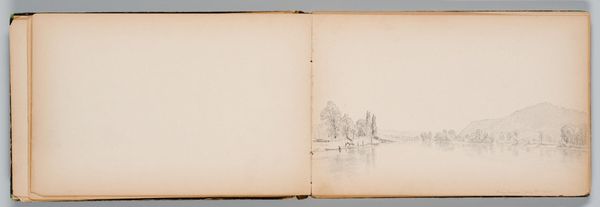
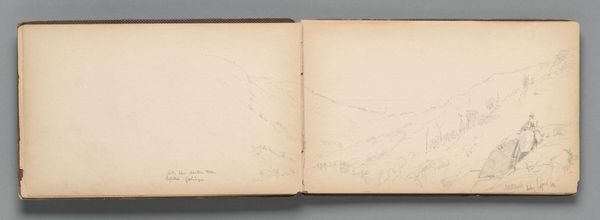
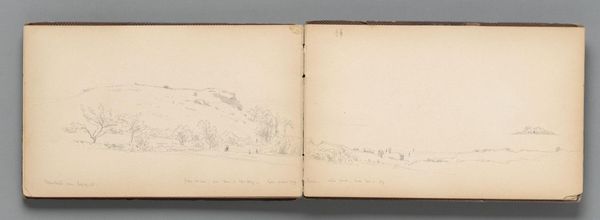
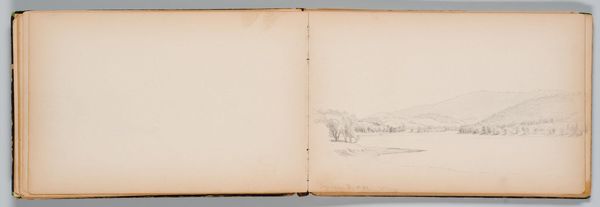
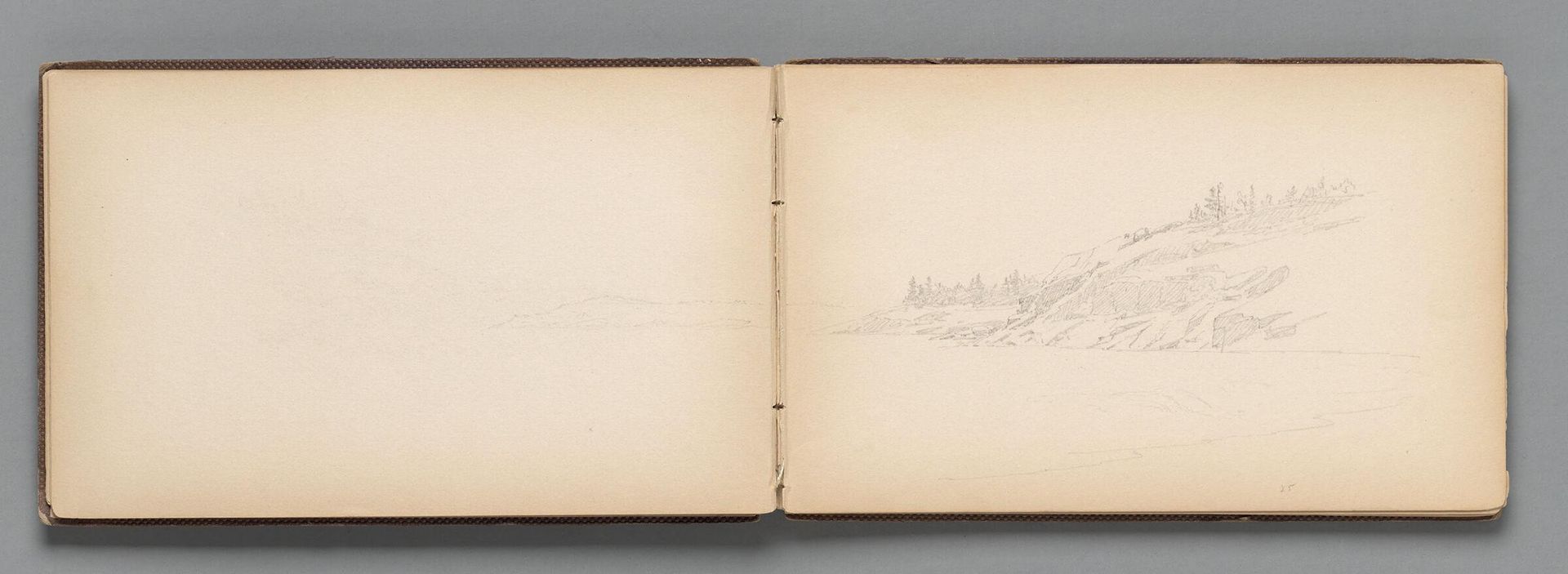
Curator: Here we have Sanford Robinson Gifford's double-sided graphite sketch, Partial Mount Desert Island Landscape and Partial Bald Porcupine Island Landscape. Editor: Immediately, I'm struck by the rawness of the scene, like a memory barely sketched onto the page, imbued with possibility. Curator: Gifford, known for his luminist landscapes, often used sketchbooks like this one. They offer a fascinating insight into his process, capturing the raw essence of place. Mount Desert Island, in particular, held special significance for artists of his era. Editor: The lightness of the lines, the open space of the pages... it mirrors the accessibility, the open-mindedness of the space it creates for artists. There is a subtle but deep commentary about how access shapes art. Curator: Absolutely. These landscapes, while unfinished, speak volumes about the dialogue between nature, art, and the social dynamics of artistic communities at the time. It is a glimpse into the networks that supported and shaped art. Editor: Seeing these sketches, I can't help but think about the power of the unfinished, the potential it holds for reimagining our own relationships with the landscapes around us.
Partial Mount Desert Island Landscape; verso: Partial Bald Porcupine Island Landscape 1864


Artwork details
- Dimensions
- 13.9 x 22.5 cm (5 1/2 x 8 7/8 in.)
- Location
- Harvard Art Museums
- Copyright
- CC0 1.0
Comments
No comments
About this artwork
Curator: Here we have Sanford Robinson Gifford's double-sided graphite sketch, Partial Mount Desert Island Landscape and Partial Bald Porcupine Island Landscape. Editor: Immediately, I'm struck by the rawness of the scene, like a memory barely sketched onto the page, imbued with possibility. Curator: Gifford, known for his luminist landscapes, often used sketchbooks like this one. They offer a fascinating insight into his process, capturing the raw essence of place. Mount Desert Island, in particular, held special significance for artists of his era. Editor: The lightness of the lines, the open space of the pages... it mirrors the accessibility, the open-mindedness of the space it creates for artists. There is a subtle but deep commentary about how access shapes art. Curator: Absolutely. These landscapes, while unfinished, speak volumes about the dialogue between nature, art, and the social dynamics of artistic communities at the time. It is a glimpse into the networks that supported and shaped art. Editor: Seeing these sketches, I can't help but think about the power of the unfinished, the potential it holds for reimagining our own relationships with the landscapes around us.
Comments
No comments